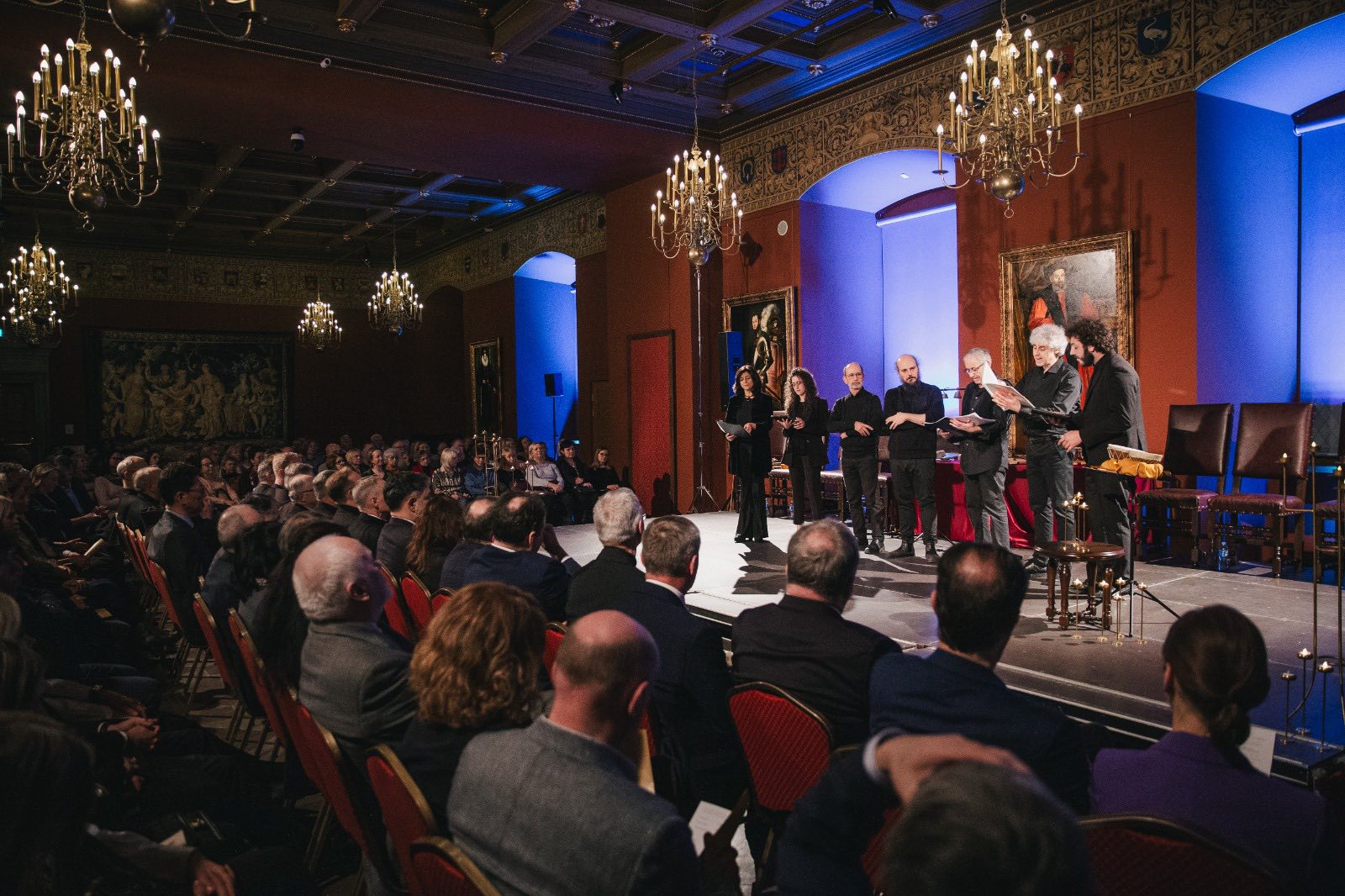
As part of the initiatives organized in Lithuania to commemorate the 800th anniversary of the death of St. Francis of Assisi, the Italian Embassy, the Apostolic Nunciature, and the Italian Cultural Institute in Vilnius organized the concert “Giullari di Dio” (Jesters of God) by the Micrologus Ensemble at the National Museum – Palace of the Grand Dukes of Lithuania. The concert was included in the program of the 12th “Marco Scacchi” International Early Music Festival.
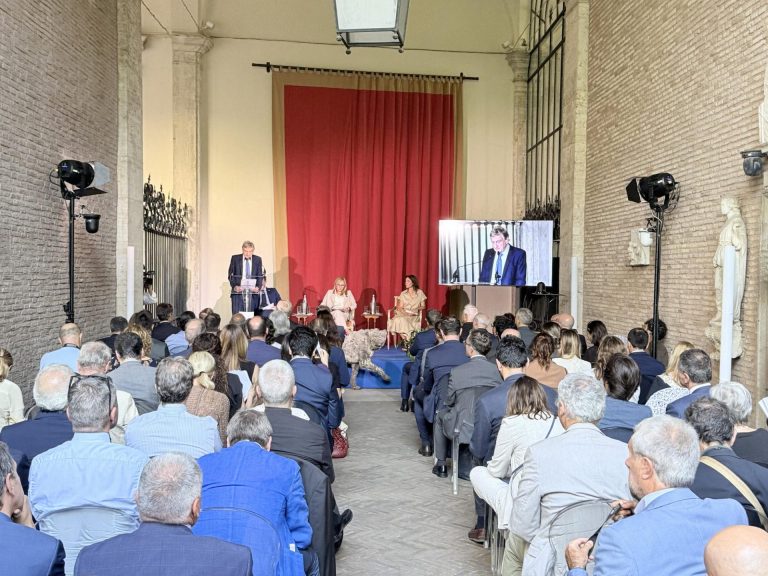
Over 500 guests attended the event, including some of Lithuania’s highest ecclesiastical, institutional, and cultural authorities, including Apostolic Nuncio Dr. Georg Gänswein, Archbishop of Vilnius His Excellency Mgr. Gintaras Grušas, Chairman of the Seimas Commission for Culture Kęstutis Vilkauskas, Museum Director Dr. Vydas Dolinskas, and representatives of the Diplomatic Corps.
The concert offered a musical journey dedicated to the earliest forms of medieval Italian lauda, which developed between the late 12th and the first half of the 13th century within the context of Franciscan spirituality. This program, specially conceived by the Micrologus Ensemble in collaboration with the European Research Council (ERC) project “Laudare,” presented for the first time a musical reconstruction of the “Canticle of Brother Sun,” which Saint Francis composed around 1225, probably shortly before his death.
The Micrologus Ensemble is one of the most influential groups on the international medieval music scene. Founded in 1984 by Umbrian musicians Patrizia Bovi, Goffredo Degli Esposti, and Gabriele Russo, along with Adolfo Broegg, the group boasts over forty years of activity dedicated to researching and reinterpreting medieval repertoire through an approach that combines historical study, musicological research, and attention to musical traditions.