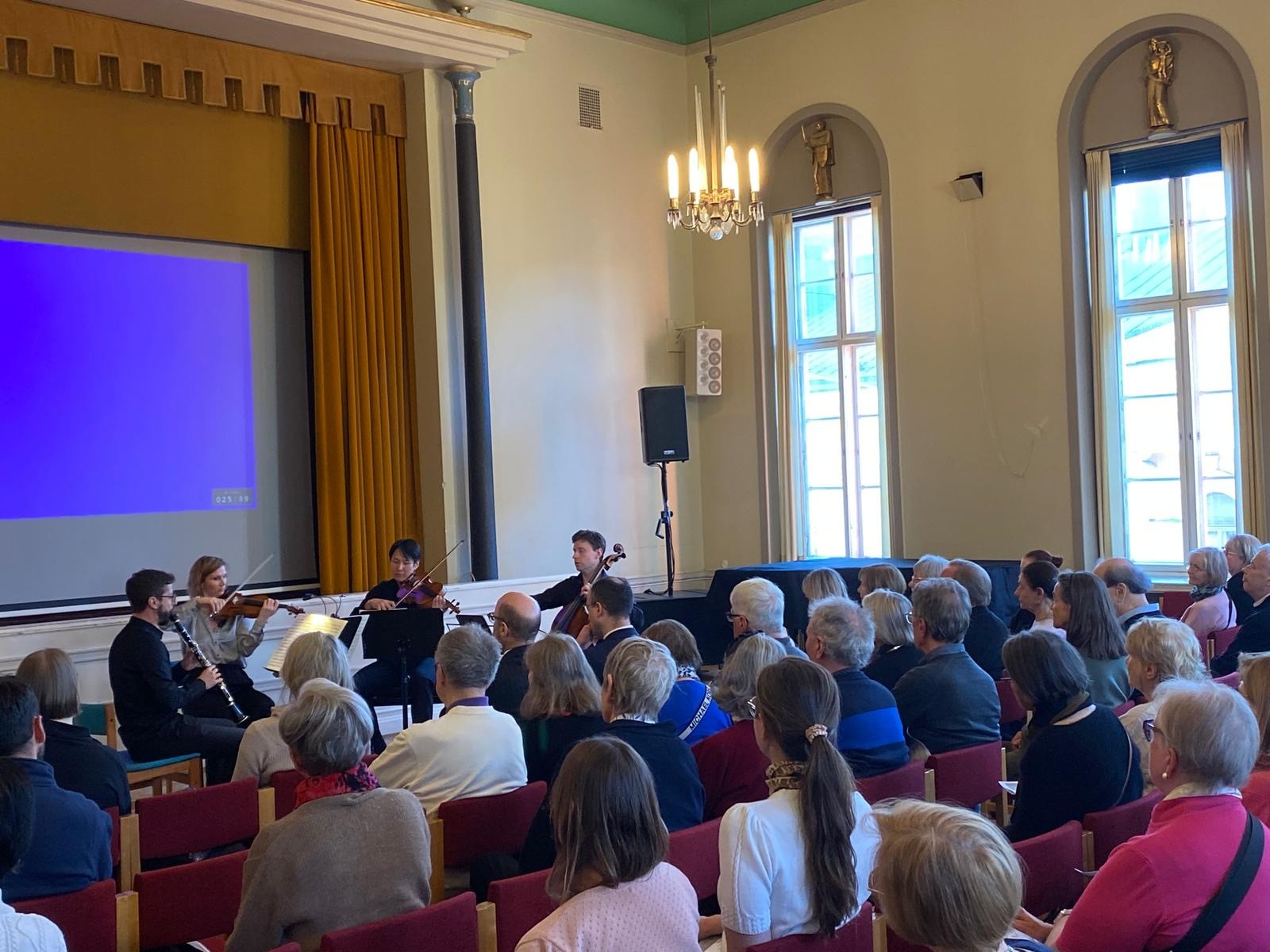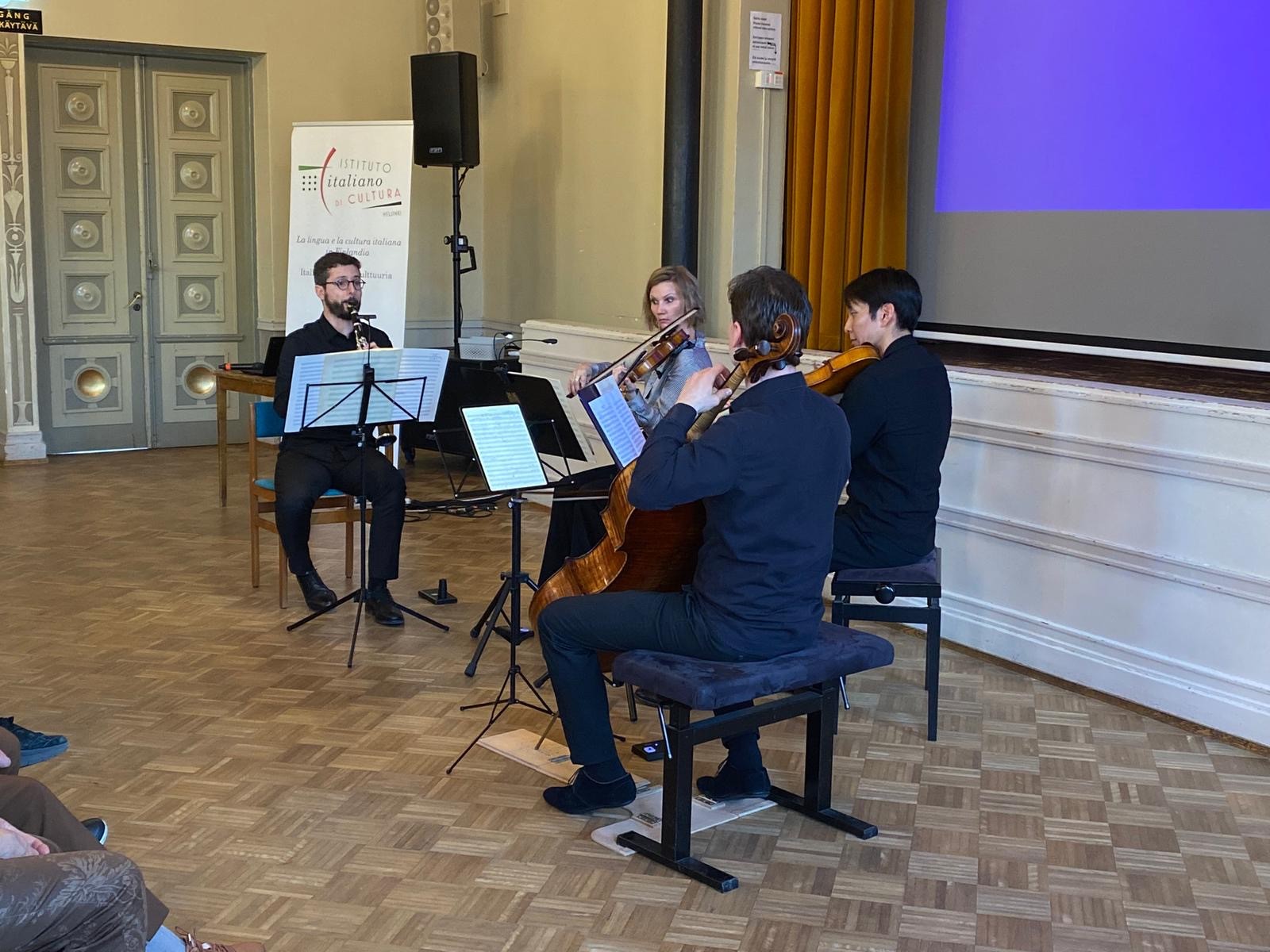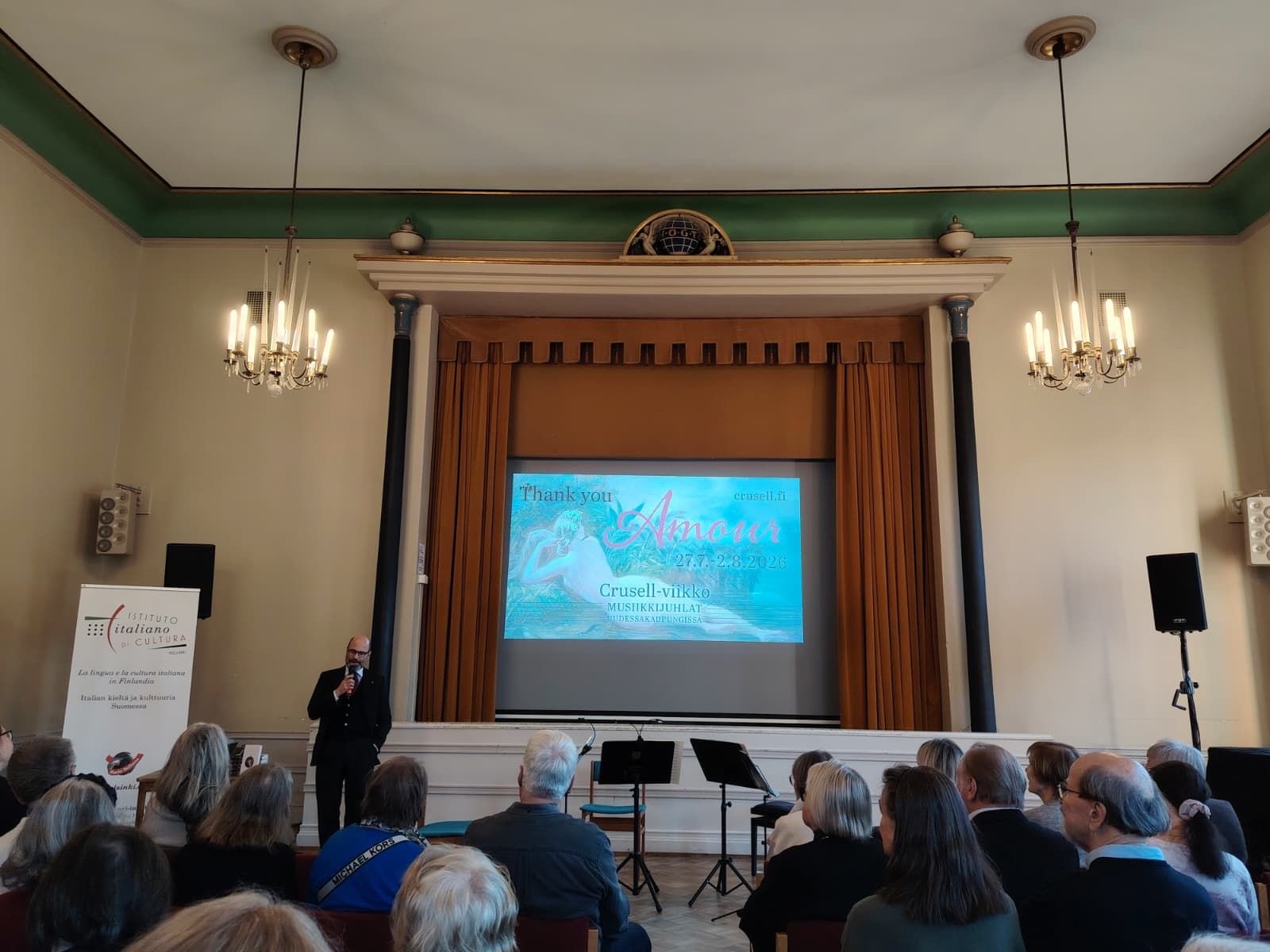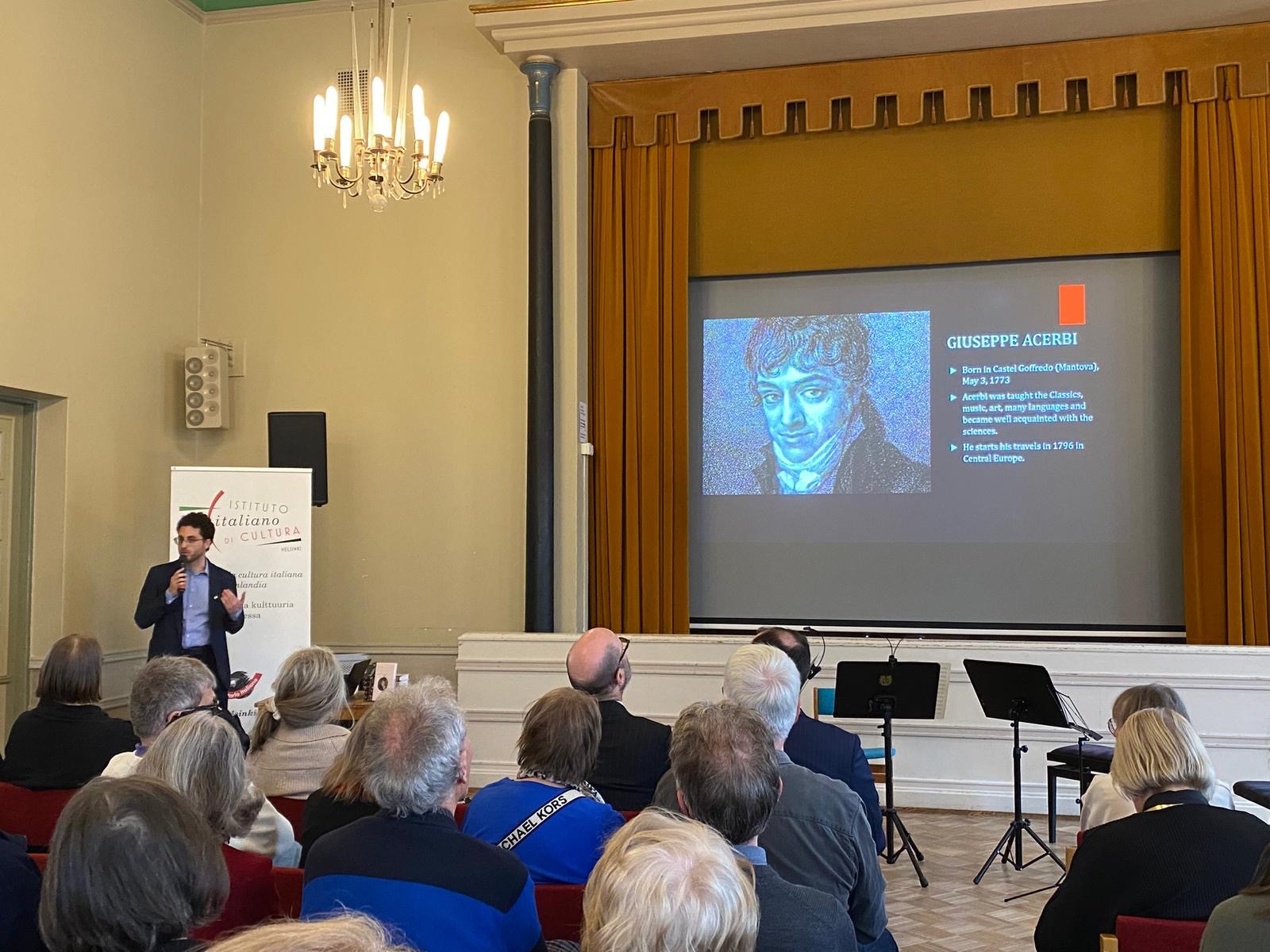
The figure of Giuseppe Acerbi (1773–1846), a native of Mantua—Enlightenment intellectual, geographer, explorer, diplomat and composer, and the first Italian to reach the North Cape overland in 1799—was at the centre of last evening’s concert-lecture “Echoes Beyond Borders”, promoted by the Italian Cultural Institute in the framework of the Italian Research Day in the World (GRIM).
Acerbi’s travel account, published in London in 1802 and promptly translated into German, French and Dutch, was among the earliest European testimonies on the Far North and laid the foundations for the scientific and ethnographic exploration of Finnish and Lappish territories.
The event offered a renewed reading of Acerbi’s scientific legacy, also highlighting his cultural impact in the fields of historical-linguistic research and music, with the performance of a clarinet quartet composed by Acerbi himself during a stay in Oulu, then the last inhabited settlement on the edge of the Arctic Circle. A quintessential European intellectual, Acerbi was in dialogue with leading Enlightenment figures and artists of his time, including Bernhard Henrik Crusell, the most prominent Finnish composer prior to Jean Sibelius. Their relationship gave rise to compositions performed by musicians of the Finnish Radio Symphony Orchestra, including clarinettist Giuseppe Gentile. Janne Palkisto, Crusell’s biographer, together with Mattia Retta, a doctoral candidate at the University of Helsinki, led a discussion on the circulation of ideas and the exchange of scientific and cultural experiences which, today as in the Enlightenment, remain a vital driver of research and a source of friendship among European nations.