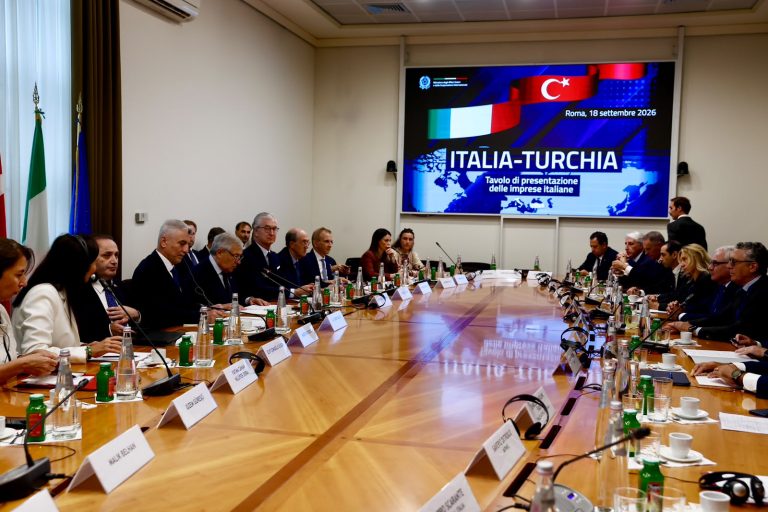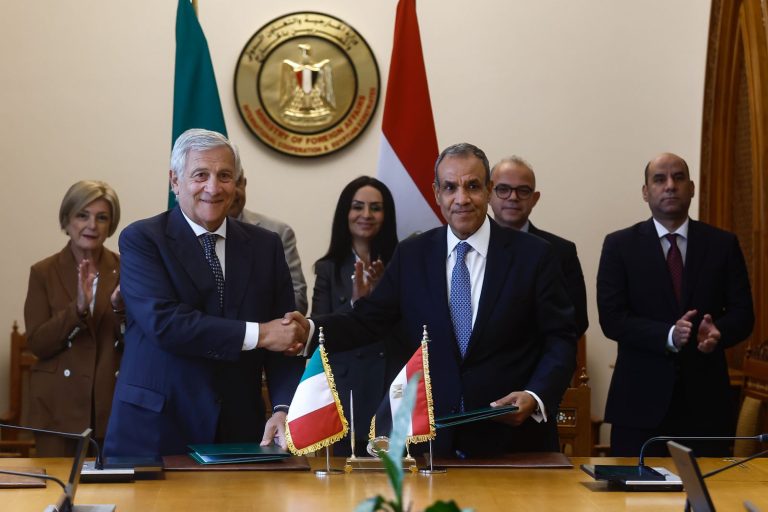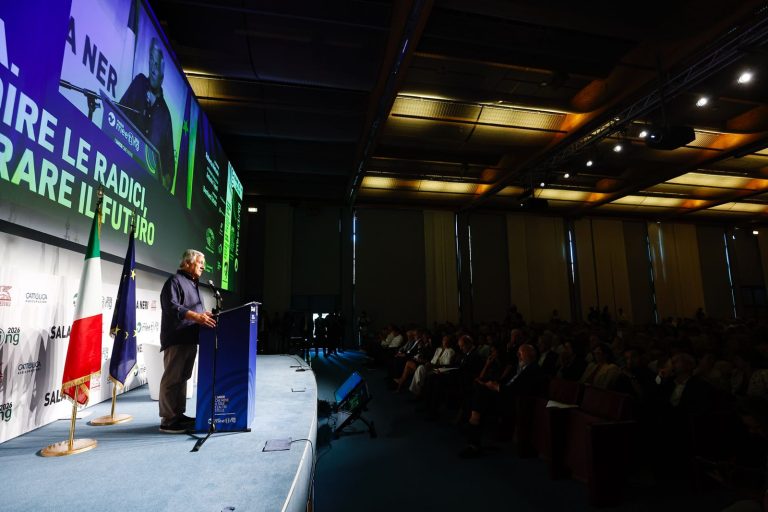
“Do you know why the meeting of the Global Alliance on the Two-State Solution is taking place in Rome? And why will the meeting between Israel and Lebanon, on 4 August, also be hosted here? Because Italy has excellent relations with everyone: Israelis, Lebanese, Palestinians, Americans, Syrians and the Gulf countries. And with Iran, with whom we continue to engage. They recognise the role our country plays.” Antonio Tajani is attempting to piece together the various crises, which are, however, linked by the common thread of global instability. The air conditioning at the Farnesina is very strong. The minister is drinking tea and eating Turkish biscuits.
You are talking about a diplomatic path. In the West Bank, however, there is an ongoing escalation by the settlers. They operate like militias, often under the protection of the IDF. How can we stop them?
“It’s not easy, if the Israeli government lets them do it. Some of Netanyahu’s extremist ministers support them: just think of Ben Gvir. We pushed for sanctions. We condemn the settlers, their acts of violence and what they do to Palestinian civilians. And we are opposed to any annexation of the West Bank. We will sign a document with the Saudis condemning the attacks by Israeli settlers. And the leaders of the E4 – Italy, France, Germany and the United Kingdom – could do the same.”
A strong move against Netanyahu.
“Being a friend of Israel and defending its right to exist does not mean justifying the violence perpetrated by settlers, which undermines the country’s position and image. We won’t give up, despite the difficulties. We are in favour of ‘two peoples, two States’. Israel is aware of our position, and this does not prevent it from taking part, alongside Lebanon, in the Rome summit.”
It is, however, unlikely that Netanyahu will be able to keep the settlers – who are backed by the government – in check, at least until the next elections in October.
“We must wait for the Israeli elections in October, bearing in mind that many are already talking about a government of national unity: this development could really change the situation. There are signs of this.”
Last September, France recognised the State of Palestine at the UN.
Is it Italy’s turn this year?
“To recognise it, you need to have a Palestinian State. Today, it does not exist because Hamas governs Gaza. So then: what is the Palestinian State? Now is not the time to recognise it; instead, we must work to build it for real. ‘We are in favour of that.”
Italy, however, remains excluded from the Gaza Board of Peace – the one in which you took part, amidst some controversy.
“We’re just observers. And anyway, speaking of that famous red cap they gave me: I accepted it out of politeness, but I left it there, in America.”
After UNIFIL, will we have Italian troops in Lebanon?
“We are prepared to take part in an international mission under the UN or European Union flag from 1 January. We are working on this with the French.”
What will come out of the talks between the Israelis and the Lebanese in Rome? A withdrawal by Israel from Lebanese territory?
“We are working on this. Ultimately, the aim is for Israeli troops to withdraw and for Hezbollah to lay down the arms, returning to its role as a political party. Of course, Iran remains the key: if it does not rein in its proxies – Hamas, the Houthis and, indeed, Hezbollah – it will be difficult. We need to strike a balance between force and diplomacy.”
At the end of this path, do you envisage Rome hosting a peace agreement between Israel and Lebanon?
“We are always ready to play a role in bringing peace to the Middle East.”
What is our ‘red line’ regarding the naval mission in Hormuz? And did the Americans ask you to move closer to the area even before a proper ceasefire had been established?
“At present, there has been no such request. We would, however, like to reiterate that we will take part in any mine clearance mission once there is a genuine ceasefire. We are not going there to wage war.”
Are you worried that the other Straits might be closed?
“To be honest, I can see some positive signs. Oil prices have fallen over the last two days. There are some signs of dialogue. Not least because the alternative – a new energy crisis – must be avoided at all costs: it would affect oil, gas and fertilisers, and would be extremely damaging to the global economy.”
Yesterday you allocated EUR 140 million for excise duties. Will you renew this measure after 6 August?
“On 4 August there will be another Council of Ministers, and we will see whether further action is needed. We will do whatever is necessary. But if the price of oil falls, as we hope it will, there will be no further measures. I have also proposed a EUR 300 fuel allowance for private-sector workers with an income of less than EUR 50,000.”
Let’s move on to Safe. How much will we ask the EU for rearmament?
“We have secured an option for EUR 14.9 billion. We are currently deciding how much of that we will take: I would say between EUR 6 and 9 billion in 2027. The political decision could be taken in September.”
In the meantime, however, the Lega says: it’s not up to Tajani to decide. Is there the green light from the Carroccio or not?
“I would remind you that was Minister Giorgetti who wrote the letter to secure the option on those funds. It would be better to make greater use of that type of funding rather than government bonds.”
Let’s turn to Ukraine. Will deep strikes against Moscow force Putin to negotiate?
“From a political point of view, Putin has lost the war. After four years, he controls 18 per cent of the territory. He must seek negotiations. Not least because what is happening should not be underestimated: yesterday, Moscow was attacked. Putin started the war and is unable to win it, nor can he prevent the capital from being struck. This creates instability.”
Will Italy launch an aid package for Ukraine?
“We have already done everything we could, but we haven’t ruled it out. We continue to support Kyiv.”
Are you still sceptical about an agreement?
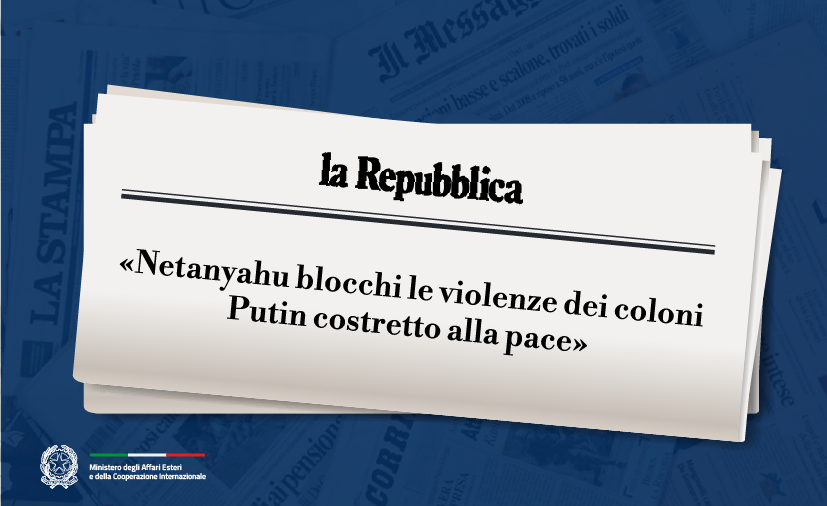
“I’m not convinced that Putin wants to rush things, but in the end, he’ll be forced to make peace. The longer it goes on, the worse it gets. What’s more, by failing to provide answers to the Americans, he’s losing their support.”
If we were to summarise the government’s approach following the attacks faced by Trump, might we say: “Friends from now on, but keeping a safe distance from the tycoon?”
“The NATO summit in Ankara went well. Trump didn’t attack our allies. And he’s stopped making statements against Italy on social media. Ambassador Fertitta worked to mend fences, playing a valuable role. Incidentally, I can announce that on Friday in Brindisi we’ll be signing an agreement with the Americans on raw materials, which I’ll then finalise with Rubio. As for the rest…”.
Please, go ahead.
“When we say no, we mean no: on the Pope, on Greenland, on the war in Iran. We also believe in European defence. This means that we cannot simply make demands: we must commit to defending Europe on our own as well. If we want to be equal partners with the US, we must invest more.”