History of the Ministry of Foreign Affairs and International Cooperation – The Ministry from the Unification of Italy to Present Times
The Ministry of Foreign Affairs and International Cooperation is the body responsible for implementing the Government’s foreign policy, and its tasks are currently regulated by Article 12 of Legislative Decree No. 300 of July 30, 1999.
The current Ministry was preceded by the Secretariat of State for Foreign Affairs of the Kingdom of Sardinia. Only with the proclamation of the Albertine Statute of 1848 did a new era begin for the Secretariat, which started to take the name “Ministry of Foreign Affairs.”
Italy’s New Position on the International Scene
Over the years and with the strengthening of Italy’s unification, the Ministry gradually adapted and underwent various reorganizations, linked to the country’s evolution. The reorganization of the Administration, sanctioned by the Cavour Law of 1853 and based on a hierarchical pyramid model, was crucial. It was especially with the end of World War I, however, that the need to reorganize the State Administration in general was felt, including the Ministry of Foreign Affairs, whose responsibilities expanded as a result of Italy’s new position on the international scene.
The reorganization was undertaken by Minister Sforza, who, in 1920, structured the Ministry on a territorial basis – i.e. focusing the responsibilities of the various offices on the countries with which they dealt – because he believed it to be the best tool for managing international political relations.
The role of the Ministry’s administrative leadership was also enhanced, especially the position of Secretary General, both through the creation of a group of offices reporting directly to him and through the use of the Presidency of a series of Committees designated to operate in particularly important sectors.
The “Micro-Reforms” of the 1920s and 1930s
The advent of Fascism ushered in a series of “micro-reforms,” the most significant of which was the abolition of the office of Secretary General, a position that remained in place until August 1943. The centralizing tendencies of the three Fascist Ministers (Mussolini, Grandi, and Ciano) made it seem intolerable that the handling of the most important or confidential matters should be influenced by anyone other than the Minister.
Furthermore, the Ministry was divided by subject matters, replacing the geographical divisions established by Sforza.
The Ministerial structure was further changed with the arrival of Ciano at Palazzo Chigi, where the Foreign Ministry was located at the time. He wanted to emphasize the political direction of the country’s foreign relations and encouraged the gradual concentration of the most important activities in the Minister’s Cabinet.
The New Organisation after World War II
After the armistice of September 8, 1943, the entire administrative system, including the Ministry of Foreign Affairs, was affected by a deep crisis. However, the few officials who joined the King’s government in Brindisi managed to re-establish an organisation. In February 1944, the Foreign Ministry moved to Salerno, and in June, after the liberation of Rome, it moved back to its offices in Palazzo Chigi.
As soon as the Minister took office, the issue of reorganizing services arose: on July 15, 1944, Badoglio signed a Ministerial Decree establishing the Ministry’s structure and organisation.
Further changes were later made to the organization of the Central Administration, such as the division of subject matters formerly under the jurisdiction of the Ministry of Italian Africa among the various offices, and the establishment of the Directorate General for International Cooperation, as a result of Italian foreign policy and the importance of economic cooperation institutions.
Relocation to the Palazzo della Farnesina and Recent Reforms
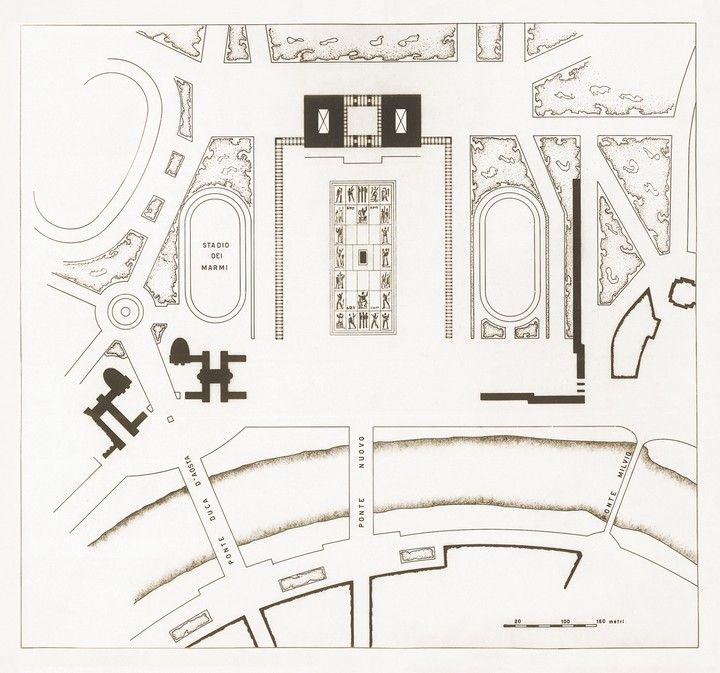
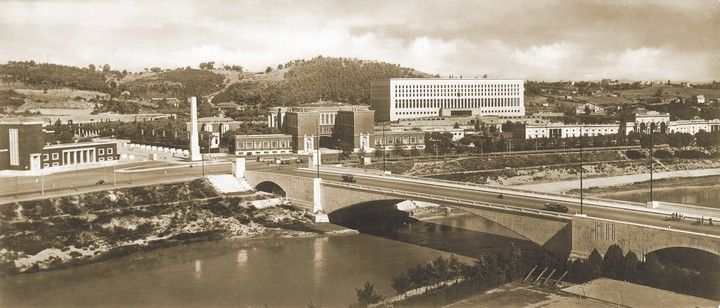
In 1959, the Ministry’s offices were relocated to their current headquarters, the Palazzo della Farnesina.
In 1967, Presidential Decree No. 18 of January 5, 1967 was issued, a comprehensive body of regulations governing the structure, functioning and staffing of the Foreign Ministry, with a structure organised by subject matters rather than by geographical areas.
It has recently been amended and updated. With a view to providing an adequate response to the country’s modern foreign policy needs, Law No. 109 of April 23, 2003 introduced substantial amendments to Presidential Decree No. 18 of 1967. The Decree of February 18 reformed the internal organisation of the offices, supplementing the traditional Directorates-General responsible for specific subject matters with new Directorates responsible for geographical areas, as well as creating a new Directorate responsible for administrative matters and the management of the Ministry’s budget.
The structures of the Administration underwent a further reorganisation by Presidential Decree No. 258 of December 19, 2007 and by Presidential Decree No. 95 of May 19, 2010.
With Law No. 125 of August 11, 2014, which comprehensively reformed the previous institutional framework for development cooperation and established the new Italian Agency for Development Cooperation (AICS), the Ministry adopted the name “Ministry of Foreign Affairs and International Cooperation”.
A further profound transformation and internal reorganisation of the Ministry of Foreign Affairs, based on criteria of simplification and innovation, with a renewed focus on services for citizens and companies, was also implemented by Presidential Decree No. 160 of September 3, 2025.