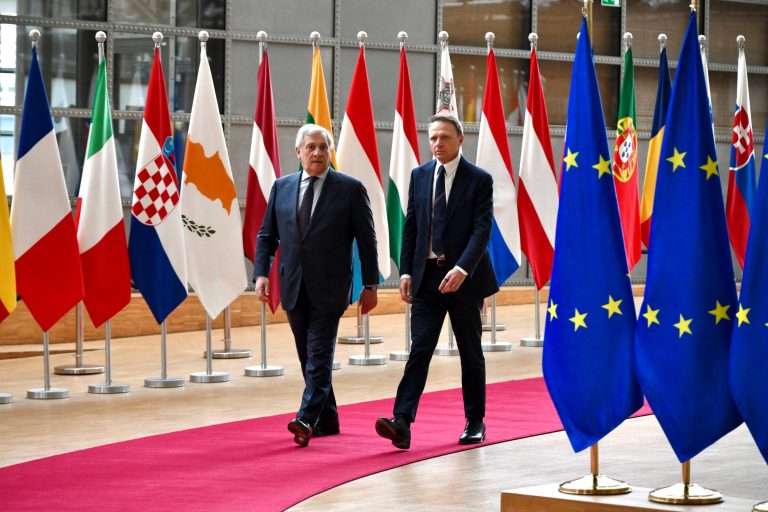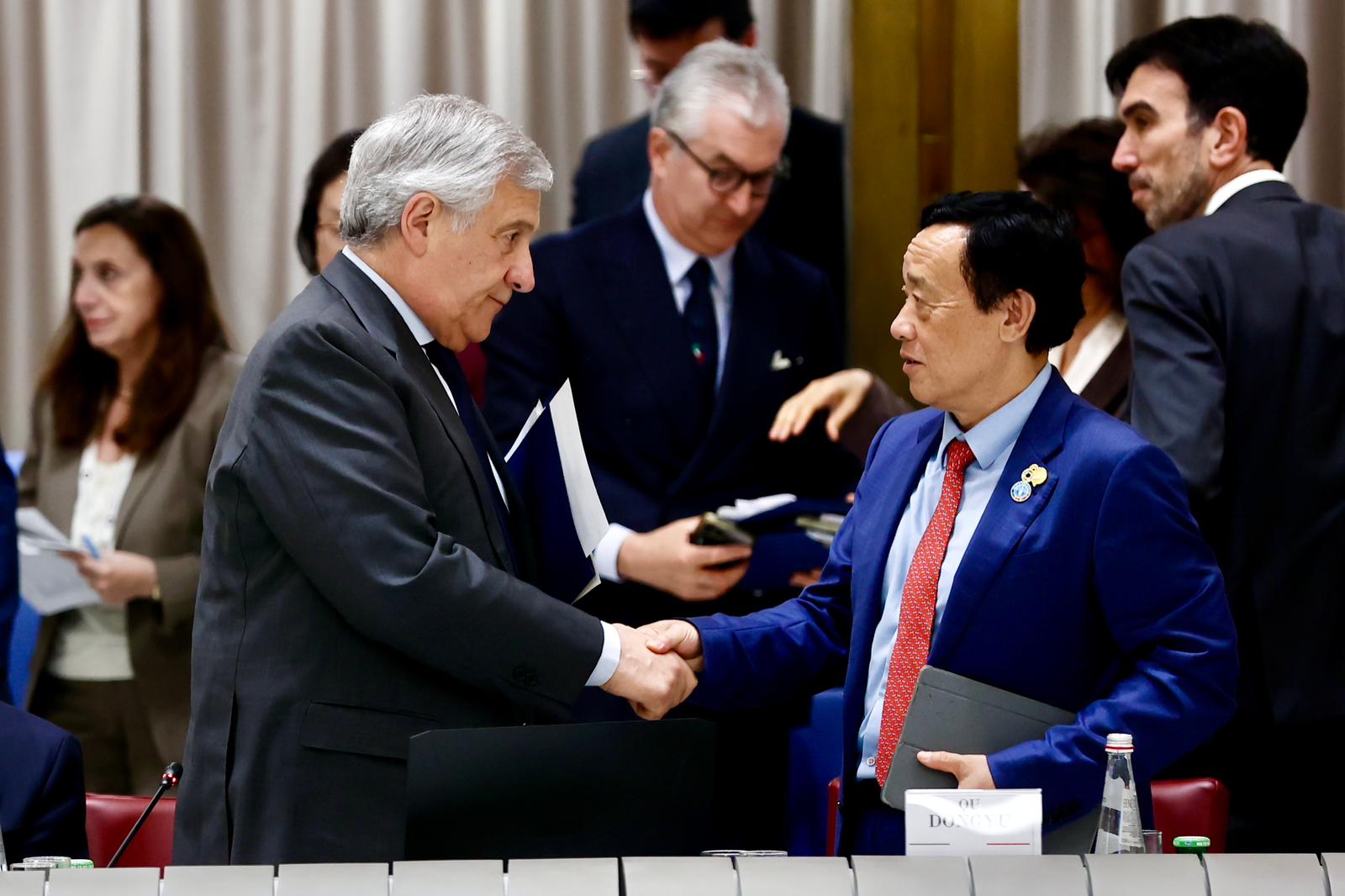
The Minister of Foreign Affairs and International Cooperation, Antonio Tajani, co-chaired today at the Farnesina, together with the Croatian Minister of Foreign and European Affairs, Gordan Grlić-Radman, in his capacity as rotating President of the MED9 group, a ministerial meeting to launch the new “Rome Coalition” on access to fertilisers and food security in the context of the crisis in the Strait of Hormuz. The meeting was attended in person, in addition to Minister Grlić-Radman, by the Director-General of the Food and Agriculture Organization, Qu Dongyu, accompanied by Deputy Director-General Maurizio Martina, as well as by around 40 countries and international organisations connected remotely, including the Gulf Cooperation Council (GCC), the Arab League and the United Nations Office for Project Services (UNOPS), reflecting the broad interest in and global relevance of the initiative.
As highlighted by Minister Tajani, the Rome Coalition is conceived as an inclusive platform for dialogue and cooperation among the countries most concerned, with the aim of promoting the continuity of supply flows, improving access to fertilisers and strengthening the resilience of agri-food systems. Recent disruptions and risks to freedom of navigation along strategic maritime routes, particularly in Hormuz, are already producing a domino effect on global supply chains, with direct repercussions on the availability and prices of food products and agricultural inputs, including fertilisers.
The Minister underlined how these dynamics further exacerbate global food insecurity, disproportionately affecting the most vulnerable countries, especially in Africa, where structural fragilities, climate pressures and a high dependence on food imports heighten the risk of socio-economic and humanitarian instability. The consequences are also reflected in migration dynamics, with potential significant impacts on neighbouring regions, including Europe.
The meeting provided an initial high-level political opportunity to discuss possible common lines of action, promote strengthened partnerships and support a multilateral approach to emerging challenges. The Rome Coalition forms part of the MED9++ framework, aimed at enhancing the role of the wider Mediterranean as a strategic space for dialogue, cooperation and convergence between Europe, the Arab world and the Western Balkans. A format which Minister Tajani proposed to make permanent.