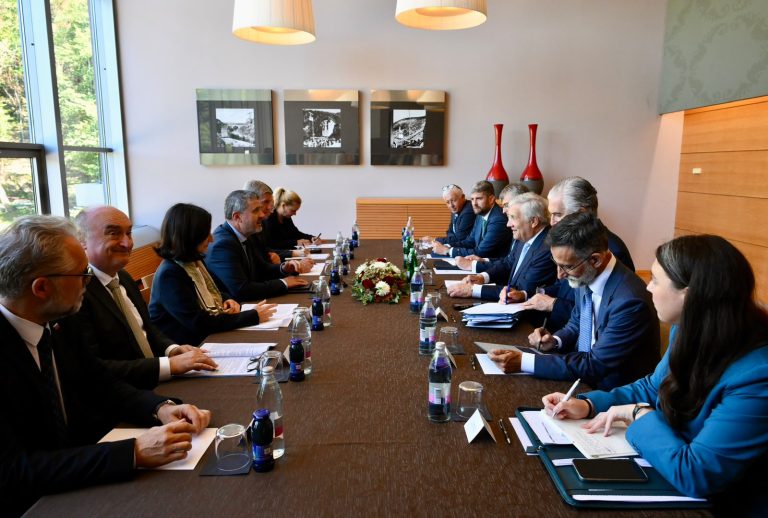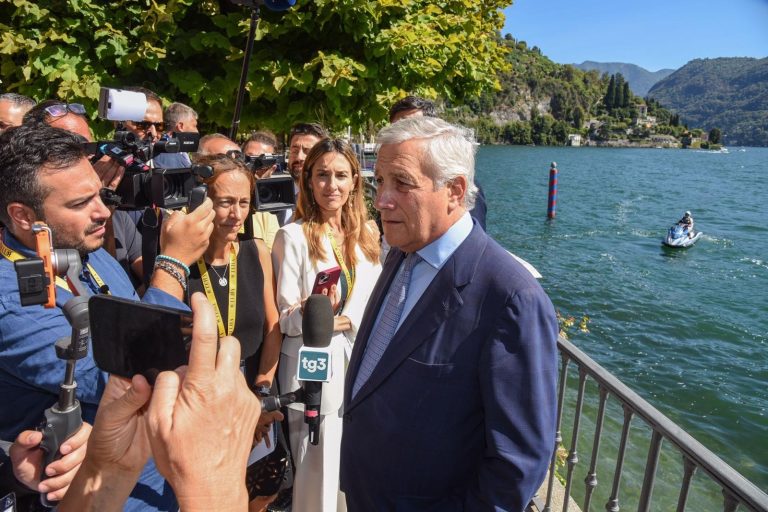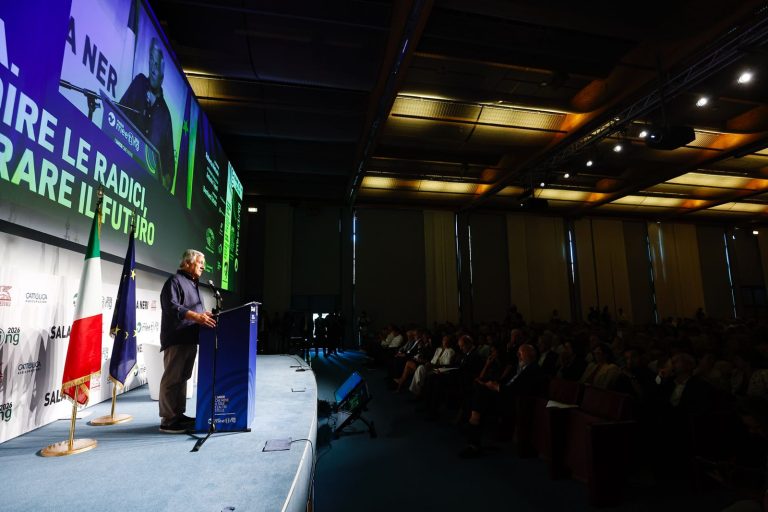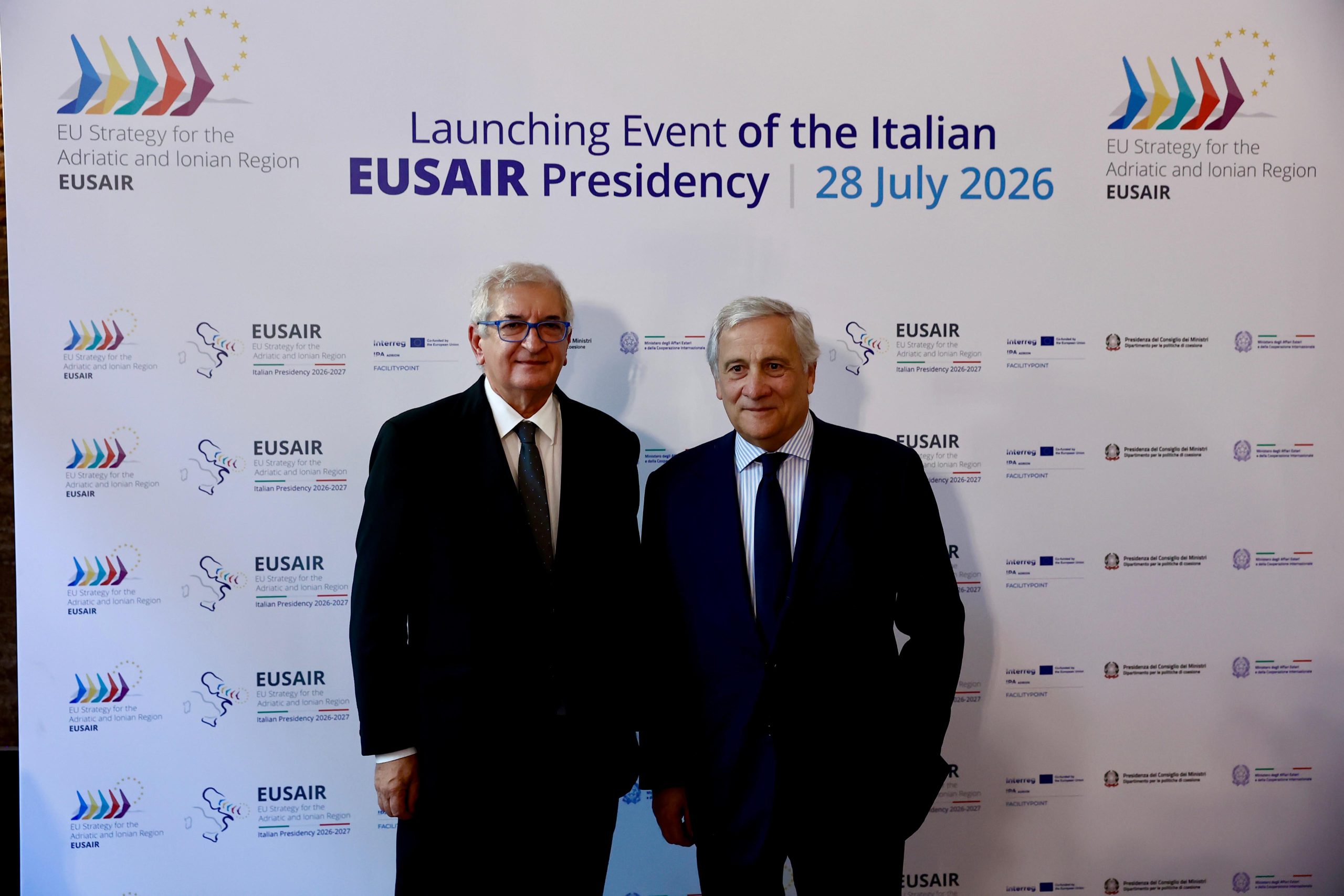
The Minister of Foreign Affairs, Antonio Tajani, and the Minister for European Affairs, the National Recovery and Resilience Plan (NRRP) and Cohesion Policy, Tommaso Foti, opened the launch event for the Italian Presidency of the EU Strategy for the Adriatic-Ionian Region (EUSAIR) at the Unioncamere headquarters. The event marks the official start of Italian Presidency of the Strategy (1 June 2026 – 30 May 2027), with a mandate focused on revitalising regional cooperation, strengthening infrastructure connectivity and energy networks, developing the blue economy, and supporting the European integration of the Western Balkans.
The EUSAIR is now playing an increasingly central role in light of changes in the geopolitical landscape and the European Union’s enlargement process. This was the message that emerged from the speech by Tommaso Foti, Minister for European Affairs, the National Recovery and Resilience Plan (NRRP) and Cohesion Policy, who identified this as one of the strategic priorities in the Western Balkan countries’ path to accession, emphasising that those states which have invested most heavily in the European integration process in recent years must have their commitment recognised. Among the topics discussed were the ‘Right to remain’, the climate emergency, the protection of the rule of law and the demographic challenge. In conclusion, Minister Foti identified the digital revolution, the energy transition and the upgrading of transport infrastructure as the key strategic factors for the future of the Adriatic-Ionian region, reaffirming its central role in the European Union’s prospects for development and cooperation.
Minister Tajani reiterated the priority of reuniting the Western Balkans with the European family, highlighting the important role of EUSAIR in this context, in synergy with Italy’s work in forums such as the Adriatic-Ionian Initiative (AII) and the Central European Initiative (CEI). The Minister of Foreign Affairs then confirmed support for projects such as IMEC, Corridor VIII, Corridor X, and the Trieste–Ljubljana–Zagreb–Belgrade railway line – initiatives that are fundamental to the diversification of trade routes and the integration of energy markets, alongside the revitalisation of port cooperation in the Northern Adriatic – Trieste, Koper and Rijeka – which remains at the heart of the Italian Presidency’s agenda. The EU Strategy for the Adriatic-Ionian Region (EUSAIR), launched by the European Union in 2014, is one of the EU’s four macro-regional strategies, alongside those for the Alps, the Danube and the Baltic Sea. These strategies promote a coordinated management of funding and resources provided by the EU and the Member States to encourage the sustainable development of the areas concerned.
The proceedings, moderated by Annamaria Esposito, Rai News 24 Assistant Foreign Editor, featured a speech by the Executive Vice-President of the European Commission and European Commissioner for Regional and Cohesion Policy, Regional Development, Cities and Reforms, Raffaele Fitto, and the Secretary-General of Unioncamere, Giuseppe Tripoli, as well as contributions from the main regions supporting the EUSAIR Strategy (Friuli-Venezia Giulia, Marche) and the Member States of the Strategy (in addition to Italy, Slovenia, Croatia, Serbia, North Macedonia, Montenegro, Bosnia and Herzegovina, Albania, Greece and San Marino).