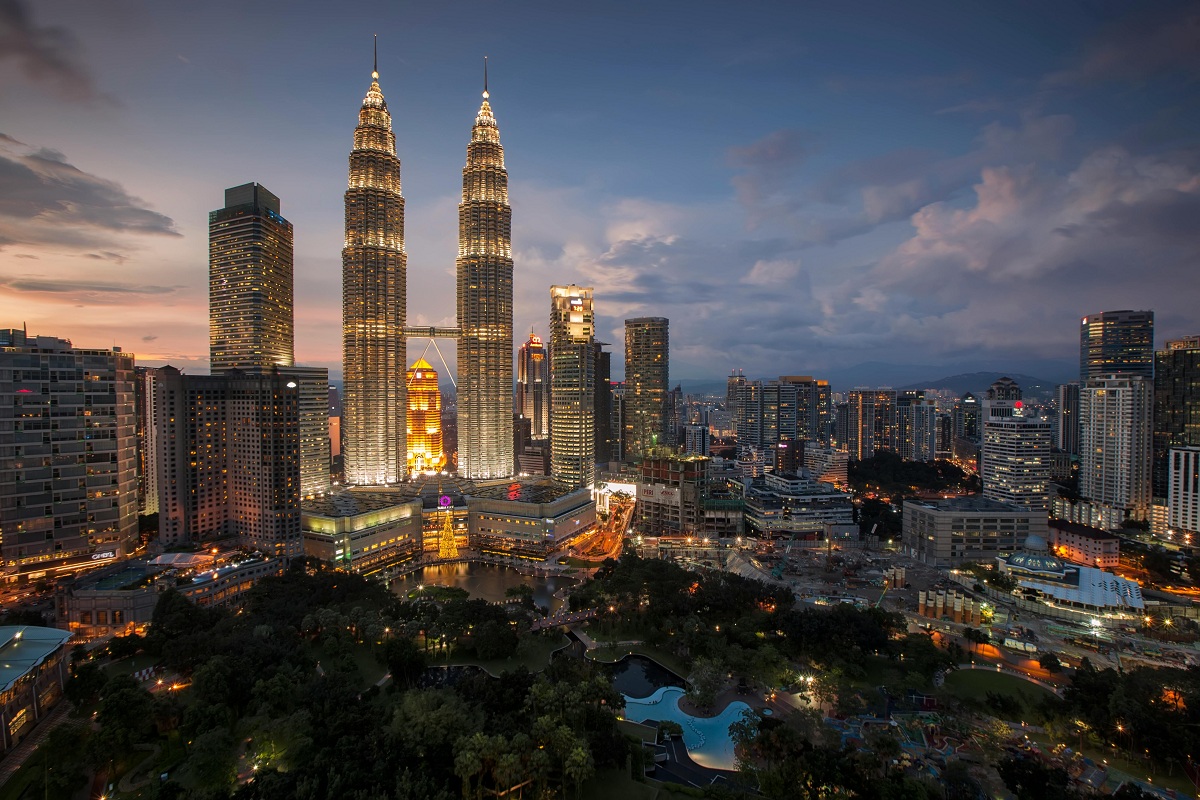
Strategically positioned, rich in natural resources, and with an eye on advanced industry, Malaysia has long been establishing itself as an ideal “bridge” for the entire Southeast Asia region. Despite internal challenges and rapidly evolving global environments, the country’s economy, with nearly 36 million inhabitants, has shown resilience, with growth forecast at 4% by 2026.
Malaysia’s economic engine, which is strongly export-oriented, has traditionally been fuelled by oil and gas (it is the region’s second-largest oil producer and the world’s third-largest producer of liquefied natural gas) and palm oil (the world’s second-largest producer). Today, however, the country is diversifying its economy, focusing on manufacturing (electronics, components, automotive) and services. Its strength in attracting foreign direct investment (FDI) lies in a combination of expanding infrastructure, low-cost skilled labour, and tax incentives. Besides East Asia, the United States is Malaysia’s third-largest trading partner, as well as one of its largest investors, and the main destination for Malaysian exports. Within the European Union, Italy ranked among the top three suppliers – behind Germany and France – in the first seven months of 2025.
Malaysia has signed several bilateral free trade agreements with China, India, Pakistan, South Korea, Japan, Australia, and New Zealand. A major trading hub, Malaysia is a founding member of the Association of Southeast Asian Nations (ASEAN) and an integral part of key regional agreements, such as the Trans-Pacific Partnership (CPTPP) and the RCEP, which includes the ten ASEAN countries, as well as China, Japan, South Korea, Australia, and New Zealand. Relations with the European Union, however, are at a standstill: negotiations for a free trade agreement (FTA) have been stalled for years due to a dispute over palm oil, which the EU considers unsustainable, a move that Malaysia deems discriminatory.
Despite challenges, including dependence on raw material prices and the need for bureaucratic reform, the country is investing in key sectors for the future. These include major infrastructure projects such as the Pan Borneo Highway and the East Coast Rail Link, the development of the green economy (particularly photovoltaics and the exploitation of biomass from palm oil), and the aerospace industry, with the ambitious goal of achieving a turnover of €12.3 billion by 2030 and employing 32,000 people.
Trade with Italy
Italy perceives Malaysia as a crucial partner and strategic base in the region. Indeed, with exports of €1.7 billion in 2024 – a 23.4% increase compared to 2023 – it is the fourth-largest export market for Italian products in ASEAN. Overall, in the period from January to July 2025, Italy ranked as Malaysia’s 21st supplier and 22nd customer, while in 2024, total trade reached €3.1 billion, up 9.3% compared to the previous year. In the first eight months of 2025, trade continued to grow compared to the same period of the previous year (+2%), as did Italian exports, which exceeded €1.1 billion, up almost 5%.
In 2024 Italian exports to the country grew by over 23%, with a positive balance of €272 million, returning to positive territory after four years, primarily thanks to the digital and energy transition, advanced industrial equipment and robotics, transportation, and aerospace sectors. Indeed, Italy exports to Malaysia primarily electronic and optical equipment (the leading export class of products, with €257 million for the first six months of 2025), followed by industrial machinery (€183 million), manufactured goods (€98 million), and transportation equipment (€92 million).
The economic systems of the two countries are similar in many respects, both characterized by a strong manufacturing vocation, specialization in medium- and high-tech processes and products, and a network of small and medium-sized enterprises (SMEs). The Malaysian market offers considerable opportunities for joint productive investment for the local market and neighbouring countries. It is no coincidence that 150 Italian companies are present in Malaysia, including Leonardo, Maire-Tecnimont, Assicurazioni Generali, STMicroelectronics, Saipem, Mapei, Cementir, Alfagomma, and Maccaferri.
Italian FDI in Malaysia, which exceeded €2.5 billion in 2024, is expected to grow further in the coming years thanks to new projects, including those in energy, CCUS (Carbon Capture, Utilization, and Storage), hydrogen, advanced fuels, and aerospace.
A strategic partnership
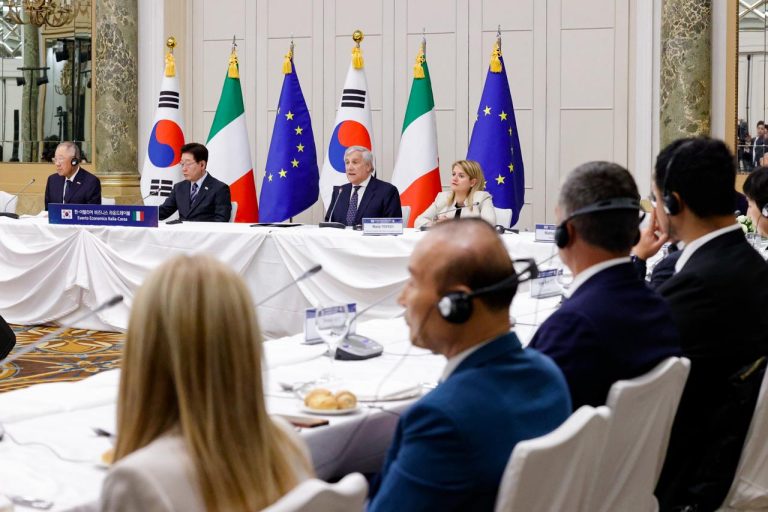
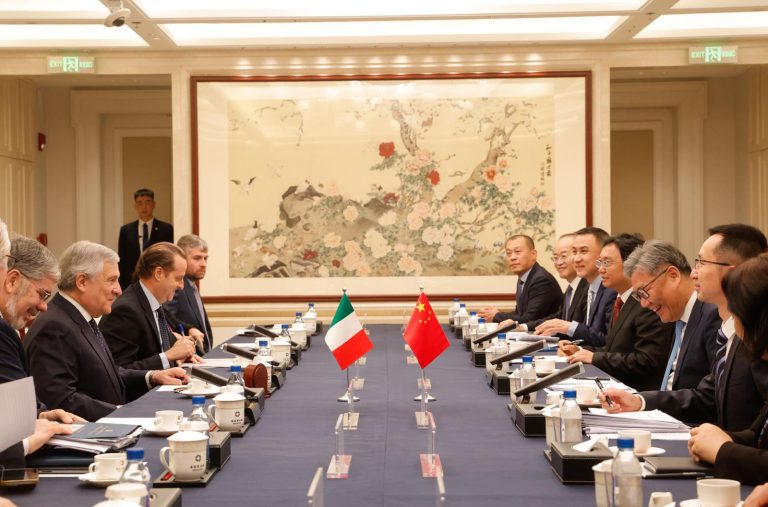
Italy’s readiness to strengthen its partnership with Malaysia through mutual investment, technology transfer, and industrial sustainability was the message conveyed by the first bilateral Business Forum, held in Rome in early July 2025, during the visit to Italy by Malaysian Prime Minister Anwar Ibrahim and a high-level Ministerial delegation.
Confirming Italy’s interest in greater collaboration with Malaysia, the Rome meeting was attended by more than 50 large Italian companies, business associations, and financial institutions, as well as 30 Malaysian firms.
This Forum of “collaboration and opportunity” – as defined by the Deputy Prime Minister and Minister of Foreign Affairs, Antonio Tajani – was held in the spirit of the new Plan for Italian Exports to Non-EU Markets, within which Malaysia is considered an attractive gateway to the largest market in Southeast Asia, already accounting for 15.8% of Italy’s total exports to the ASEAN region in the first quarter of 2025.
The Rome Forum highlighted the broad convergence on shared priorities between the two economies, such as the green transition, defence, microelectronics, supply chain, and advanced manufacturing. These are, in fact, some of the sectors that Malaysia intends to strengthen as part of its economic development plans, opening up many opportunities for Italian companies. The roundtable also discussed the relaunch of negotiations for an EU-Malaysia free trade agreement, currently in its second round, which is deemed crucial for Euro-Asian economic integration.
Interview with the Ambassador of Italy to Malaysia, Raffaele Langella
How do you explain Malaysia’s renewed interest in Made in Italy products, with a 25% jump in Italian exports to the country this year?
Malaysia is recording a tremendous interest in Made in Italy products. Our export figures demonstrate not only that Italian products continue to be seen as synonymous with quality and innovation, but also that there is significant untapped potential, both in terms of growing B2B contacts and expanding the retail customer base. It should also be noted that the number of Malaysian tourists choosing to spend their holidays in Italy is rising sharply and, upon returning home, they seek out Italian products in their country. As an Embassy, we are working intensively, together with the Italian Trade Agency (ITA) and the Italian Chamber of Commerce in Malaysia (ItalCham), to further strengthen the image of our country and our companies. We finally need to consider the current international trade environment, characterized by volatility and uncertainty. In this scenario, Malaysia presents itself as a sufficiently solid trading hub, strategically positioned in Southeast Asia, and characterized by a growth rate that continues to attract investors. This makes us confident in the contribution the Malaysian market can provide to the goal of diversifying Italian exports towards non-EU markets and achieving the global export target of €700 billion by the end of 2027, as announced by Minister Tajani.
Are there specific sectors where further qualitative leaps can be made for Italian exports to Malaysia?
The roundtable discussion on the Italian-Malaysian economic partnership held in Rome last July confirmed the two governments’ strong focus on revitalizing bilateral trade and industrial ties, starting with the energy, advanced machinery, infrastructure, and defence sectors. We are seeing fast and concrete developments in these areas. Our companies are ready to invest because they see good market conditions and a growing interest from Malaysia in developing new industrial partnerships. Consider, for example, investment in the energy transition linked to the ASEAN Smart Grid project. In addition to the sectors I mentioned, I would also like to recall the great importance of our exports in specific areas such as motorcycles. The promotional event held at the end of October by the Italian Trade Agency (ITA) and the main operators in the motorcycle industry, on the sidelines of the Sepang MotoGP, showed very positive signs of Italian-Malaysian trade dynamism in this sector.
In your opinion, what are the projects and strategic plans currently underway or about to be implemented in Malaysia that could provide the greatest opportunities for collaboration and investment for Italian companies?
We are closely monitoring the projects of several Italian companies in Malaysia and are seeing a very positive trend in investment growth. One of these, which is certainly very significant, is the Pengerang Biorefinery, a major industrial project managed by ENI through a joint venture with Petronas and Euglena. Construction of this facility in southern Peninsular Malaysia has recently broken ground. It will be operational by 2028, with a capacity to process up to 650,000 tons of renewable feedstock per year for the production of sustainable aviation fuel, HVO diesel, and bio-naphtha. On November 3, ENI itself signed an agreement with Petronas to establish an independent, equally-held company (“NewCo”) through the integration of their respective upstream assets in Indonesia and Malaysia. These are very significant steps that demonstrate the depth of Italian-Malaysian industrial collaboration in the energy sector.