Behind the surge in Italian exports lies (in part) a Ministry of Foreign Affairs which, thanks to a substantial (and probably cultural) reform introduced at the start of the year, is increasingly supporting companies looking to international markets. “Our embassies should not be places where receptions with canapés and pastries are held, but operational centres from which action is taken to support all businesses. No Italian company looking to explore opportunities abroad can or should be left to its own devices.”
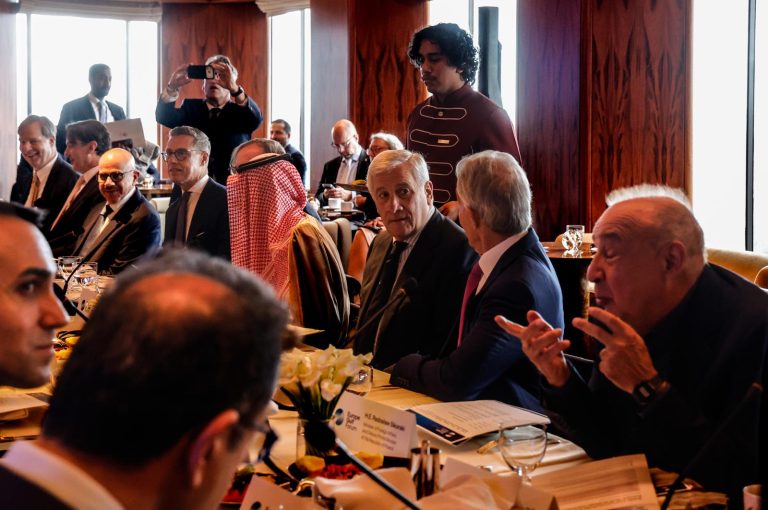
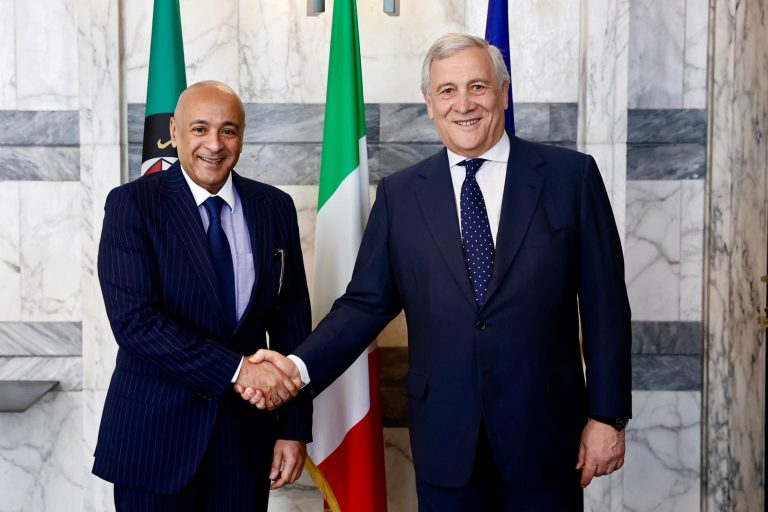
On the flight taking him to Cairo – accompanied by the Minister for Labour, Marina Calderone, and the Minister for the Environment and Energy Security, Gilberto Pichetto Fratin – on a day packed with engagements that will see him involved in a face-to-face meeting with Egyptian President Abdel Fattah al-Sisi and Minister of Foreign Affairs Badr Abdelatty, in the proceedings of the Italian-Egyptian Joint Committee and in those of the Italy-Egypt Business Forum attended by over a hundred Italian companies, the Deputy Prime Minister and Minister of Foreign Affairs, Antonio Tajani, explains what lies behind an export sector which, despite the many geopolitical uncertainties – not least the crisis in the Middle East – continues to thrive.
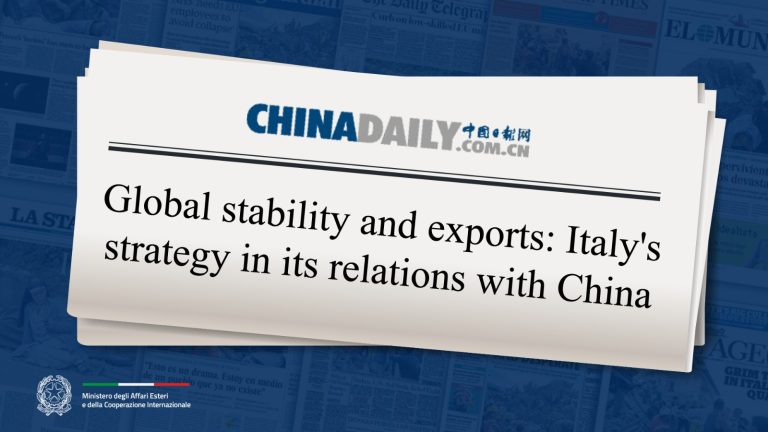
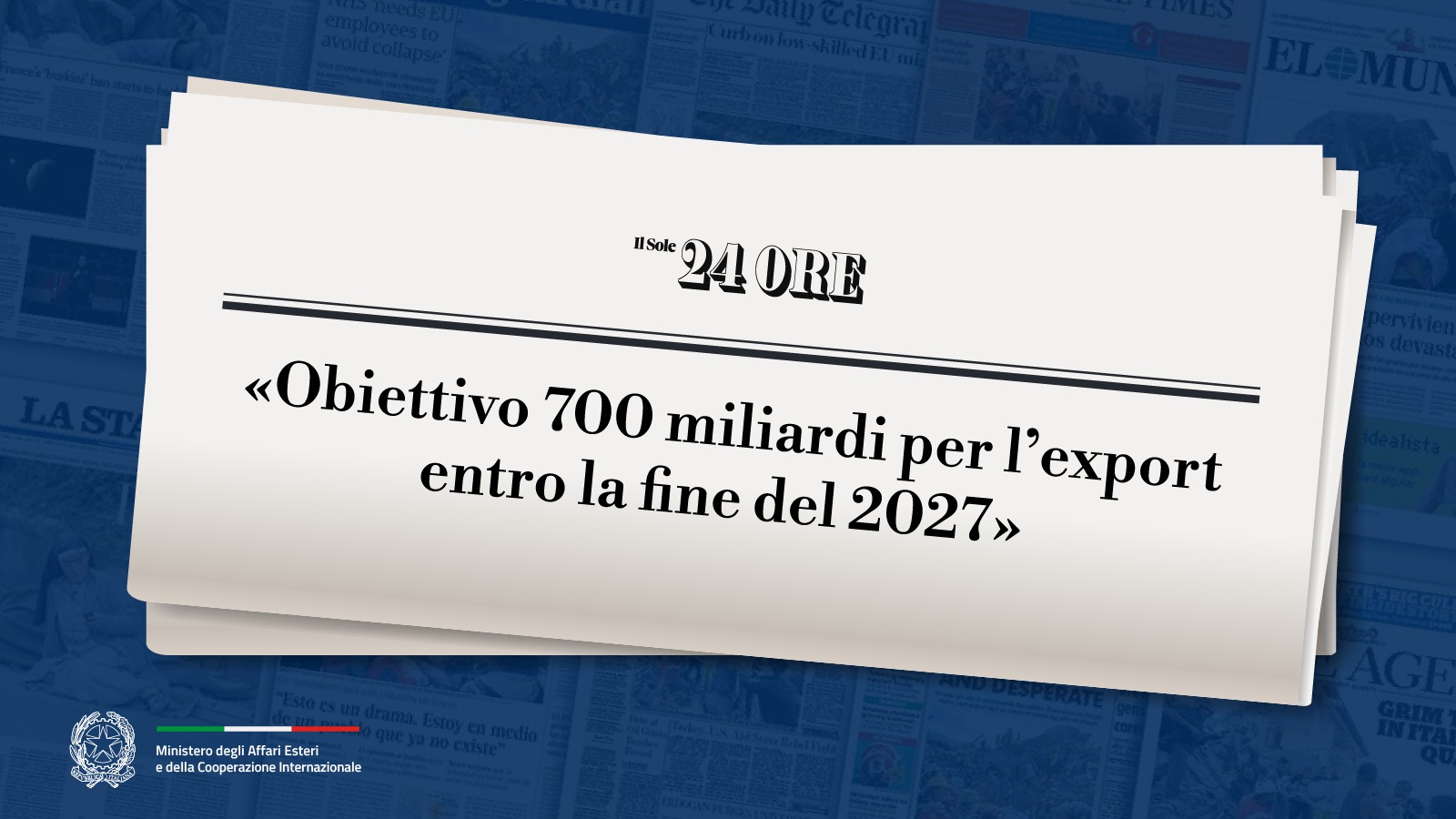
“In these first four years of government, exports have been – and continue to be – one of the flagship achievements of the government’s policy,” he emphasises. “We have reached EUR 650 billion, which is a record, and the aim is to reach EUR 700 billion by the end of next year. This means that exports currently account for between 30 and 40 per cent of Italy’s Gross Domestic Product (GDP). As we are the second-largest industrial power in Europe and have become the world’s fourth-largest trading power, we wanted to develop a strategy for our exports.”
What were the key stages?
“The starting point was an ‘Action Plan’ focused on diversification. Because the tariff war has changed the game. Whilst continuing to focus on the United States and Europe, where we are growing through exports, we have decided to support businesses in other regions too, from Africa to Asia and Latin America.”
Today it’s Egypt’s turn.
“In the first six months of this year, exports to this country rose by 1.7 per cent. The Suez Canal is vital to the Egyptian economy, but it is also of extraordinary importance to us, as 40 per cent of Italian maritime traffic passes through Suez and the Red Sea. These are cargo ships bound for the Middle East or Africa. This also explains the synergy with the other ministries. For example, with the Ministry of Defence, starting with the Aspides mission, which is designed to protect our exports.”
Then there is the issue of migrants.
“We want to strengthen channels for regular migration, focusing in particular on investing in training for young people and skills development. A sector we are strongly focusing on is technical and vocational training, in line with the Mattei Plan, whilst also drawing on the Italian experience of the ITS Academies (Higher Technological Institutes). We already have some concrete examples. The Don Bosco Institute in Cairo is the only Italian school abroad involved in the pilot scheme for the 4+2 technical and vocational programme. Together with ITS Academy, universities and businesses in Italy and Egypt, we are developing programmes in strategic sectors such as mechatronics, biomedicine, pharmaceuticals, energy and life sciences.”
Companies—especially smaller ones—may encounter difficulties in the process of internationalisation. What steps did you take to come to their aid?
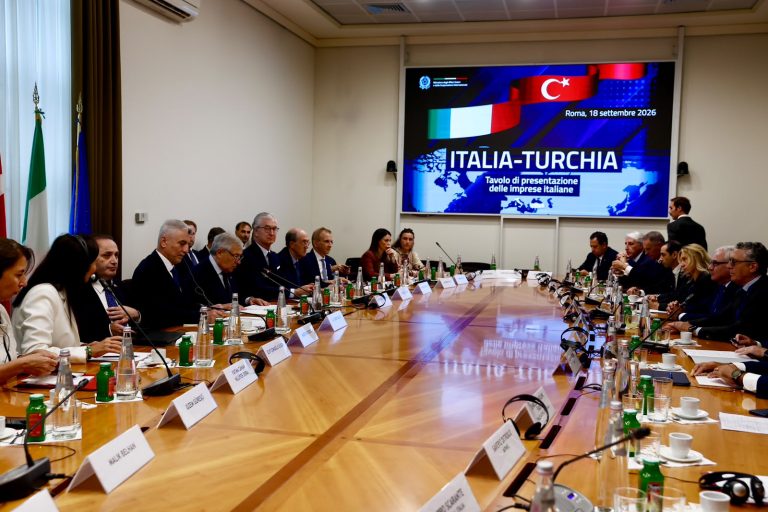
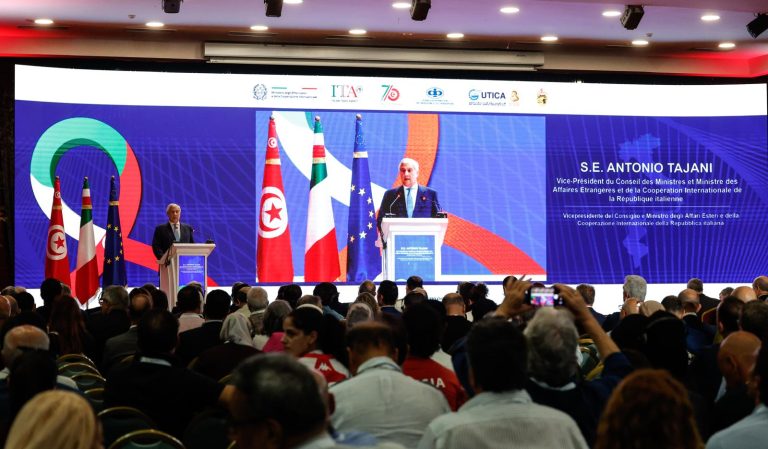
“Behind the surge in exports lies a genuine transformation of the Ministry of Foreign Affairs. The reform, which came into force in January, led to the creation, for the first time, of a Directorate-General for Growth, where men and women focus exclusively on exports and the internationalisation of businesses; they do so round the clock, as there is also an export operations room that works day and night to respond to businesses operating across different time zones. What’s more, we have organised hundreds of business forums. Today’s is just one example. Next week we’ll be in Brazil and Argentina (see article on page 4, ed.), then in mid-September we’ll be holding one in Santo Domingo. This involves all-round support for large, small and medium-sized countries to ensure that, thanks to the great flexibility and wide range of products that characterise ‘Made in Italy’, we can occupy as many markets as possible.”
There is no shortage of competition, particularly at a time like the present, when barriers and obstacles to international trade are proliferating.
“We have an ace up our sleeve: we are the country with the second-highest capacity in the world – after China – to bring a wide variety of products to market.”
However, if we act on our own, all this might not be enough.
“We are also working with other countries and with the European Commission to facilitate new agreements. I’m thinking of the one with India and the one with Bosnia and Herzegovina.”
The Meloni government, of which you are a leading member, has placed great emphasis on the Mattei Plan for Africa.
“Ultimately, the aim is to create the conditions to reduce irregular immigration and encourage regular immigration. The battle is also being fought on the training front: we aim to train young people with technical skills that make them attractive to our companies.”