The Ministry of Foreign Affairs and International Cooperation is in charge of implementing the Government’s foreign policy. Its duties are regulated by Article 12 of the Legislative Decree n. 300 of 30 July 1999.
The present Ministry’s forerunner was the Secretariat of State for Foreign Affairs of the Kingdom of Sardinia. When the Albertine Statute was promulgated in 1848, a new era began for the Secretariat and its name changed to “Ministry of Foreign Affairs”.
Over the years, as Italy became unified, the Ministry evolved along with the country’s legislation. A definitive step in this direction was taken with the 1853 Cavour Law that reorganised the national administration according to a pyramidal-hierarchical structure. With the end of the first world war, the need arose for an overall reorganisation of government, including the Ministry of Foreign Affairs, whose duties were expanded in accordance with Italy’s new international position.
This task was undertaken by Minister Carlo Sforza, who set up a geographic structure for the Ministry in 1920, concentrating the various departments’ responsibilities on the countries they dealt with, deemed the best way of monitoring international relations. The role of the Ministry’s administrative directors also received added recognition. The office of Secretary General, in particular, was assigned direct responsibility for a group of offices. Moreover, commission chairmanships were assigned duties in a number of important sectors.
The Fascist regime enacted a series of “micro-reforms”, including abolition of the office of Secretary General, which continued until August 1943. The three Fascist ministers (Mussolini, Grandi and Ciano) with their tendency to concentrate power found the influence of anyone but the Minister on major or reserved issues intolerable. In addition, the Ministry was divided according to sectors of competence rather than geographic areas as decreed earlier by Sforza.
The Ministry’s structure was further modified when Galeazzo Ciano took office in Palazzo Chigi, then the headquarters of the Ministry of Foreign Affairs. As Foreign Minister, he focused on the political direction of the country’s foreign relations. In addition, Ciano gave the Minister’s Cabinet a greatest role. After the armistice of 8 September 1943, the entire system of government, including the Ministry of Foreign Affairs, fell into deep crisis. The few officials who managed to reach the King’s government in Brindisi set up an organisation. In February 1944, the Ministry of Foreign Affairs was transferred to Brindisi, returning to its offices in Palazzo Chigi in June, after the liberation of Rome.
Once in place, the Ministry had to reorganise its services. To this end, Prime Minister Pietro Badoglio signed a ministerial decree with new Ministry regulations.
Later, other changes were made to the central government structure. These modifications included redistribution of the various offices that were formerly covered by the Ministry of Italian Africa, and creation of the Directorate General for International Cooperation, the latter a result of Italian foreign policy and the growing importance of economic collaboration institutes.
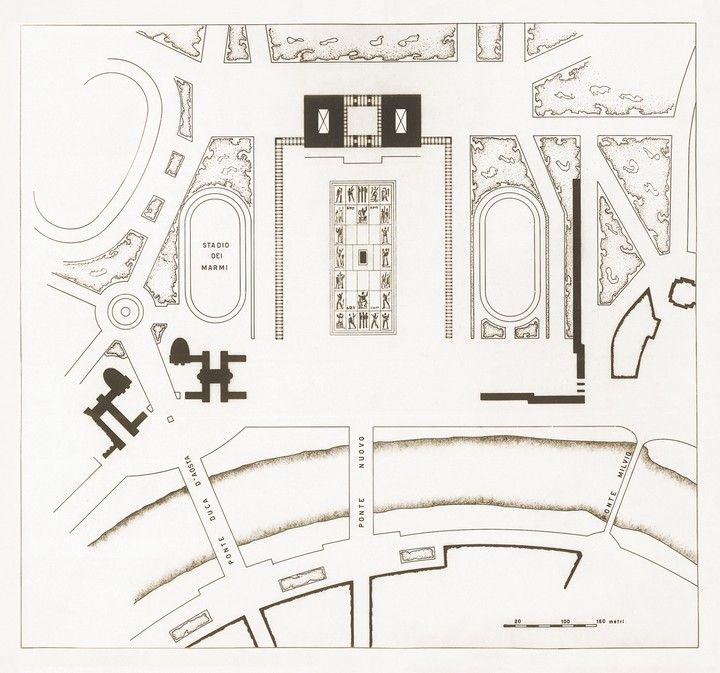
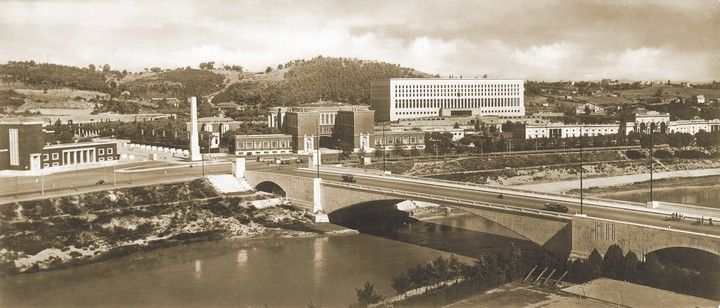
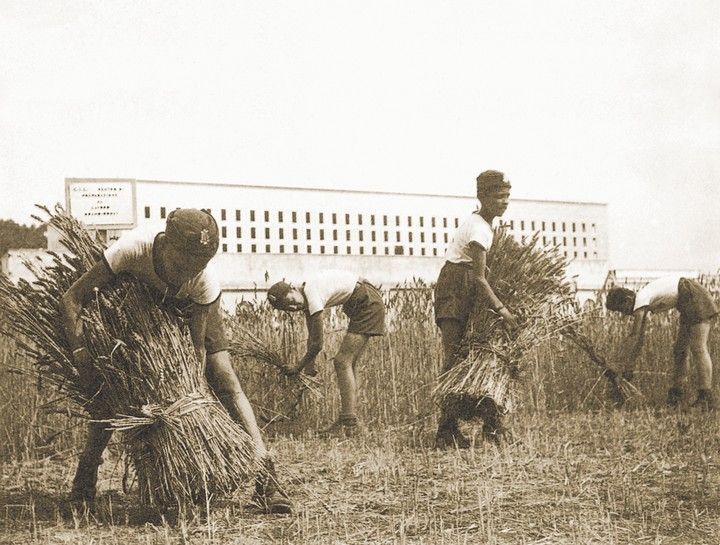
In 1959, the offices of the Ministry of Foreign Affairs were transferred to their present site in Palazzo della Farnesina.
In 1967, Presidential Decree n. 18 of 5 January was issued. The act contained a complete set of regulations regarding the structure, operations and personnel of the Ministry of Foreign Affairs, divided according to sectors of competence rather than geographic area.
These regulations were recently modified and updated. In 2003, in order to respond to the modern demands of the country’s foreign policy, Law n. 109 of 23 April 2003 made substantial changes to Presidential Decree n. 18 of 1967. In addition, a decree passed on 18 February 2003 reformed the organisation of Ministry offices. In this act, directorates general for geographic areas were added to those covering sectors of competence. The act also added a directorate general in charge of administrative matters and to manage the Ministry budget.
The Administration’s structures underwent further reorganization with Presidential Decree No. 258 of December 19, 2007, and with Presidential Decree No. 95 of May 19, 2010.
With Law No. 125 of August 11, 2014, which completely reformed the previous institutional structure of the development cooperation and established the new Italian Agency for Development Cooperation (AICS), the Ministry took the name “Ministry of Foreign Affairs and International Cooperation.”
A further profound internal transformation and reorganization of the Farnesina, aimed at boosting simplification and innovation, with a renewed focus on services to citizens and businesses, was also implemented with Presidential Decree No. 160 of September 3, 2025.