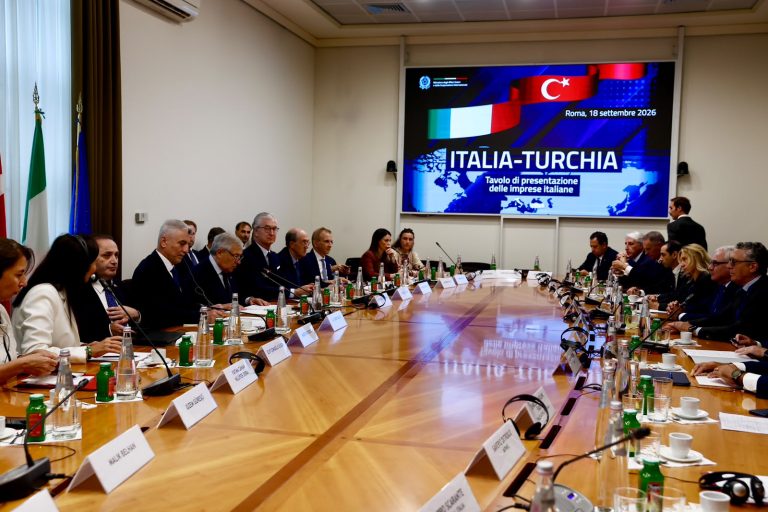
Welcome to the Ministry of Foreign Affairs for another working session dedicated to growth diplomacy. I thank the European Commission, particularly DG Trade, Commissioner Šefčovič and Deputy Director-General Redonnet for joining us in person and for their valuable contribution.
A special welcome to our companies and entrepreneurs. You are the focus of today’s discussions. We want to hear from you, understand your perspective and help you do your work even more effectively.
Market access is central to our diversification strategy. It is vital to many strategic sectors of Italian exports, ranging from food and agriculture to design and furniture. Our aim is simple: to overcome the barriers and obstacles that slow trade in our priority markets. This is a key objective for the Government.
We are working towards concrete results. I am thinking of the extensive work we have done in the United States to address anti-dumping duties on pasta and open the market to exports of new types of cured meat.
We also collect all reports from businesses through the new Export Operations Room, which operates around the clock.
We have strengthened the network of agricultural attachés at our Embassies in countries where we are working on major market access issues. I have decided to bring them together again on 5 November, along with the science attachés, to take stock and define our strategies for next year.
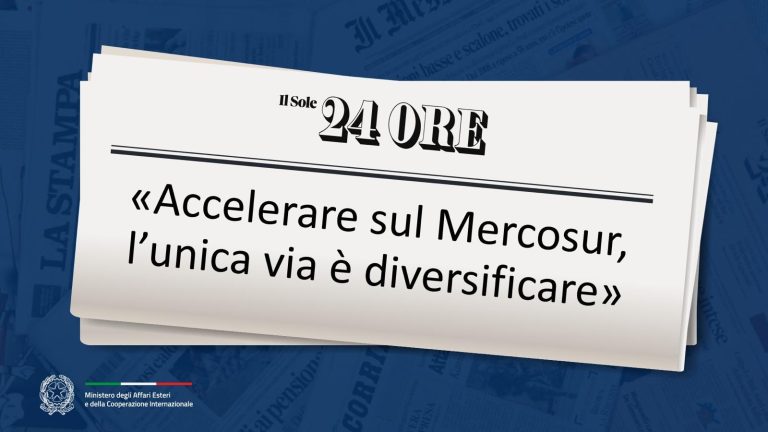
The EU–Mercosur agreement, in effect since 1 May, the agreement with Mexico, and those concluded at the technical level with India, Australia and Indonesia, are major achievements. Italy has consistently supported these agreements and kept market access at the heart of its efforts.
In 2025, Italian exports reached a record €643 billion. In the first seven months of 2026, exports grew by 4.6 per cent. Our goal is to reach €700 billion by 2027.
We are fully committed in all our priority markets. The Gulf is one example. That is the reason why, together with the European Commission, we will bring the Trade Ministers of the Gulf countries together here on 12 November.
We must promote the excellence of Italian know-how and expertise, while also ensuring that all our products can enter key markets.
This commitment goes hand in hand with the close attention we are paying to freedom of navigation, the security of supplies of energy, critical minerals and fertilisers, and the diversification of connections.
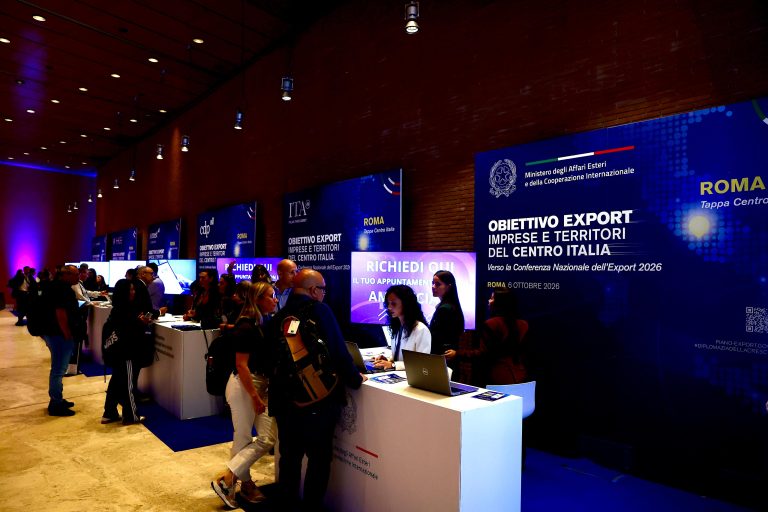
We always start by listening to the needs of local communities and businesses. We have held meetings in Turin, Bari and Rome to gather their views and demands. Our work continues, and I look forward to seeing you all in Milan on 17 December for the National Export Conference.
Thank you, I wish you all the best in your work!
Antonio Tajani