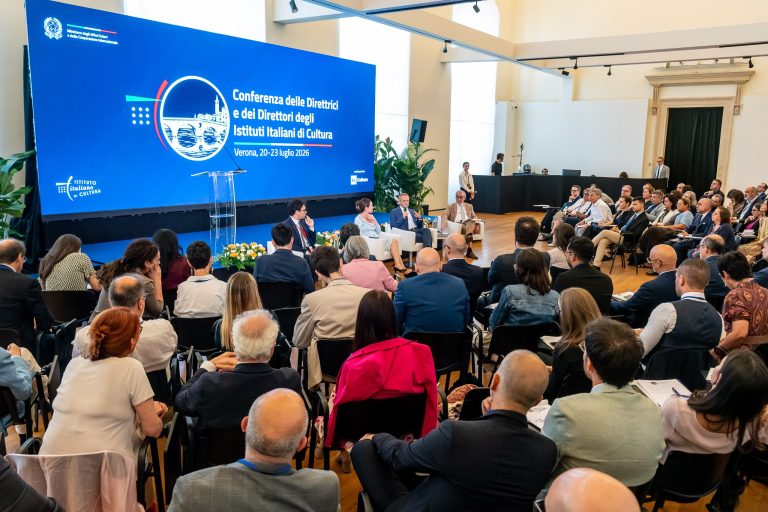
Italy is, first and foremost, a major cultural power. And it is precisely from this realisation that its presence in the world must begin.
The Italian Cultural Institutes are an essential part of this strategy. They are not merely an accessory to foreign policy, but one of its most effective expressions: they spread the language, convey Italian identity and promote what makes our country unique. Culture, in fact, is not just about books and the visual arts, but also about cuisine, music, design, craftsmanship, lifestyle and the ability to stay together.
When we champion the Mediterranean diet, we are not merely championing a dietary model: we are championing an essential part of our identity. And wine is also part of this identity; it is not merely a drink, but an integral part of Italian and Mediterranean culture, a social language, a convivial ritual, and a feature of our history stretching from ancient Rome through Christian tradition to the contemporary dining table. Attacking wine in the name of superficial slogans often means ignoring its cultural – as well as economic and symbolic – value to Italy.
Culture is also our music – pop music, but also folk music. To mark an event dedicated to ‘Tourism of the Roots’ – which forms part of our foreign policy aimed at attracting tourists of Italian origin to Italy, or Italians living abroad – we brought together the bands, which are an integral part of our identity.
This view of culture also has clear economic significance. In 2025, the cultural and creative industries generated 116 billion in added value. Our cultural sector is worth around EUR 310 billion, accounting for over 15 per cent of national wealth, and employs over 1.5 million people.
This year we are guests of honour at the Guadalajara Fair, which will be a great opportunity to showcase our identity to the hundreds of thousands of people who will be visiting the Fair.
Culture, therefore, is not merely a symbolic heritage: it is a tangible driver of development, employment and tourism.
This is why the Cultural Institutes are a piece of the great mosaic that is Italy in the world, and they must be fully integrated into the country’s economic diplomacy. Embassies, ITA, SIMEST, SACE and the cultural network must work in a coordinated manner, because promoting Italy around the world is not just about its image, but also about exports, the internationalisation of businesses and the ability to attract interest in our manufacturing and creative sectors.
This has also led to a specific political and administrative decision: the reform that transformed the Ministry of Foreign Affairs into a two-headed Ministry – with a political head and an economic head – has made it clear that cultural promotion is not separate from the country’s growth, but is an integral part of it. It is no coincidence that the Italian Cultural Institutes fall under the Directorate-General for Growth: a decision that recognises that culture and the economy must go hand in hand, as part of a unified strategy encompassing diplomacy, attracting investment, internationalisation and development.
But culture is also synonymous with dialogue. It is precisely for this reason that the event on 28 and 29 July in Rome takes on particular significance, where Italy and Saudi Arabia will chair a meeting of the Global Alliance on the Two-State Solution, with a strong focus on interfaith dialogue. This is an important step, as it confirms that culture can serve as a tool for peace, dialogue and the development of shared perspectives in one of the most sensitive contexts on the international stage.
The Italian language also remains another cornerstone of this global presence. It is not merely a means of communication, but a vehicle for charm, identity and appeal. The language courses organised by the Italian Cultural Institutes, together with initiatives dedicated to the Italian-speaking world, strengthen Italy’s presence and broaden its sphere of influence. Here, too, we can see how culture and diplomacy are inseparable.
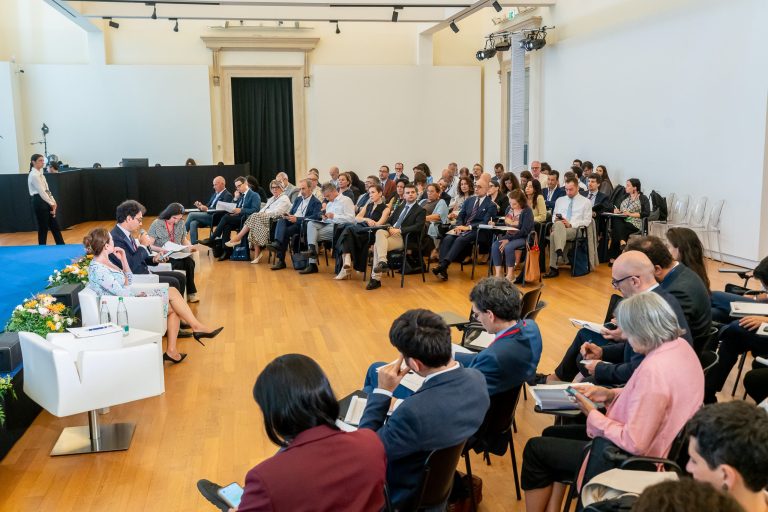
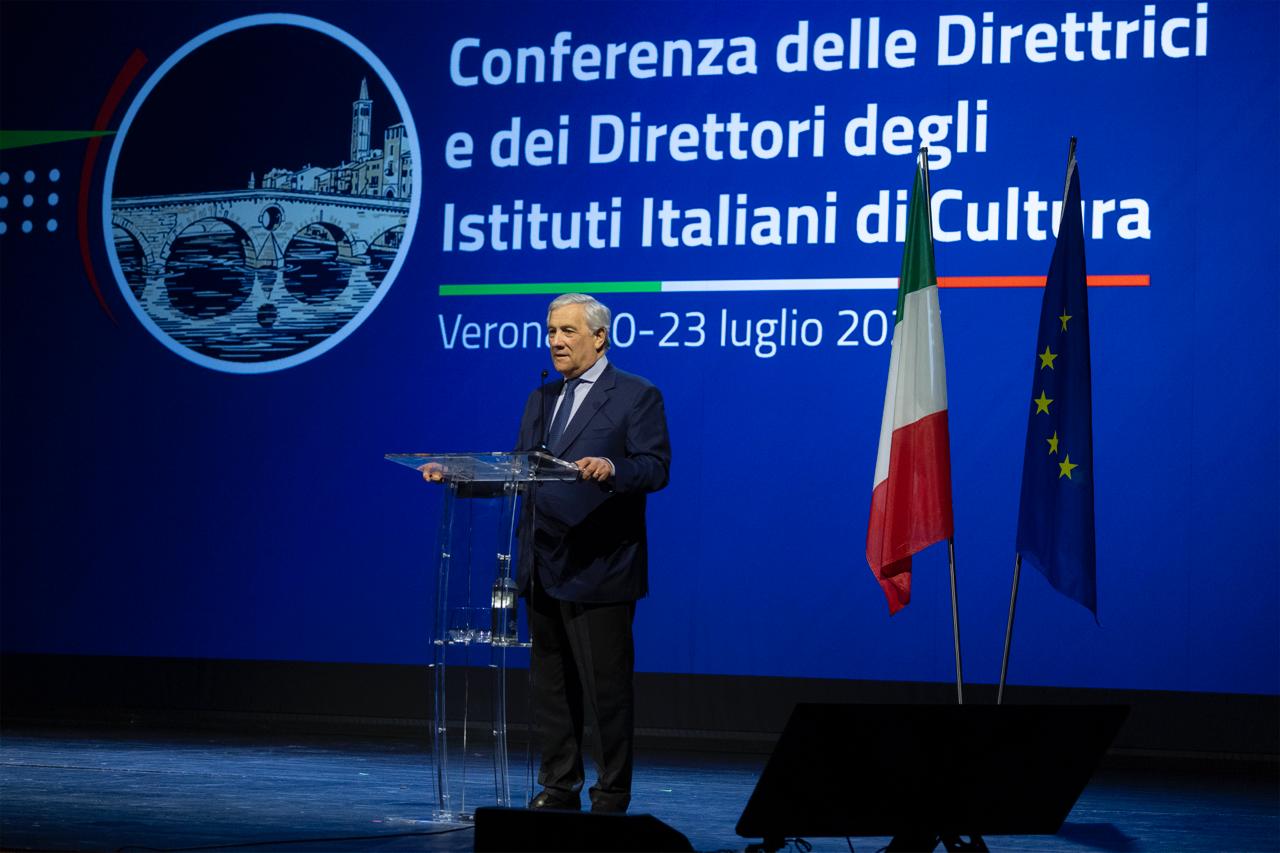
You, the Directors of the Cultural Institutes, represent the very heart of our civilisation and our identity. We must continue to work – with your support – alongside universities in various countries, increasing the number of scholarships for young people from abroad who come to study in Italy and to attract talent; I am thinking of Africa, but not only Africa. At the Italy–France summit in Antibes, we announced the launch of a ‘young talent’ programme, which we will be running in partnership with Luiss University, enabling talented young Italians to study in France.
In this context, the Institutes are not merely representative offices: they are Italy’s outposts around the world. They embody excellence, gather ideas, identify talent and build relationships. This is where a crucial part of the country’s growth lies, because a nation that knows how to promote its own culture also knows how to strengthen its economy, its international credibility and its capacity for dialogue.