A city-state projected onto the future. With nearly six million inhabitants, Singapore is not only a world-class financial and logistics centre (its port is the second busiest in the world), but has also established itself as Asia’s most advanced technology hub. With an economy expected to grow 4.4% in 2024 and a per capita GDP exceeding $93,000, Singapore offers a perfect ecosystem for business, thanks to cutting-edge infrastructure, a stable regulatory system, and a very low unemployment rate (1.9% in 2024).
Singapore’s strategic brain operates on multiple levels. The country is the undisputed leader in aerospace (particularly aircraft maintenance and overhaul) and a pioneer in information and communications services. But it is also pushing hard in the sectors that will define the next decade, namely agritech, foodtech, and cleantech.
Considered the privileged gateway to the Association of Southeast Asian Nations (ASEAN), Singapore draws on a global trade network, being a party to major agreements such as the Central Asia-Pacific Partnership (CPTPP) and the RCEP – the free trade agreement between 15 Asia-Pacific countries. In light of the redefinition of the international trading system, these agreements are seen as an opportunity to strengthen plurilateral and regional pacts. For its part, trade with Europe is reulated by the EU-Singapore Free Trade Agreement (EUSFTA), in force since 2019.
Singapore’s challenges stem from its very nature as a hub: strong exposure to external shocks, high dependence on imports, and a high cost of living. For this reason, the city-State is investing in cutting-edge, long-term strategies. Therefore, faced with challenges in the agricultural sector, the country, of which only about 1% of its land is down to agriculture, has set a goal of producing both 30% of its protein needs – including eggs and seafood – and 20% of its national fibre consumption locally by 2035, which includes leafy and fruiting vegetables, bean sprouts, and mushrooms. This goal is also supported by vertical farming and innovation (Singapore was the first country to approve the sale of cultured meat). At the same time, the Green Plan 2030 aims for total sustainability by promoting green mobility (60,000 electric vehicle charging points by 2030), while also pushing for the digitalization of smart cities and the expansion of logistics infrastructure, such as doubling the subway system and expanding the port. Globally, Singapore continues to attract a massive influx of capital, with incoming Foreign Direct Investment (FDI) exceeding $143 billion in 2024.
Trade with Italy
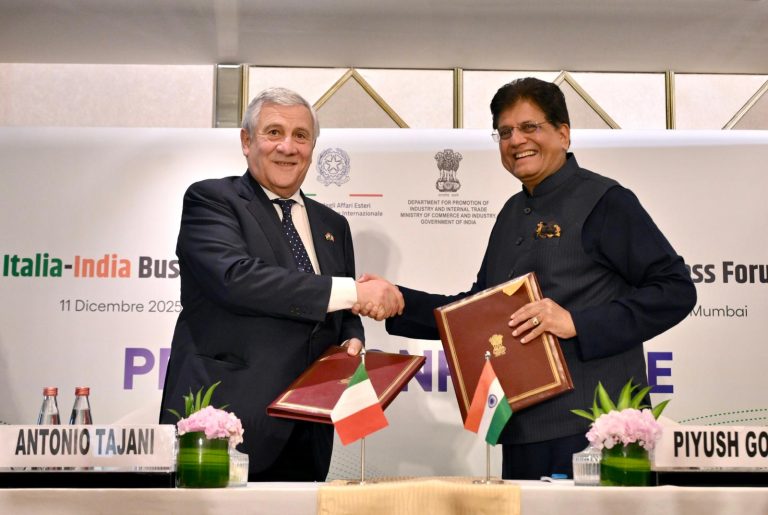
For Italy, Singapore is the leading export destination in the entire ASEAN region. It is no coincidence that it is one of the priority countries in the Asia-Pacific Focus of the Italian Export Action Plan, launched last March by the Minister of Foreign Affairs and International Cooperation, Antonio Tajani. In the period January-October 2025, Italy ranked 18th among Singapore’s suppliers, climbing two places compared to the previous year. Among its main European competitors, it ranks behind France (2.65%), the United Kingdom (2.54%), and Germany (2%), with a share of 1.2%.
The trade balance, however, is clearly in Italy’s favour: in 2024, trade exceeded €4.4 billion, generating a surplus of over €2 billion for Italy (€3.2 billion in exports as against €1.2 billion in imports). This trend was confirmed in the first eight months of 2025, with a positive balance of 1.6 billion euros – exports have already reached almost 2 billion, up 2.3% compared to the same period in 2024.
Looking at the breakdown of trade flows for the period January-July 2025, Italy’s main exports are machinery and appliances (€397 million) and computers and electronic equipment (€387 million), followed by chemicals (€147 million), textiles and clothing (€147 million), and pharmaceuticals (€122 million). On the other hand, we import from Singapore almost exclusively computers and electronic appliances (€123 million) and chemicals (€40 million).
In the consumer goods sector, Singapore’s market is mature and demands high quality, opening up significant opportunities for Italian companies, particularly in food and beverage, which generates over €130 million for Italy, making it the fourth-largest European exporter in this sector. Leading Italian companies, such as Menarini, Ferrero, and STMicroelectronics, also have a consolidated presence in the country in luxury fashion, jewelry, and designer furniture.
The Italian presence is well structured: official data for 2022 recorded nearly 300 Italian companies in Singapore, with a total turnover of €22.2 billion and over 8,000 employees. The stock of Italian FDI in Singapore reached nearly €1.8 billion in 2024.
The recent mission to Singapore by Deputy Minister for Enterprise and Made in Italy, Valentino Valentini, has reaffirmed the centrality of Asian markets for the strengthening and development of economic partnerships that benefit the Italian manufacturing system. Above all, it has confirmed the opportunity to reap the benefits of a long-standing collaboration that combines Italy’s industrial and technological expertise with Singapore’s innovation capacity, working together to create value for companies and strengthen mutual competitiveness in global markets. The Deputy Minister’s meetings with local authorities and economic stakeholders have highlighted the desire to develop cooperation in areas of mutual interest, such as technological innovation, energy transition, advanced manufacturing, and human capital development.
Furthermore, the importance of renewing the 2027-2029 Executive Program between the Italian Ministry of Foreign Affairs and International Cooperation (MAECI) and the Singaporean government research and development agency A*STAR has been reaffirmed. This programme is a central pillar of bilateral relations and has already demonstrated its effectiveness in enhancing scientific and technological cooperation
Interview with Ambassador of Italy to Singapore, Dante Brandi
Do Deputy Minister Valentini’s three visits to Singapore in less than a year demonstrate a renewed interest in Made in Italy?
It is a clear sign of Italy’s renewed commitment to this country and, more generally, to the Indo-Pacific region. Singapore is a key player in promoting Made in Ital productsy, thanks to its role as a financial and logistics hub and its ability to attract investment and innovation.
During last September’s mission, we worked to realize this vision, signing three cooperation agreements in the fields of semiconductors, energy transition, and university education. These results demonstrate a shared desire to build a long-term partnership based on innovation, sustainability, and human capital development.
Singapore is also a bridge to other strategic markets. Deputy Minister Valentini’s visits have enabled us to explore potential collaborations in Africa. Our goal is to strengthen a stable economic and industrial dialogue that goes beyond trade promotion and fosters structured collaboration between production systems, institutions, and universities. In this context, Made in Italy products are asserting themselves not only as a symbol of quality and creativity, but also as a driver of technology and competitiveness.
How can Italian companies benefit from Singapore’s interest in the Eurozone?
In two ways: by using the country as a strategic platform for expansion in the ASEAN region and by taking action to attract investment from the investor base based in this financial centre. Singapore recognizes the strength of the Italian manufacturing industry and appreciates our companies’ ability to combine innovation, sustainability, and design, viewing Italy as a reliable, quality-oriented partner. For Italy, this interest is a concrete opportunity to strengthen economic and industrial cooperation with a partner that shares our values of openness, efficiency, and excellence.
In 2024, Italian exports to Singapore exceeded €3.2 billion, growing over 14.3 percent compared to the previous year. A further 9 percent increase is expected in 2025, with a particular boost in semiconductors (+12.2 percent), thus confirming Singapore’s growing interest in our companies and their competitiveness in high-value-added sectors.
Singapore is currently an ideal platform for Italian companies looking to expand into ASEAN, thanks to its excellent infrastructure, a dynamic economic ecosystem, and a transparent regulatory framework. At the same time, local operators such as the sovereign wealth fund Temasek and ST Telemedia are investing in Italy in key sectors such as energy, infrastructure, and data centres. This demonstrates an increasingly close relationship, which the Embassy will continue to promote and facilitate.
In a previous interview, you highlighted the already important academic relations between Singapore and Italy: how will they be strengthened with the agreement between the University of Turin and Nanyang Technological University?
Along with security and defence, scientific and technological cooperation between Italy and Singapore is a fundamental pillar of our bilateral relations. The agreement between the University of Turin and Nanyang Technological University, signed during Deputy Minister Valentini’s latest mission, marks an important step in this direction, developing a further partnership between prestigious academic institutions in the two countries.
It provides for the joint supervision of PhD programs, shared research activities, and faculty and student exchanges in cutting-edge fields such as artificial intelligence, sustainability, and advanced manufacturing. These areas are the future of cooperation between our two countries and reflect the shared priorities of digital innovation and the green transition.
The collaboration between Italian universities and Singaporean institutes of excellence already rests on the Executive Cooperation Program, through which teams of scientists from the two countries are developing ten research projects in various fields, ranging from immunology to quantum physics, from oncology to robotics, from artificial intelligence to hydrogen. We are working to identify areas of common interest in which to develop the second three-year cycle of projects, which will begin in 2027. This concrete partnership is the true hallmark of relations between our countries, i.e. aimed at a global audience and at scientific and technological progress.