There was “no political motive”, merely the “need to ensure our country’s security”. According to Antonio Tajani, this is the sole reason behind the Italian government’s decision to extend for a further fifteen days the suspension of the Schengen Agreement, introduced on 1 August in response to the migration crisis in the Spanish exclave of Ceuta.
Those reasons were not enough to prevent a corresponding response from the country led by Socialist Prime Minister Pedro Sánchez: Spain extended for another two weeks its border checks on passengers entering the country by sea or air from Italy. According to the Forza Italia leader, the countermeasure smacks of “retaliation”.
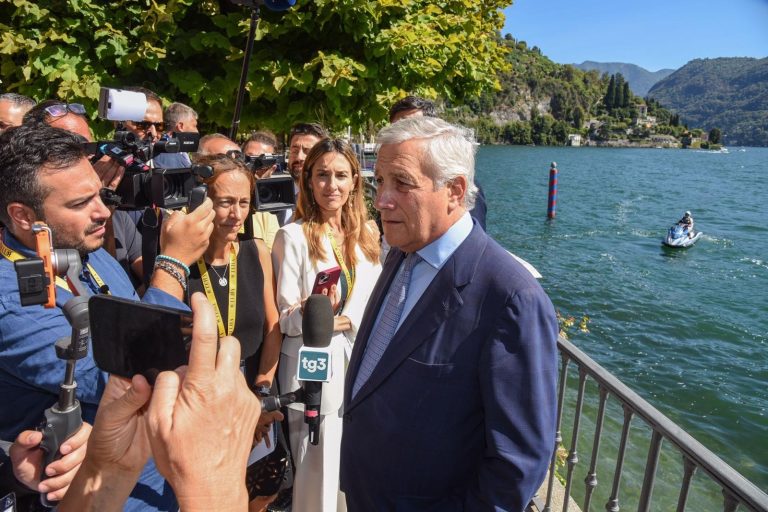
“Was this further extension really necessary?” many wondered as soon as news agencies began reporting that the Italian Prime Minister’s office was notifying the EU of the decision. The Foreign Minister, contacted by the daily Il Messaggero during an event in Rieti, had no doubts: “Of course. One need only look at what happened in Ceuta today to understand the situation.”
He was referring to the clashes involving migrants that occurred yesterday morning in the Loma Colmenar district. Hundreds of people of North African origin, who had been camping in the streets in recent weeks, entered a temporary reception facility set up by the government. The police subsequently intervened, firing shots into the air to disperse the crowd.
“The emergency in Ceuta is not something we invented. Almost 100,000 people have arrived, the police were forced to open fire, and it is not known how many irregular migrants remain.”
The decision was therefore based on technical assessments: “The Committee responsible for border security and immigration,” Minister Tajani explained, “concluded that the situation has still not been resolved. We therefore decided to extend the suspension of the Schengen arrangements for a further fifteen days, covering both ships and aircraft arriving from Spain, in order to safeguard our domestic security and the security of our borders.”
He then added an almost inevitable clarification, given the storm of criticism from the opposition: “We did so in cooperation with Europe and, of course, also with Spain, which was informed by the Interior Minister. There was no political motive.”
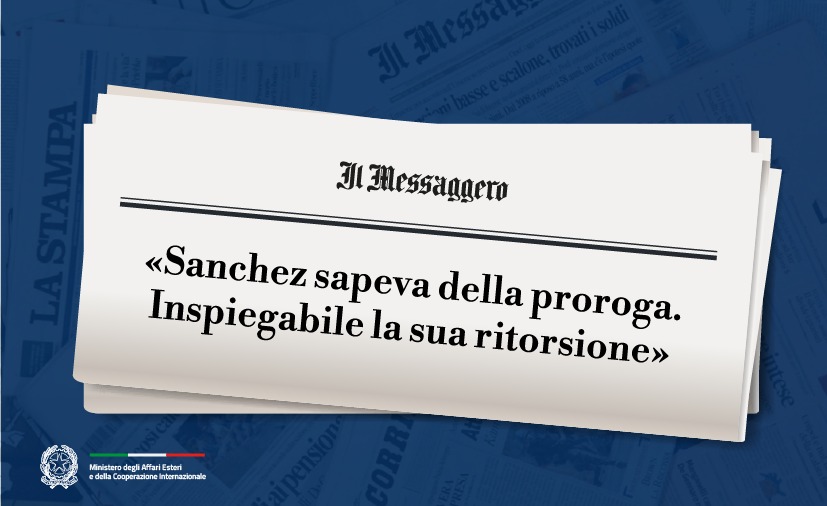
While Prime Minister Sánchez “knew” about the extension, Italy, by contrast, had not been “notified” of the countermeasure being prepared by its Iberian neighbour.
“In truth,” Minister Tajani acknowledged, “the reason for this decision is unclear; there is no justification for it. Fortunately, migration flows have been reduced by 50 per cent, an improvement compared with previous years, whereas the situation in Ceuta is a cause for concern. Spain’s decision appeared to be a retaliation for which there is no explanation.”
Asked whether the tug-of-war might be related to the political complexion of the Spanish government and the approaching election campaign, the Forza Italia leader dismissed the suggestion: “The political affiliation of the respective governments has nothing to do with it. Italy is taking action within a framework of European solidarity, including with Spain.”
THE TERRORIST ISSUE
Underlying the decision is the fear of possible terrorist infiltration: “The risk of terrorism is always present and must not be underestimated. We know that the threat is severe in sub-Saharan Africa, which borders Morocco. And we must not forget that not everyone who arrived in Ceuta was Moroccan.”
The Foreign Minister then mentioned the figures: “Over the past month, 31 refusal-of-entry orders have been issued at maritime and airport border crossings, eight of them involving Moroccan nationals. Six people were arrested. Those are not insignificant numbers.”
There remains a political concern: namely, the risk that this exchange of measures between EU countries could weaken freedom of movement, as well as the legal framework established by the Treaties. The leader of Forza Italia—a member of the European People’s Party family, one of the most pro-European political groups in Brussels—drew a distinction between the two issues: “Freedom of movement does not mean failing to combat irregular immigration and terrorism.”
The deputy Prime Minister could not guarantee that this would be the final necessary suspension: “We hope it will be, because it is in our interests not to extend it again. First, however, we must guarantee security.”