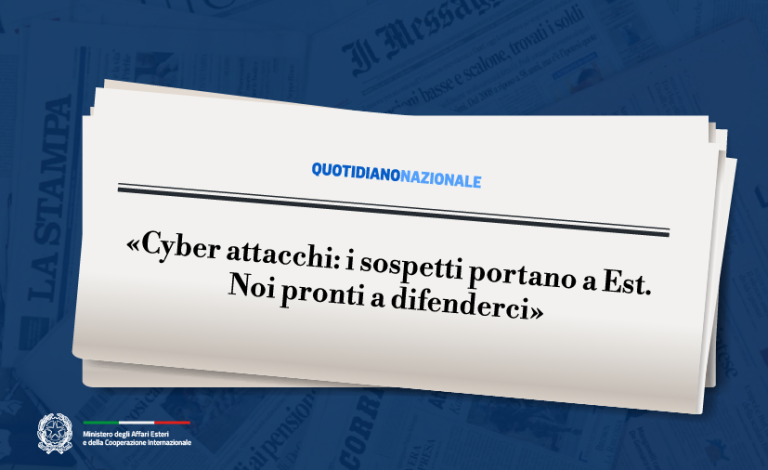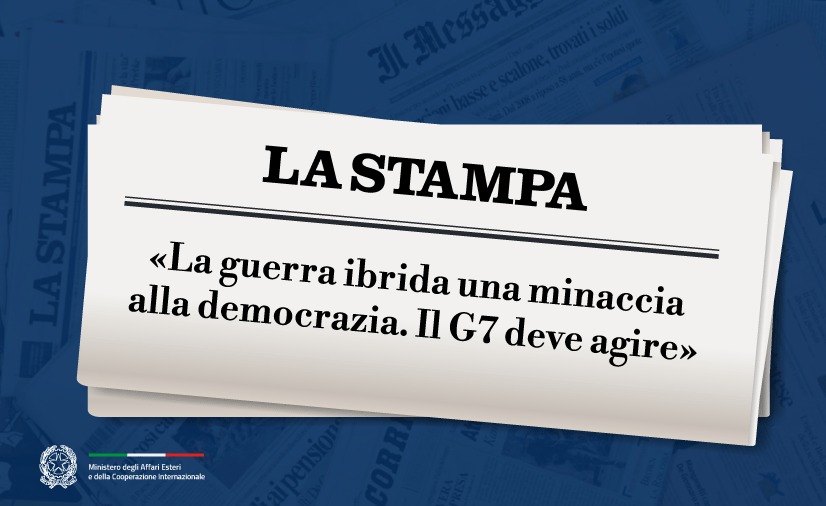
It is clear who is driving this constellation of cybercriminals: those who seek to redraw Europe’s borders through violence. Faced with this scenario, the G7 must immediately demonstrate its ability to take action and respond. Major international issues cannot remain confined to documents and diplomatic statements: they need to be turned into responses that make a difference to people’s daily lives and the security of our communities. The credibility of our democracies is also measured by their ability to protect citizens. This is the responsibility that the leading Western democracies must shoulder: conveying a strong and unequivocal political message and developing concrete, coordinated responses.
That is the reason why I asked French Foreign Minister Jean-Noël Barrot to include the crucial issue of cyber threats on the agenda of our G7 Foreign Ministers’ meeting in Paris today and tomorrow. Defending our democracies also means preserving their fundamental principles: freedom, pluralism and openness. Above all, however, it means ensuring that these principles continue to turn into security, confidence and opportunities for our citizens and companies.
The same approach must guide us on artificial intelligence. We cannot passively accept its developments, nor allow the governance of new technologies to become the preserve of a handful of countries or major technology companies. Those who control artificial intelligence will have an enormous advantage over those who fall behind: we want new technologies to help narrow the gaps between countries, rather than deepen them. The challenge is, in fact, not only technological, but also economic, social and strategic.
In this respect, the G7 has a responsibility that goes beyond coordination among the leading advanced economies. It must be a platform for international leadership, capable of engaging with a wide range of partners, building common ground and contributing to practical solutions for citizens, rather than a fortress closed off from the world. This is the vision that guided Italy’s Presidency in 2024, when we sought to systematically involve strategic partners and international organisations in our meetings, from Algeria to Türkiye, from Kenya to multilateral institutions.
At the G7 Foreign Ministers’ meeting in Paris, Italy intends to promote an integrated strategic vision for the security of Europe and the wider Mediterranean. This region is central to the balance of power in the twenty-first century, where Europe, Africa, the Middle East and the Indo-Pacific meet; where major energy, trade and connectivity routes converge; and where our ability to prevent conflicts, manage interdependencies and foster development is put to the test.
In response to the situation in the Strait of Hormuz, we launched the Rome Coalition on Fertiliser Access and Food Security together with Croatia, the FAO and more than 40 countries and international organisations. The participation of Luke Lindberg, Executive Director of the World Food Programme, in the Paris G7 meeting also highlights the role of Italy and the United Nations’ Rome-based food and agriculture hub, home to the FAO, WFP and IFAD (International Fund for Agricultural Development). Here too, a seemingly sector-specific issue takes on global strategic significance: ensuring access to fertilisers means safeguarding agricultural production, easing pressure on food prices and protecting households’ purchasing power.
This action-oriented diplomacy must take on an increasingly European and multilateral dimension. This is the proposal we will bring to Paris and Brussels and develop through the MED Dialogues, scheduled to take place in Naples from 19 to 21 November. We will bring together governments, institutions, businesses, scholars and civil society to build a shared strategy for the future of the Mediterranean, involving partners such as Yemen’s Foreign Minister, Afrah Al-Zouba, and the Secretary-General of the Gulf Cooperation Council, Jasem Mohamed AlBudaiwi. We want to connect political dialogue with economic, scientific and business expertise, because the challenges facing the Mediterranean require responses that combine security, growth and new opportunities for cooperation.
These weeks will test the G7’s credibility and political relevance: its ability to turn dialogue among the major democracies into decisions, initiatives and tangible results. We are meeting not merely to discuss the world’s crises, but to help resolve them by addressing their consequences for our societies and economies.