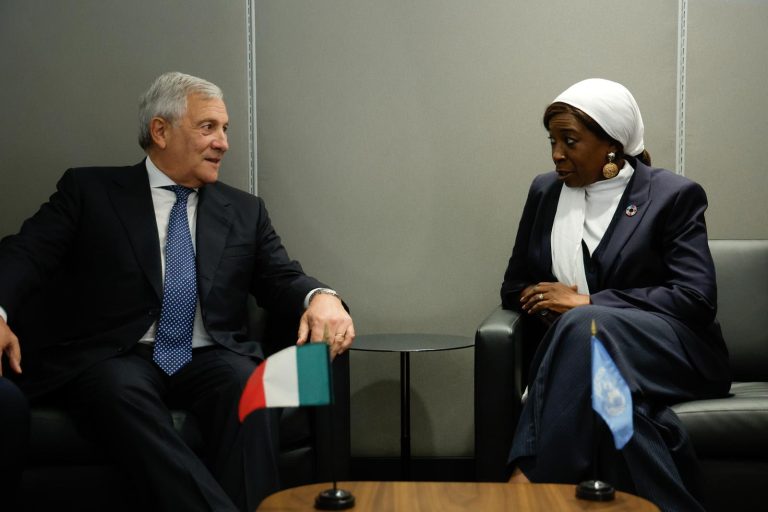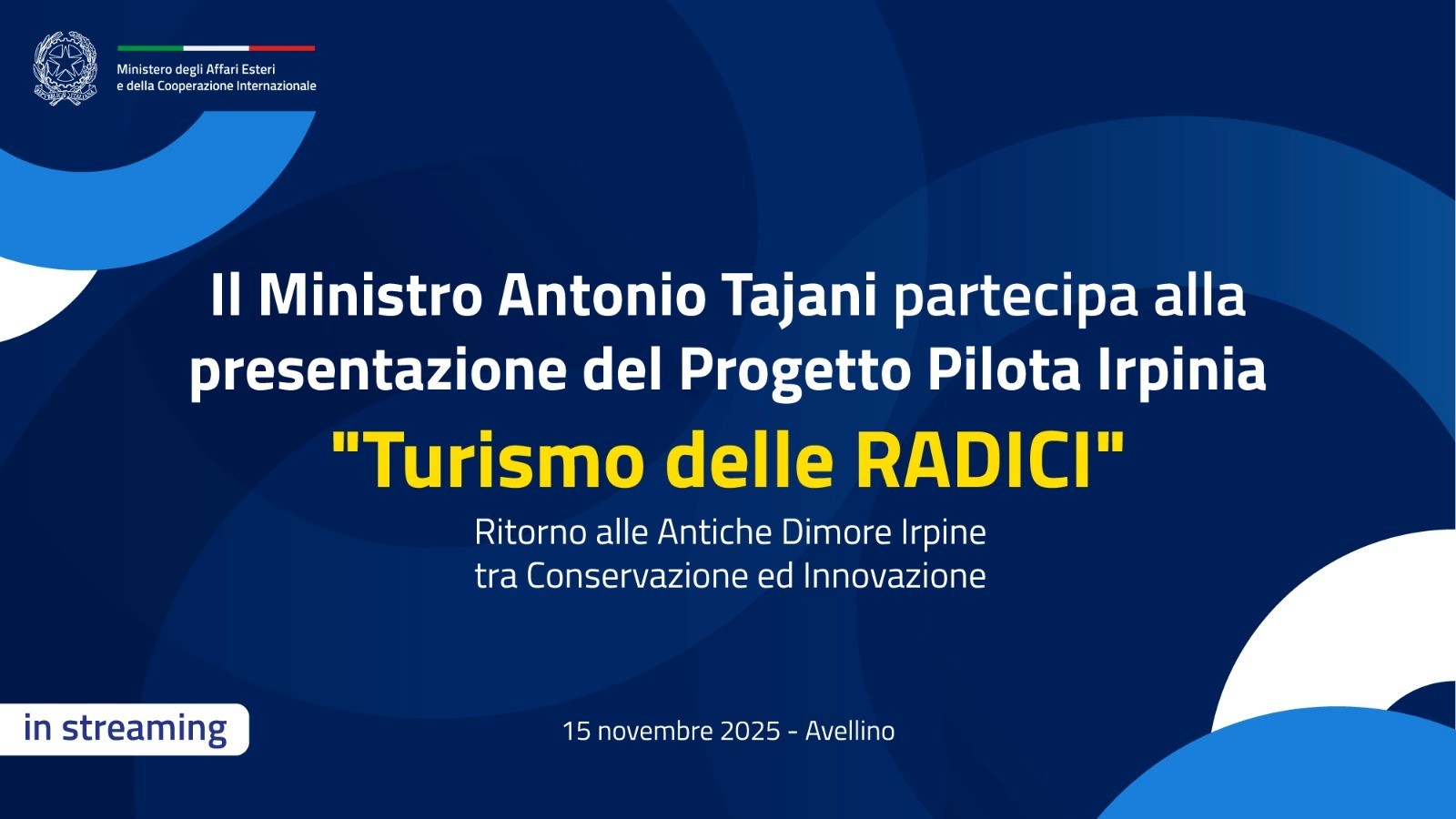
In view of the official presentation of the “Roots Tourism” initiatives scheduled for 21 November at Villa Madama, Foreign Minister Antonio Tajani and Interior Minister Matteo Piantedosi will participate today at 4:30 p.m. at the Prefecture in Avellino in the presentation of the pilot project dedicated to this province of Campania.
The project also includes the enhancement of the historical-religious route “Cammino di Guglielmo“; the creation of the “Migrantes” Museum Complex; the redevelopment of the Avellino Station, and the creation of an intermodal hub with innovative tourist services, as well as the redevelopment of the historical Avellino-Rocchetta Sant’Antonio railway line.
Since 2022, the Foreign Ministry has been the implementing Administration for the NRRP measure “Roots Tourism – An Integrated Strategy for the Recovery of the Tourist Sector in Italy after Covid-19,” which aims to strengthen the connection between approximately 80 million Italians abroad – both of Italian descent and of Italian origin – and their homelands, while promoting sustainable tourism in small villages and rural areas.
Paper and digital guidebooks for the Roots Tourism Itineraries have also been produced (five books, each dedicated to four Regions), and an agreement with RAI for the production of 20 television episodes on small Italian municipalities has been signed.
The pilot project “Roots Tourism – Return to the Ancient Irpinia’s Homes between Conservation and Innovation” begins today, a new phase of which will be funded by the Ministry of Foreign Affairs and International Cooperation (MAECI) from the 2021-2027 Development and Cohesion Fund (FSC). The initiative, implemented by the Province of Avellino, proposes an integrated model to bring back to Irpinia generations of emigrants and Italians abroad who wish to reconnect with the places of their family history.
MinisterTajani stated: “On 21 November in Rome, we will illustrate how this model will be extended to other municipalities and regions in Lazio and Apulia. The return to one’s own origins must be a cultural experience, but also a physical journey supported by infrastructure and services worthy of our historical villages.”