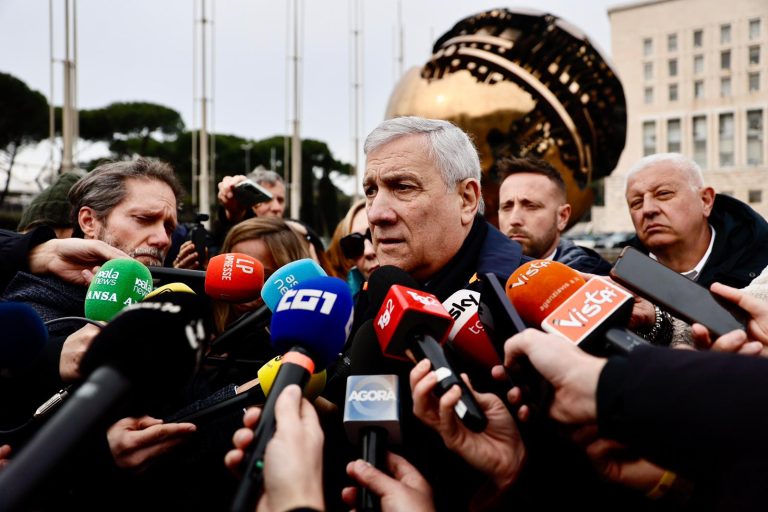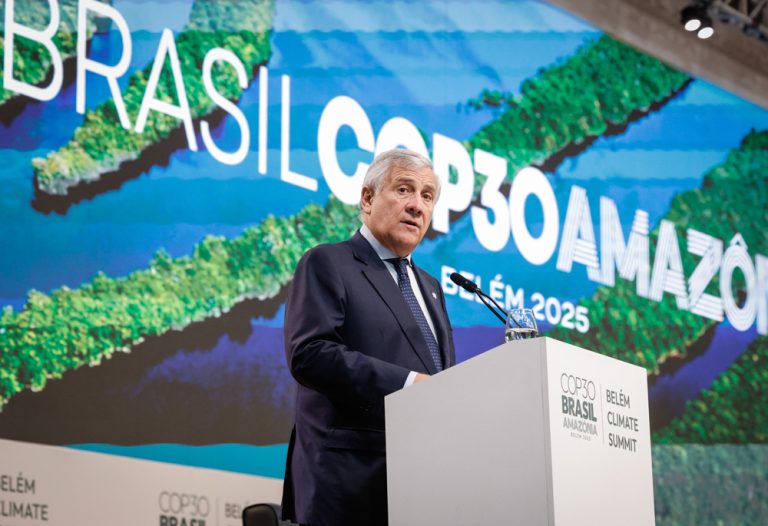
The news of the release of Alberto Trentini and Mario Burlò arrived at dawn, but Foreign Minister Antonio Tajani had been pursuing it for some time. He highlights “long and discreet work” and describes the decision by interim President Delcy Rodríguez as “a strong signal that Italy greatly appreciates”. The release also raises further questions: what message is Italy sending to Caracas, to Washington and to the 42 Italo-Venezuelans still detained?
Minister, today is a day of celebration. But what truly unlocked the release?
“It was months of work, carried out discreetly by the entire ‘Italian system’: the Italian Foreign Ministry, the embassy, intelligence services and Palazzo Chigi. The turning point came yesterday evening, when around 8 p.m., Venezuelan Foreign Minister Yvan Gil called to inform me that President Rodríguez had decided to release Trentini and Burlò, and that they would be freed within a few hours. We are very pleased with this result, the product of extensive behind-the-scenes work, always in contact with the families, and with the direct involvement of the Prime Minister. I would also like to thank Ambassador Giovanni Umberto De Vito for his outstanding work in achieving this outcome.”
Did you speak with Trentini and Burlò?
“Yes, they were extremely happy and about to call their families.
I only exchanged a brief greeting to give them time to speak with their loved ones rather than with me. What mattered most was to give them a ‘hug over the phone’ and to reassure them that they would soon return to Italy. Between last night and today, they will be back in Italy. Our work continues, because this day represents a step forward, not a final goal”.
The beginning of the end of Maduro’s era seems to have influenced this outcome. How has Italy’s relationship with Venezuela changed?
“The Italian government has been able to engage and respond to the changes in Venezuela. Politically, President Rodríguez’s decision to start a new phase by releasing political prisoners, and specifically Italian citizens beginning with Trentini, creates a new climate in Venezuela–Italy relations. We have welcomed this decision with great satisfaction”.
A “strong signal” from Rodríguez, which Italy “greatly appreciates.” What effects does it have?
“Following the release of Trentini and Burlò, we decided to fully restore diplomatic engagement with Venezuela. Until now, formally, there was only a Chargé d’Affaires; our ambassador held that rank. This signals a willingness to establish a fuller relationship, in response to the positive signal from Caracas. Substantively, diplomatic work continued; formalising the embassy provides more effective tools and interlocutors, including for monitoring remaining cases.”
How many cases remain, and what are the next steps?
“We still have 42 Italians detained, including Italians and Italo-Venezuelans. Those with only Italian passports are all free. Among the remaining detainees, 24 are political prisoners; the rest are not. Our goal is to increase the number of releases, one by one, with realism and determination. In a delicate context, the essential priority is to safeguard individuals and bring them home.”
You stress the “stabilisation” of Venezuela and mention a strong Italian presence: 170,000 citizens, around one million of Italian descent, and Eni. How are citizens and interests protected?
“Protecting a large community and the legitimate interests of Italian companies is part of our foreign policy. We also have a significant presence of Eni in Venezuela. Energy is a fundamental issue for us. Eni also participated in the White House meeting with the main oil companies operating in Venezuela, and we intend to remain a leading presence in the sector. Italy is also working to create conditions for stability, an orderly transition, and, where possible, new elections. It is an approach of responsibility.”
And the United States—what role did Washington play?
“I thank U.S. Secretary of State Marco Rubio, who from the beginning showed great sensitivity to the issue of Italian prisoners and guaranteed his support, including at the most recent G7 meeting.”
Has Italy’s position on the Venezuelan crisis and U.S. action changed?
“Italy’s position remains clear: a military solution is not the way to resolve complex crises. That said, countries assess risks and threats, including those related to drug trafficking. We work to ensure that politics prevails and that the region does not destabilise further.”
Yet U.S. action continues to provoke strong reactions. And you have repeatedly condemned those burning U.S. flags.
“It is a principle: one must not confuse a government with its people and history. Protests are legitimate, but burning flags does not create solutions. Today, open channels of dialogue are needed, not incendiary symbols.”
Finally, the tragic events in Iran.
“My condolences go to those who have lost their lives during the demonstrations. Italy, together with European partners, is actively engaging diplomatically to achieve a prompt and positive resolution to the crisis, respecting the aspirations of the Iranian people and the safety of its citizens. We have called for the death penalty not to be used as a tool to suppress the protests of young people and women in Iran.”