The UAE’s refusal to escalate in response to weeks of Iranian missile attacks has been welcomed by the Italian Foreign Minister Antonio Tajani, who, in an interview with The National, describes the decision as “restrained and measured”. “Diplomacy is always a choice to make in times of war”, Mr Tajani says in written comments. “The possibility and encouragement of dialogue is actually a core principle of the UAE. We appreciate the very restrained and measured posture of the UAE”.
Tehran started launching drones and missiles at neighbouring states after Israel and the US attacked Iran on February 28. “Italy is following the developments in the Middle East with deep concern” Mr Tajani says. “Iran has unlawfully attacked neighbouring countries, which had declared that they would never allow the use of their territory to conduct military strikes. Despite how hard it looks – and it is difficult for our friends under attack – I feel confident that together we will be able to pass through this crisis and we will emerge much stronger”. Yesterday, a Palestinian man was killed by a missile in Abu Dhabi. Flights were disrupted at Dubai International Airport after a drone caused a fire in a fuel tank. A major fire also broke out at Fujairah Oil Industry Zone, a bunkering site.
Supportive role
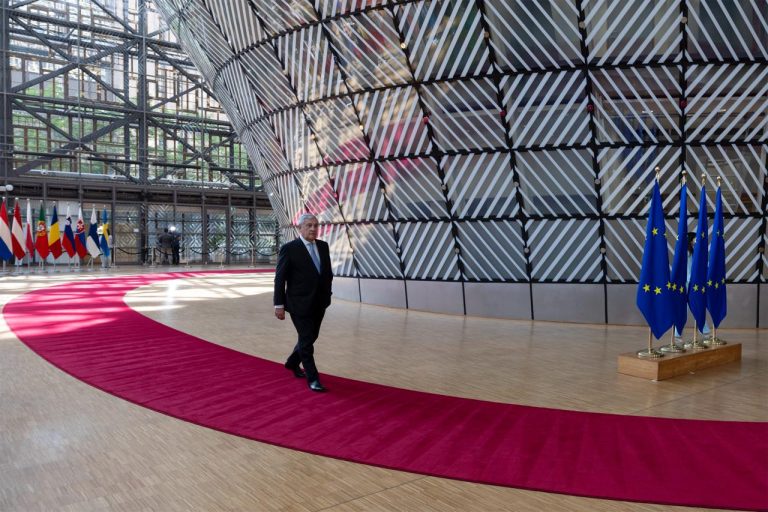
Mr Tajani, like a number of the foreign ministers gathering in Brussels yesterday, has followed events closely and is keen they to provide as much support as possible. Italy co-sponsored a UN Security Council resolution last week condemning Iran’s “egregious attacks” on Gulf states. Dr Anwar Gargash, diplomatic adviser to President Sheikh Mohamed, has asserted the UAE’s right to self-defence and has stressed the decision to maintain restraint in the face of an aggressive neighbour.
Thousands of Italians were caught up in the crisis when the US-Israeli bombing campaign began and Iran started to attack neighbouring countries that host US bases. The efforts of local authorities and staff to keep airports open and maintain flight operations have been praised by European nations. “We are deeply grateful for the swift assistance provided by the Emirati authorities to our citizens, including residents, tourists and other Italians in transit” Mr Tajani adds. About 20.000 Italians live in the UAE. Some of the UAE’s European allies, including Italy, have come to its aid since the start of the war, including by providing air defence systems.
Italy and the UAE signed a new defence agreement during Sheikh Mohamed’s visit to Rome last year. Mr Tajani hosted Sheikh Abdullah bin Zayed, Deputy Prime Minister and Minister of Foreign Affairs, in Rome on March 5 and spoke to him again on the phone in recent days. The Italian Foreign Minister also convened a meeting of ambassadors of the Arab League in Rome. Italy’s own troops in the region have felt the effects of the conflict. A base that is used for training in northern Iraq came under missile attack last week. Mr Tajani adds that Italy remains “fully committed to co-operation with Kuwait” after Italy’s military base in Kuwait was hit by a drone on Sunday. No casualties were reported. “We stand ready, of course, to evaluate possible aid from Italy to strengthen Kuwait’s defence capability” he says. At talks in Brussels on Monday, the agenda of the EU’s 27 foreign ministers was topped by the Middle East conflict, and consolidating the EU’s response to Iran’s attacks against ships in the Strait of Hormuz.
Cautious Europe
Speaking before the meeting, Mr Tajani reiterated his call for diplomacy and cautioned against extending existing naval European defence operations to the strait. He says he backed the reinforcement of a mission named Aspides, which means “Shields” in Greek, launched in 2024 to protect ships from Yemeni Houthi rebel attacks in the Bab Al Mandeb strait. “We support the reinforcement of the operation by our EU partners in light of the current situation” says Mr Tajani. “The involvement of non-EU partners is also important, particularly those in the region. Freedom of navigation and maritime security are global common goods that require collective efforts beyond Europe”.
With France and Greece, Italy is one of the handful of European nations that has sent more frigates to Aspides this month. Rome remains a vital player in maritime coalitions to police the trade routes around the Middle East, particularly the Bab Al Mandeb strait and Red Sea. “Freedom of navigation is a fundamental principle and is essential for global trade and energy security” says Mr Tajani.
The de facto closure of the Strait of Hormuz by Iran has caused concern around the world. US President Donald Trump has called on Nato allies to help to reopen the strait as oil prices continued to soar yesterday to more than $105 a barrel. He warned that it would be “very bad for the future of Nato” if there was no response. As tension mounts, Italy’s Prime Minister Giorgia Meloni, who has good relations with the US leader, is widely viewed as Europe’s best hope of defusing them.
“Italy maintains very close co-ordination with the United States. Along with other allies, we are contributing to discussions aimed at preserving regional stability and safeguarding international security” says Mr Tajani. “I had a phone call with Secretary of State Marco Rubio a few days ago to discuss developments on the ground and the economic implications of this crisis”. Lebanon is another country suffering the consequences of the escalation of the conflict, with Israel saying yesterday that it had launched ground operations against Hezbollah after a week-long bombing campaign.
Keeping the peace
Italy is the second-largest contributor to the UN peacekeeping force at the Lebanese-Israeli border. Three Ghanaian peacekeepers were wounded on Friday in an attack blamed on Israel by Lebanon’s state-run National News Agency. The UN has not commented on who was responsible. “We urge all parties, under all circumstances, to ensure the safety and security of Unifil personnel and premises. Peacekeepers must never be the target of attacks or intimidation of any kind” says Mr Tajani.
Israel’s offensive came in response to Hezbollah, a Lebanese militia backed by Iran, launching rockets against Israel earlier this month in solidarity with Iran. Israel’s response has killed at least 850 people, mostly civilians, and displaced more than 700.000 people. In Iran, the number of dead stands at more than 1.200 people. European nations, including Italy, have condemned Hezbollah’s actions and called for de-escalation. “Hezbollah’s unwarranted decision to attack Israel in support of Iran was a mistake that provoked a massive Israeli response and drew Lebanon into a war that is not its own, with already dramatic humanitarian consequences” says Mr Tajani. “Our priority is to support hundreds of thousands of people who have fled their homes to escape hostilities”. Italy also supports the Lebanese President Joseph Aoun and Prime Minister Nawaf Salam.
In a historic move, the cabinet recently declared Hezbollah’s activities illegal. “This stance demonstrates Beirut’s commitment to peace with Israel” Mr Tajani said. Reports indicate that Lebanon may be willing to engage diplomatically with Israel in an effort to avoid a ground invasion. The two countries have technically been in a state of war since Israel’s founding in 1948. “We steadfastly support President Aoun and Prime Minister Salam along this path towards the states sovereignty and a negotiated political solution with Israel” says Mr Tajani.