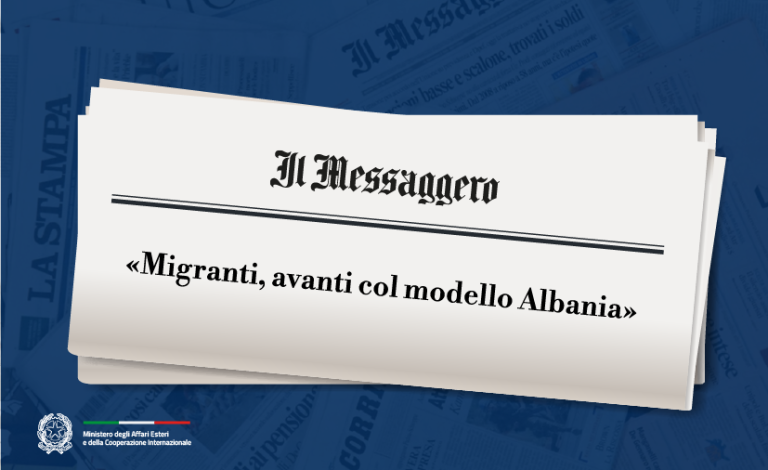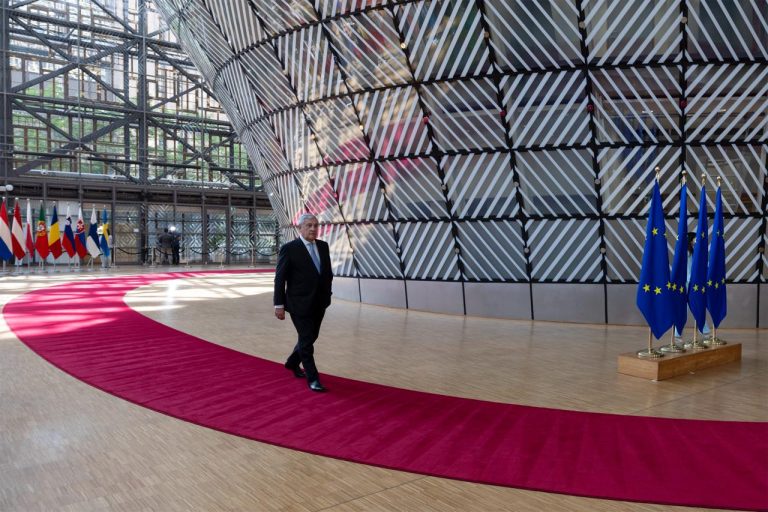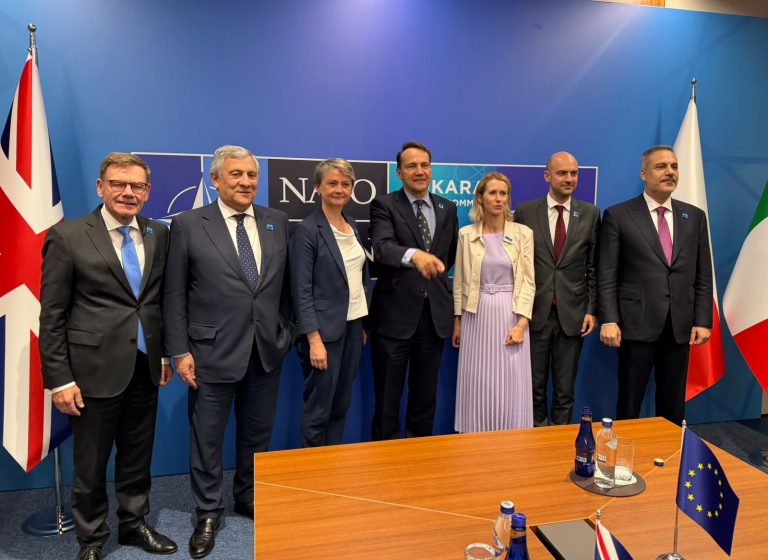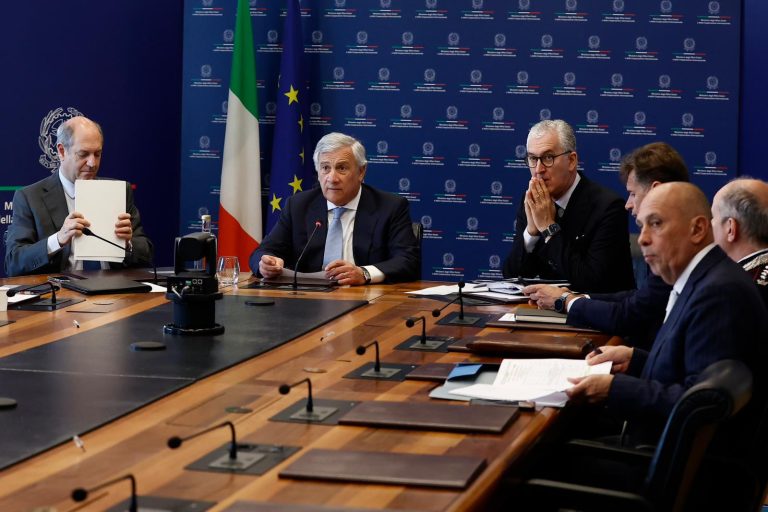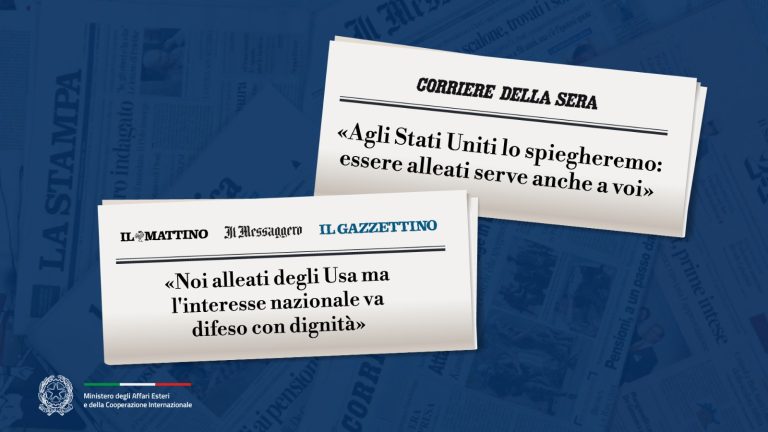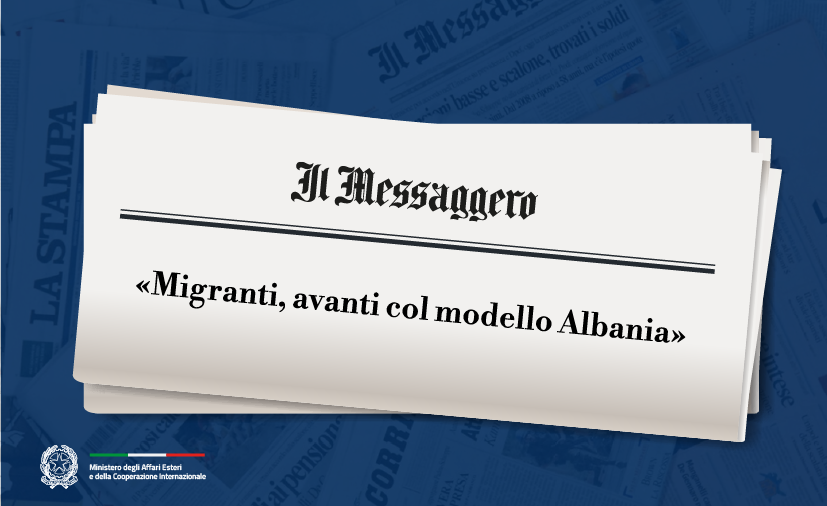
Minister Tajani is in Marina di Pietrasanta. He met with Forza Italia leaders, spoke to people who asked him about the wars, and shared the stage with Antonio Preziosi, Director of Tg2, who interviewed him about the government’s work and everything else. And today, the attention of the Minister of Foreign Affairs will be focused on the Coreper (Committee of the permanent representatives of the governments of the member states to the European Union) meeting, at which the ambassadors of the EU member states are preparing for the emergency meeting of the Ministers of the Interior of the 27 EU countries, to be held tomorrow. “We need to develop,” explains Tajani, “a common strategy on immigration. The Italian government has called for this meeting, together with Denmark’s Social Democratic government, to ensure that the EU Pact on Migration and Asylum is implemented. In other words, repatriations must be carried out, and, furthermore, the possibilities for establishing new ‘Albania-style’ model centres in various African countries – and, more generally, in countries of origin and transit – must be assessed in practical terms.”
MELONI’S STANCE
On this issue, the Italian Meloni government’s stance is gaining increasing support. This is also because the courts had suspended the hub’s operations in Albania for a long time, but now, according to Tajani, things are running smoothly. “The Meloni government,” Minister of Foreign Affairs insists, “is putting forward its ideas, which are both rigorous and moderate, and by no means inhumane, even though left-wing propaganda is trying in vain to make them appear so.”
Minister, you are being accused of ruthlessness, and the left is ready to take a stand against the African repatriation hubs. “Let them do it,” Tajani says, his tone hardening, “but the truly ruthless ones are those who promote the ‘culture of the big hug’, which in reality turns out to be the opposite of the do-goodism they so loudly proclaim, as evidenced by the people dying at sea, lured by empty promises of universal welcome.” Tajani does not want to further escalate the row with Spain. But note: “Madrid’s stance runs counter to the Italian one, which is supported by almost all the other countries. We strongly disagree with the Sánchez government’s strategy of granting legal status to everyone and then citizenship. The ‘come to Europe’ policy is wrong, because Europe is not in a position to take in everyone indiscriminately. And it is a positive sign that the European Commission has sided with the Italian position rather than the Spanish one.” Tajani refuses to accept this ‘manipulation’ – as he calls it – through which Italy, and ‘responsible’ countries like Italy, are portrayed as the epitome of cruelty and even racism. “It is unacceptable,” says the Minister of Foreign Affairs, “to refuse to see things as they really are and to engage in ideological manipulation that serves no purpose other than to stir up the masses. Italy has agreements with the countries through which migrants transit, agreements with the countries of origin, and the Mattei Plan to promote growth in African countries. We provide training for legal migrant workers in Italy. We have invested heavily in cooperation. That’s how you make the policies we need, not by spouting slogans and making false promises.”
THE INSPECTIONS
However, the suspension of the Schengen Agreement following the events in Ceuta seems to many to be an excessive measure. And it’s a ploy to keep up with Vannacci. “I really can’t get my head round it,” Tajani objects, “how anyone could say things like that. We did the same with Slovenia a few years ago, and nobody was surprised by that suspension of the Schengen Agreement. This measure simply involves carrying out random checks on passports for four weeks for those arriving from Spain. I am astonished by the level of opposition propaganda being peddled on this issue. The worrying overall picture must also be borne in mind. Last week there was an Islamist attack in Germany; jihadism is on the rise across sub-Saharan Africa; and, meanwhile, there is intense pressure from the influx of migrants. Spain says that 73,000 of those who arrived in Ceuta have already been repatriated to Morocco. So the figures that had been circulating – namely that 40,000 people had entered the exclave – were incorrect. There were far more than that. And all this has resulted in dozens of deaths.”
HORMUZ
In his remarks from Versilia, Tajani also turns his attention to the issue of war in Iran: “Now is the decisive moment to reach a peace agreement and to reopen the Strait of Hormuz. Otherwise, the energy crisis will worsen, the price of gas, oil and fertilisers will rise even further, the markets will become unstable, and, in short, it is time to reach a lasting truce to allow shipping to resume.” What can Italy do? “Let us play our part, and Rome – following the summit on the Two-State Solution held a few days ago and with the talks between the Israelis and the Lebanese due to take place here from tomorrow until 6 August – has a crucial role to play. We are the Capital of Peace.”
But there is no peace between the right and the left in Italy. Minister Tajani, are you prepared for strong opposition from the centre-left against the ‘Albania-style’ African hubs? “Unfortunately, I expect there to be controversy and disagreements, but it is time to move past this attitude of saying ‘no’ to everything a regarding everything. It is the left that refuses to compromise and is constantly unwilling to engage in dialogue. As for repatriation hubs, they fail to understand that, as we are seeing in the case of Albania, they are a practical, balanced solution which, as it happens, has been approved by the EU.”