Minister Tajani, Assopetroli is holding an emergency meeting today. Is it possible that other companies might cap fuel prices, as ENI has done?
“Eni has sent out an important signal, which is in line with the direction advocated by Forza Italia. So much so that our party has managed to prevent the taxation of windfall profits. We are opposed to this on principle because such profits do not exist either in law or in economics.”
Could Eni’s move go viral, or, as Assopetroli suggests, is it a popular but unsustainable choice for other operators?
‘Yesterday afternoon, IP also decided that it would cap fuel prices across the whole of Italy. This is very positive news. At the start of September, I had asked Rovshan Najaf, chairman of SOCAR – the Azerbaijani energy company that controls Italiana Petroli – to move in this direction. No top-down imposition, no new taxes on companies, but a voluntary contribution to help Italian citizens. That’s good. And we need to continue in this direction. As a government, we need to engage in dialogue with all the oil companies and encourage them to adopt a positive stance. Not least because any solution is better than a tax on windfall profits.”
Politically speaking, how significant is the fuel price cap?
“It is a very significant initiative. Because it demonstrates that when the country’s economic system and its companies take responsibility, tangible and concrete results can be achieved without resorting to interventionist and punitive measures. If Italians are paying less at petrol stations, that is an outcome we must regard as a great success’.
Is this just a campaign ploy?
‘Look, these are concrete measures in the interests of citizens, and anyone who reduces it all to propaganda is mistaken. We need to pay close attention to the concerns of Assopetroli, which includes small companies that do not have ENI’s supply chain at their disposal. And we must not forget the petrol station operators – thousands of small business owners who ensure service across the country and must be enabled to continue carrying out their work with proper economic sustainability, whilst preserving competition and pluralism within the network. The aim must be to turn the immediate benefit resulting from ENI’s and IP’s initiatives into a sustainable outcome for the entire system.”
How can Europe help us in this energy crisis?
“It has granted us environmental flexibility equivalent to 15 billion. This cannot be used to reduce excise duties but only for clean energy projects. We will therefore submit a series of projects as soon as possible. Furthermore, we have reached a new agreement with Venezuela on extraction activities. We have also authorised the possibility of extracting more oil in Basilicata.”
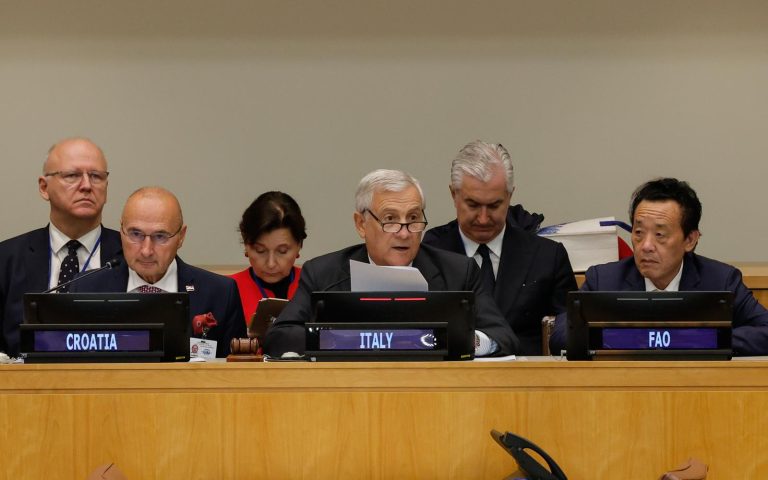
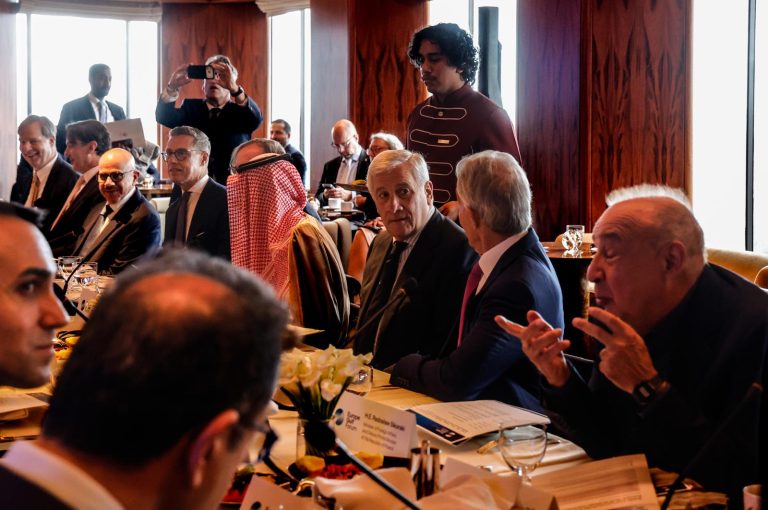
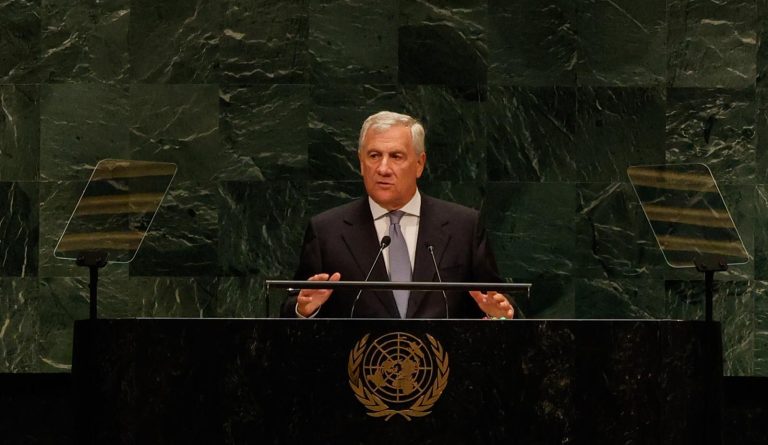
During the week of the UN General Assembly, you met with the Trump Administration’s representative for North Africa, Massad Boulos. What did you discuss?
“He reaffirmed the important role that Italy plays in Libya. And it is obviously a role that encompasses the energy sector. I also met the Iranian Foreign Minister on that occasion. I told him – and I also told the Secretary of State, Rubio – that Italy supports all peace initiatives, not least because the oil issue needs to be resolved as soon as possible. Unfortunately, it is not easy.”
From the Strait of Hormuz to security in Italy. Don’t you think your recent comments have been a bit extreme regarding judges and also somewhat at odds with the principles of due process?
“I do not think so at all. The principles of due process and the rule of law hold that no innocent person should be in prison. But those who commit crimes must be in prison. Due process is not a defence of impunity; it also entails great severity, but fair and just severity. The rule of law ensures that citizens’ freedom cannot be jeopardised by organised crime, nor indeed by petty crime. The other day I simply said that incidents like the one in Turin must not be repeated, where a man who had harassed a 13-year-old girl was released by the magistrate. He only went to prison following a reaction of the public, and another magistrate decided to arrest him.”
So why did your words cause such a stir?
“Because these days people look for controversy in every word. And that’s simply not right. I merely said that if people are arrested by the police in the act of committing a crime, they cannot be immediately released by a lenient judge. Because that fuels mistrust in the institutions, undermines the authority of the police and causes public alarm. Magistrates have three options.”
Do they always choose the worst one?
“Either they release the suspect, or they confirm the arrest, or they proceed to a summary trial. Unfortunately, very often the first option is chosen. I never attack judges. I have advised them to examine their consciences and apply the law.”
With specific reference to the election campaign, do you agree with the Barachini ruling on halting the use of artificial intelligence in propaganda?
“I agree wholeheartedly. I have instructed Forza Italia not to use AI under any circumstances to criticise opponents. This runs the risk of being an election campaign heavily tainted by manipulation. Including by foreign countries, as I have been denouncing for some time. There is no evidence that Russia intends to attack Italy with drones or other weapons. But Russia is carrying out cyber-attacks. And it is targeting the election campaign, including through the use of fake news generated by AI. Old habits die hard, because disinformation was one of the Soviets’ favourite weapons.”