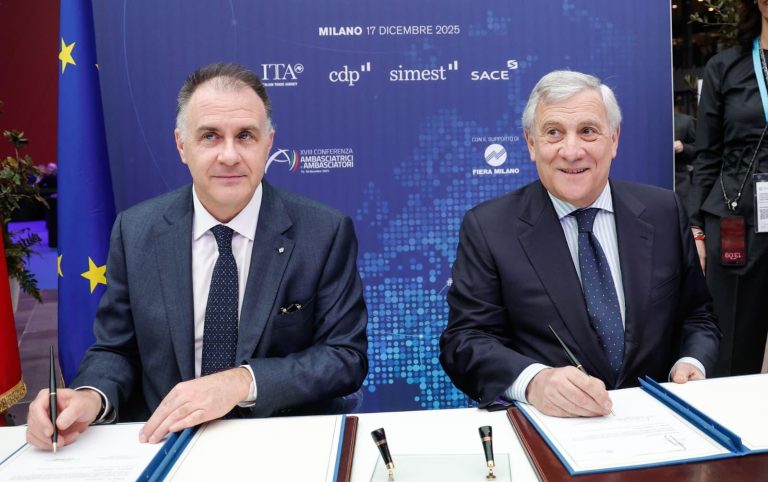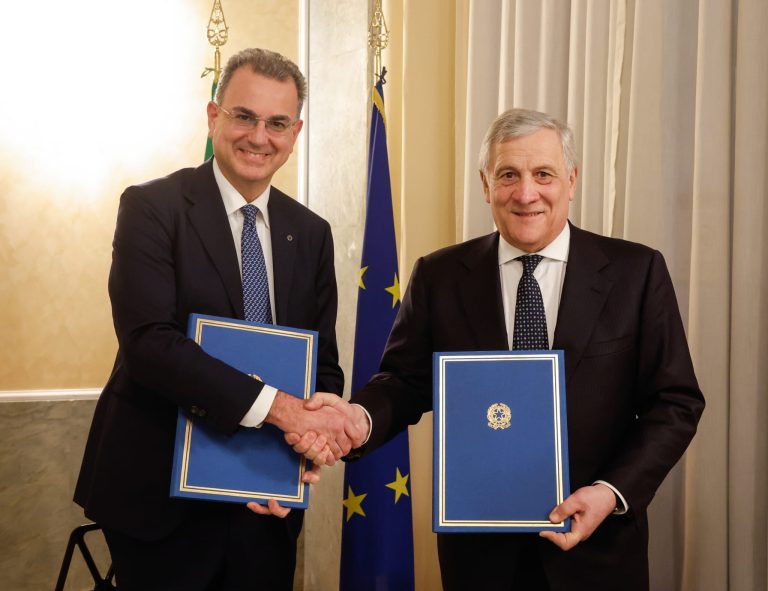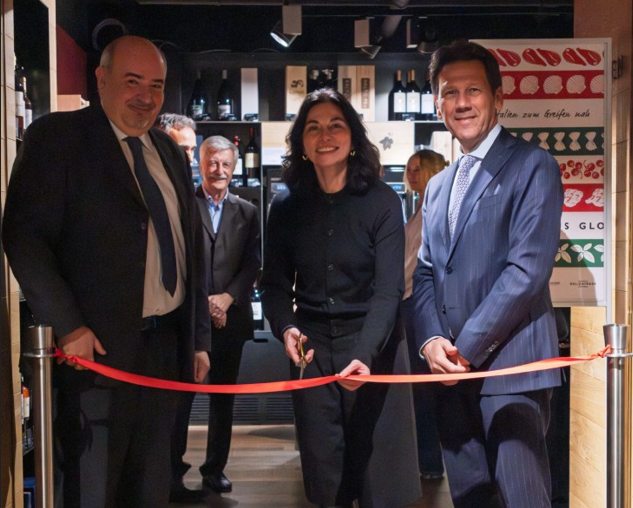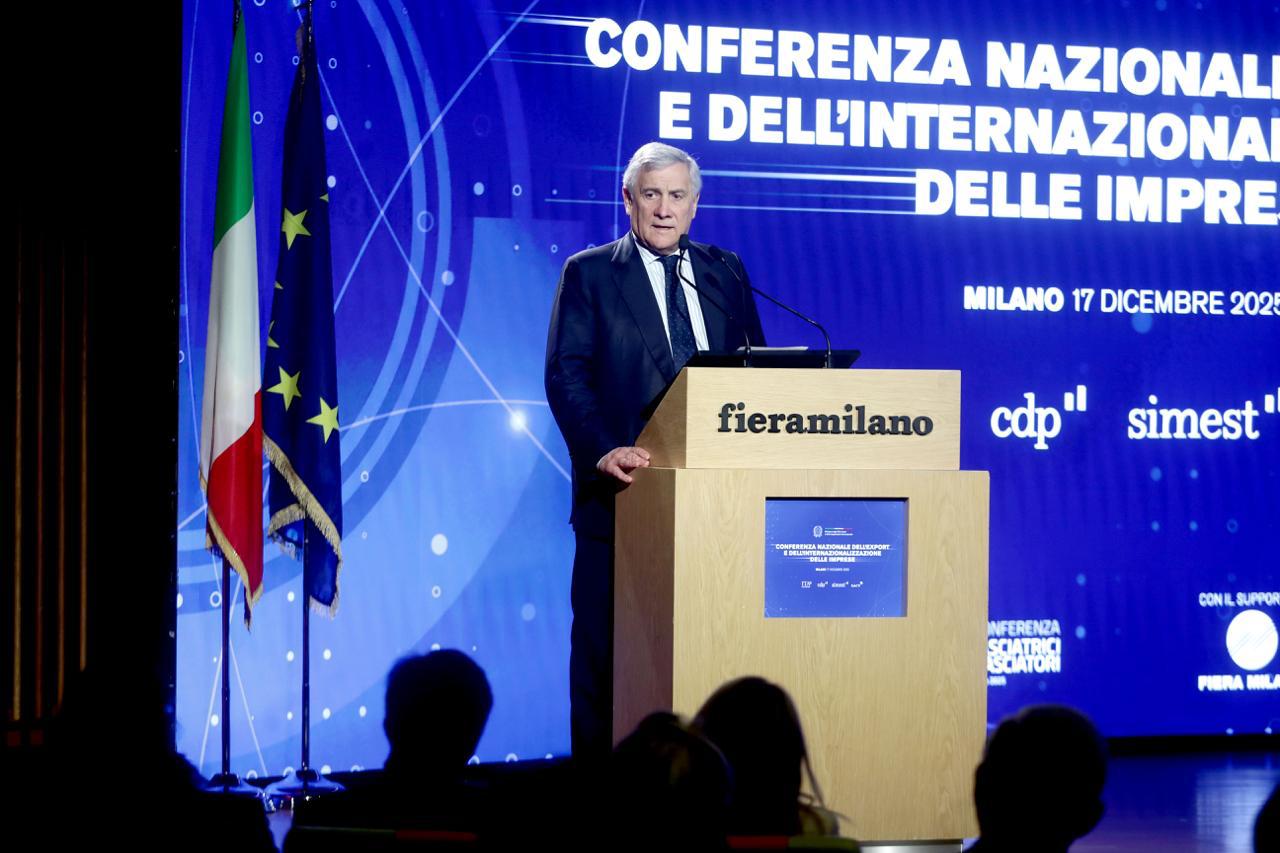
Bringing Italian exports to €700 billion by 2027 is an ambitious challenge that requires a shift in pace across the country. This is the goal emphasized by the Deputy prime minister and Minister of Foreign Affairs and International Cooperation, Antonio Tajani, in his opening remarks at the Third National Conference on Exports and Business Internationalization, held in Milan in mid-December as part of the 18th Conference of Italian Ambassadors.
As said by Foreign Minister Tajani, with a view to achieving this goal, the Ministry has undergone a major reform that, starting from January 1, has created the new Directorate General for Growth and Export Promotion.
Attendance at the Milan events was large and high-level, with over 2,000 registered participants: nearly double the number from the previous year, thus confirming the growing interest in the work that the diplomatic network can carry out to support Italian companies.
Meetings with Ambassadors reached nearly 5,500 requests. In the afternoon, the Foreign Ministry worked to secure approximately 1,700 meetings, more than double the number organized in the previous edition. Along with the Ambassadors, the meetings also involved the Directors of ITA (Italian Trade Agency) and experts from SACE, SIMEST, and CDP.
2025 – An Intense Year
The Conference marked the culmination of a year full of initiatives. In March 2025, the Minister of Foreign Affairs launched the Action Plan for Italian Exports to High-Potential Non-EU Markets, which outlines the Foreign Ministry’s strategy to promote exports and the internationalization of companies. On that occasion, a series of politically-led business missions to every continent were announced, leading to the organization of over 50 major business forums involving approximately 7,500 companies and the holding of over 5,000 B2B meetings. The December Conference provided an opportunity to take stock of the year’s results and outline the sectors and areas that will guide diplomatic and government action in the coming months.
Among the 2025 initiatives, some deserve special mention.
Three business forums were held with India, one of the world’s largest markets: the first in New Delhi, during Deputy Prime Minister Tajani’s visit last April, with the participation of nearly 500 Italian and Indian companies; the second in Brescia, during the visit of Minister of Industry and Commerce Pyush Goyal in early June, with over 400 participating companies; the third, held in Mumbai, took place in December, a few days before the Conference, and was attended by approximately 200 companies.
In Riyadh, Saudi Arabia, the largest Business Forum ever organized in the country took place in November, with over 1,000 participating companies, as well as the preview of the Salone del Mobile 2026, thus confirming the double-digit growth in bilateral trade.
In Africa, in October, Minister Tajani’s missions to Mauritania, Senegal, and Niger strengthened Italy’s economic presence, with the Italy-Senegal Business Forum and the first Area Meeting of Italian Ambassadors and Security Experts in Africa, both held in Dakar. Scholarships were also doubled for ten sub-Saharan African countries and immigration channels for skilled workforce were promoted.
In Asia, Italy took centre stage with the Italian Pavilion at EXPO Osaka, which was awarded the prize for best pavilion, while preparations for EXPO 2030 in Riyadh are already underway. Italy’s strategy also includes strengthening its efforts in ASEAN countries, with which two important business forums were held in September – with Vietnam and South Korea – and in major Asian economies, such as China and Japan.
In the Americas, the United States – the main non-EU export market – recorded 7.2% growth in exports (to nearly €70 billion), an extraordinary result considering the trade tensions that characterized the year. A €300 million SIMEST measure dedicated specifically to the US market has been adopted for 2026, while a Business Forum is scheduled in Miami during the G20 Summit. Other markets of particular interest include Mexico, with which a business forum was organised last May, opened by Minister Tajani, and the Mercosur countries.
Finally, in Europe, which accounts for over 65% of Italian exports, particular attention is being paid to the Balkans and the partnership with Germany. Italy also aims to strengthen its presence in other strategic regions, ranging from Central Asia to the Gulf, with several economic forums and meetings planned, as part of a strategy to support the internationalization of Italian companies.
Diversification – a Strategic Need
During the Milan Conference, it was repeatedly emphasized that companies are facing an increasingly complex global situation. In this context, market diversification becomes a strategic need.
This effort requires strong institutional support, and the reorganization of the Ministry of Foreign Affairs announced by Minister Tajani is part of this strategy.
The Minister explained: “From January 1, the Ministry will have an economic team equivalent to the political one, with the aim of making international trade and growth diplomacy essential and inseparable components of Italian foreign policy.” The reform takes shape with the creation of the Directorate General for Growth and Export Promotion, designed to serve as an operational point of reference for entrepreneurs and a tool for coordinating diplomatic Missions, which are called upon to act as real launching pads for Italian companies abroad. For the Minister of Foreign Affairs, the goal is clear: to ensure that no Italian entrepreneur operating outside Italy feels isolated or deprived of institutional support.
This is matched by the creation in Florence of a Center of Excellence for Training and International Cooperation, housed in the former Overseas Agronomic Institute. The Center will be dedicated to supporting the internationalization of companies, especially SMEs, strengthening development cooperation, and training skilled workers, in conjunction with the Mattei Plan for Africa projects and legal immigration channels tailored to the needs of the production system.
Teamwork
Reaching the €700 billion export target requires a concerted effort. Matteo Zoppas, President of the Italian Trade Agency (ITA), has emphasized that the Italian economy still has an estimated €80 billion in untapped potential and has also underlined the importance of innovative tools to map the remaining opportunities. For Zoppas, “working as a system” and using the network of Embassies as economic outposts is now essential in a fragmented geopolitical context.
Strong support has come from the industrial world. Confindustria’s President Emanuele Orsini has reiterated that Made in Italy remains a globally recognized value and has emphasized that competitiveness depends on the ability to attract talent, secure investment, and offer stable production conditions.
Record exports: €643 billion in 2025
In 2025 again, exports remained a key driver of Italian economic growth, increasing by 3.3% and reaching a record €643 billion. “Behind these figures,” Minister Tajani said, “lies the strength of our productive system, Europe’s second-largest manufacturing sector,” with over four million small and medium-sized enterprises and exports that alone account for approximately one-third of GDP.
The Minister also highlighted the success of the inscription of Italian cuisine as a UNESCO Intangible Cultural Heritage of Humanity, a recognition of the entire agri-food supply chain; the attention paid to sports diplomacy, a driving force for promoting Italian regions and products; and the attractiveness of investment in Italy, which is another priority.