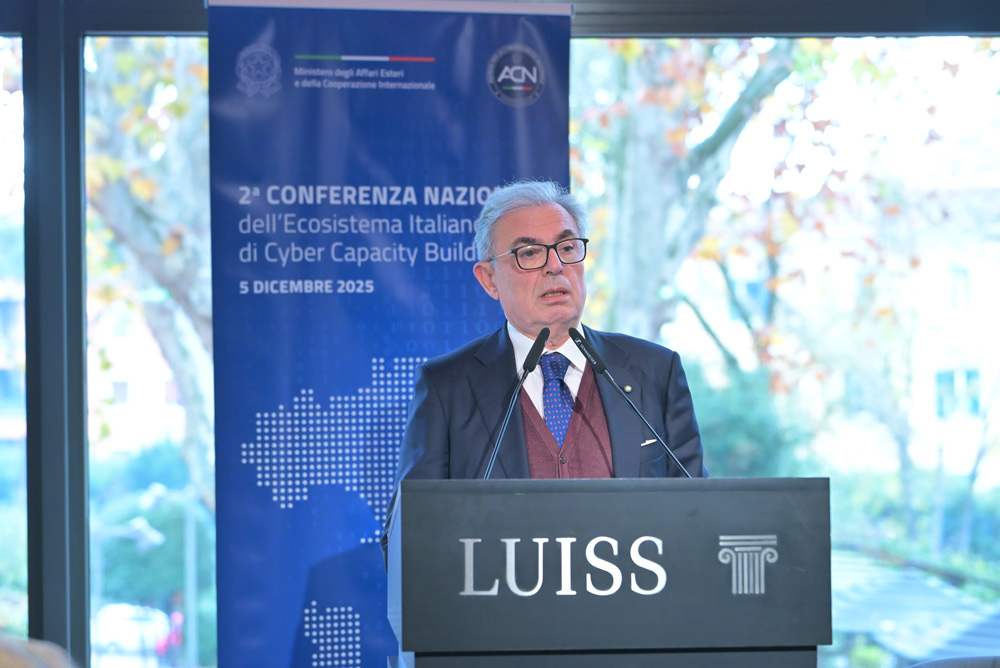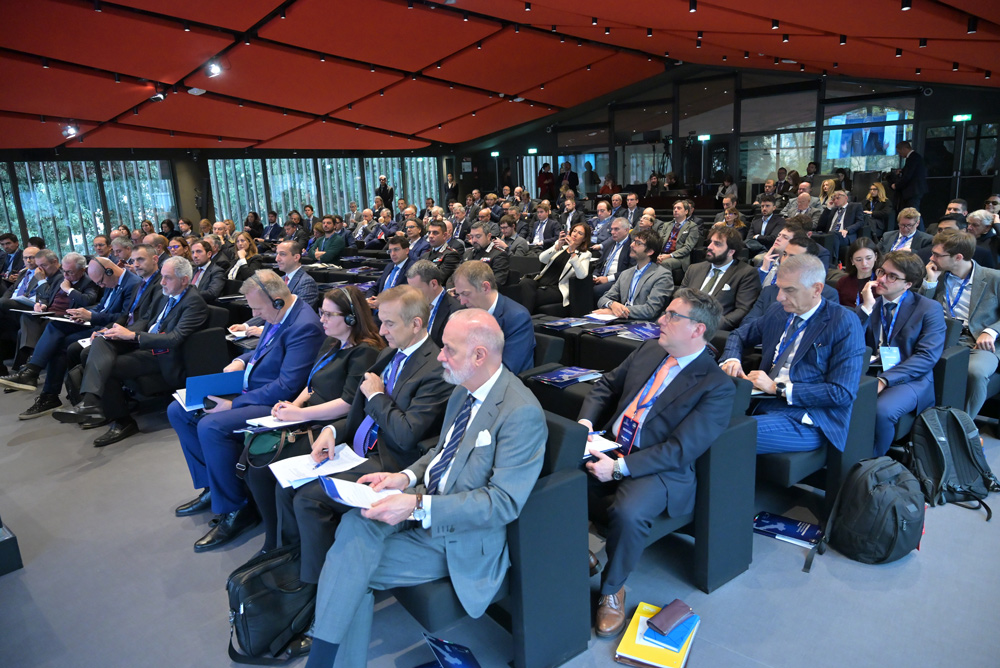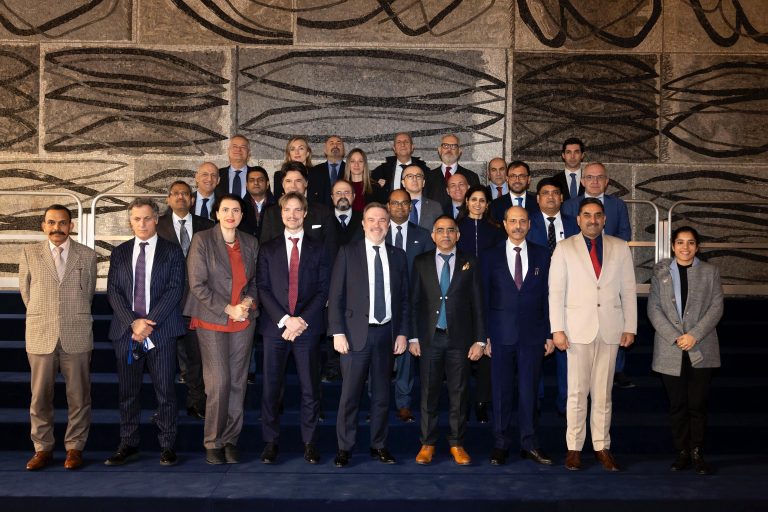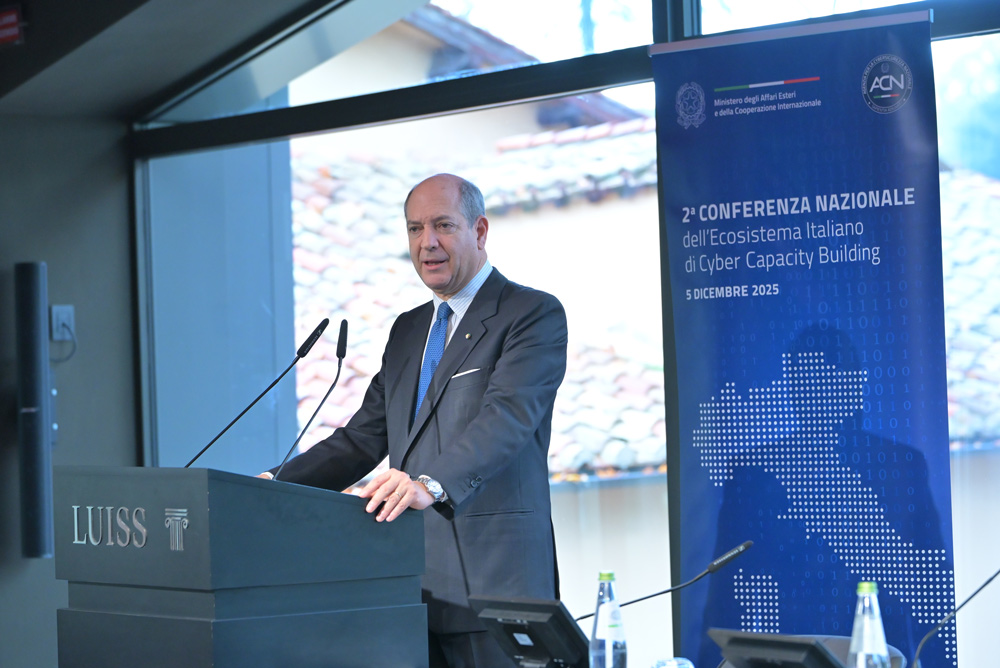
Today, Rome hosted the Second National Conference of the Italian Cyber Capacity Building (CCB) ecosystem at LUISS Guido Carli University, organised by the Ministry of Foreign Affairs and International Cooperation and the National Cybersecurity Agency.
In a global context characterised by increasing technological competition and rising cyber threats, capacity building is becoming an ever more strategic priority for Italian foreign policy, serving as a tool to strengthen the digital resilience of partner countries. Against this backdrop, today’s conference provided an opportunity for discussion, aimed at the progressive structuring of the cyber ecosystem. In this regard, Italy, in line with the 2022–2026 National Cybersecurity Strategy, has adopted a multi-stakeholder approach, based on synergistic collaboration between institutions, the private sector, academia, and civil society.
Building on the First National CCB Conference, held on 2 July 2024 at the Ministry of Foreign Affairs, this edition presented the results achieved, experiences gained, and operational guidelines for the future.
In his opening message, the Deputy Prime Minister and Minister of Foreign Affairs, Antonio Tajani, emphasised the Ministry’s commitment to an open, free, and secure cyberspace and highlighted the importance of capacity building as a foundation for security and economic growth.
Opening the conference, the Secretary-General of the Ministry of Foreign Affairs, Amb. Riccardo Guariglia, focused in particular on the growing role of international cooperation in this field and on the significance of the Italian CCB ecosystem.
In his remarks, the Director-General of the National Cybersecurity Agency, Pref. Bruno Frattasi, highlighted how an event of this calibre confirms Italy’s central role in strengthening the digital resilience of partner countries and supporting the internationalisation of Italian companies specialising in cybersecurity.
The conference brought together Italian and foreign institutional representatives, including UNIDIR Director Robin Geiss, the Director of the Ghanaian National Cybersecurity Authority, Divine Selase Agbeti, and the Head of ITU’s Cybersecurity Division, Orhan Osmani, as well as representatives from Italian companies and research institutions.
The first session highlighted Italy’s commitment to civil cyber resilience in Ukraine, in particular through the Tallinn Mechanism, a multilateral coordination platform under which the Ministry of Foreign Affairs has allocated EUR 1 million to the Ternopil Provincial Administration. The second session focused on CCB activities in the Western Balkans, presenting results achieved through training programmes, technical assistance, and the exchange of best practices. Finally, the third session provided an overview of initiatives developed in Africa, as well as ongoing partnerships and potential new areas for engagement.