It cannot be “a visit”, “a statement or an interview” to radically change the international political scenario, much less historic alliances.
This is the reason why Antonio Tajani – Foreign Minister and leader of Forza Italia – the day after his meeting with US Secretary of State Marco Rubio, and at a time when Donald Trump once again expressed disappointment with Italy’s attitude and did not rule out a withdrawal of US troops from our bases, is neither celebrating nor overdramatizing.
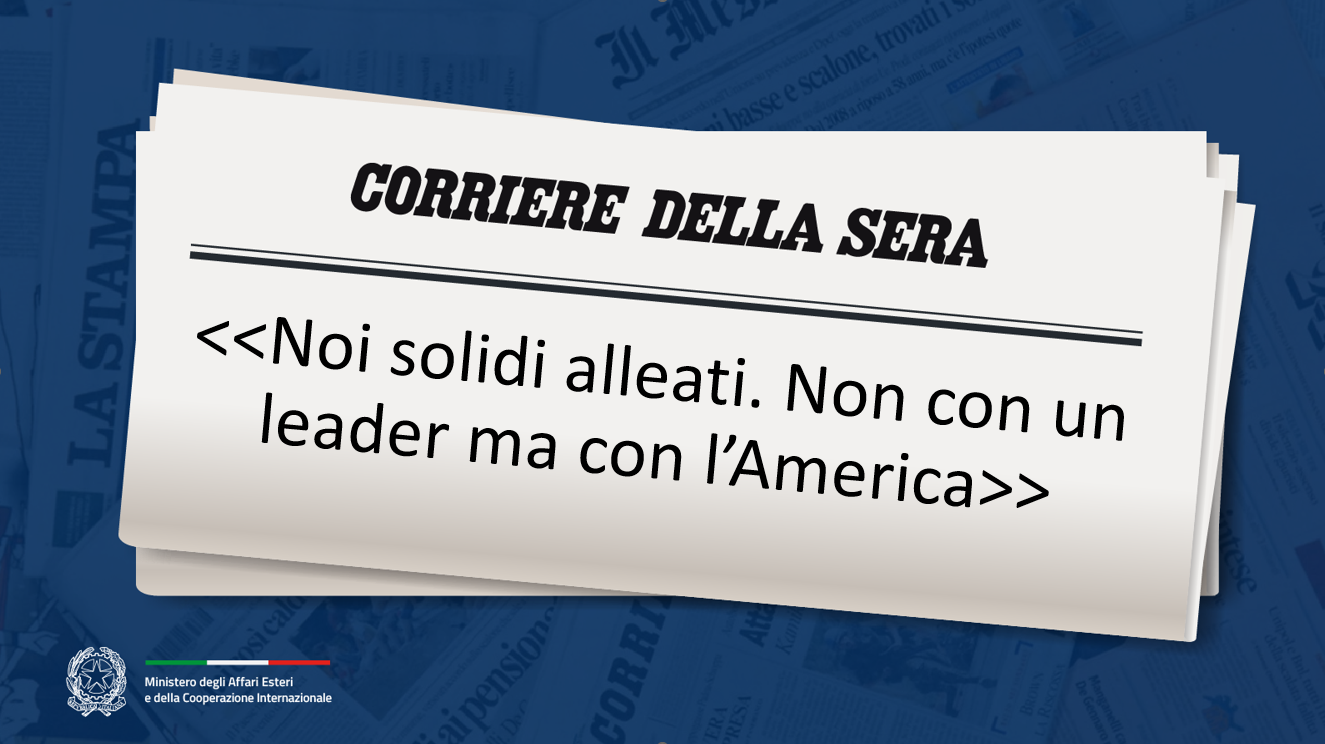
“The alliance is solid and it is with the United States, not with Trump, Obama, or Biden. And it remains, for a simple reason.”
Which one?
«Because Europe and Italy need the United States, but the United States also needs Europe and Italy. It would benefit no one to weaken a continent like ours and a country like ours, which are strategically and economically essential, also for the security of the entire West».
President Trump keeps you hanging on the thread of a “we will see” policy line, continuing to attack Italy for not helping the United States on Iran by not granting the use of bases, while – he said – the US has done everything for us.
“I want to be very clear. It is not true that Italy ‘has done nothing.’ Italy is the country that makes the greatest contribution to international peacekeeping operations, both with the UN and NATO. I mention Lebanon in particular, where we are not only engaged in the UNIFIL mission, but are ready to do even more, providing military training to the government to curb Hezbollah, even making our Guardia di Finanza available to counter the illicit flows that fuel drug trafficking, arms trafficking, and terrorist financing in that crucial area. We have never backed down, from Iraq to Afghanistan: our soldiers have died defending peace and freedom. No one can argue that Italy is doing too little.”
Did you tell Rubio?
«We discussed this at length. We are allies, and we will remain so, but we cannot agree on everything. We care about our alliance with the United States, but also about our national interests” – just like the US.
Is Lebanon one of them?
«Italy strongly supports the negotiations that the United States has initiated directly between Israel and Lebanon. The truce is crucial; it is decisive, but we need to achieve a genuine peace process that guarantees the actual sovereignty of the Lebanese government and the security of Israel from Hezbollah attacks against the civilian population. The issue for Lebanese institutions is Hezbollah’s disarmament. And we will be there.”
What about Hormuz? The United States has asked for more. How much are we willing to grant in terms of military commitment?
«Italian minesweepers could be sent to Hormuz to help ensure freedom of movement for ships from around the world. A consolidated truce and a framework of international agreements are needed. We certainly do not want to go to war, but we will do everything necessary to ensure respect for international maritime law. Our national security and the well-being of Italian citizens and companies are also at stake.”
Has the United States understood this?
«I definitely think so. Relations are ongoing, and we need them as much as they need us. Regarding Iran, we have not been involved, nor even informed. We also share the goal of pacifying the region; we hope for a dialogue that leads to peace. There is no contradiction.”
But, after all, you are not even ready to snap to attention, as the opposition reproaches you.
“We have never done so; we have always had the same policy line. We do believe, however, that Europe needs to be stronger, more cohesive, and more independent in terms of defence and foreign policy. We need to take up this role, first and foremost, by being united. I will discuss this tomorrow in Brussels at the EU Foreign Ministers’ meeting.”
No one gives anything away for nothing…
“We have given, but if we want to count, we need to do more.”
There is also talk about an EU single negotiator for Ukraine: would this role interest us?
«It is still unclear what the EU will decide on the appointment of a single negotiator, but the important thing is that the EU countries maintain a high and united commitment to Ukraine’s defence. Our sanctions policy has been essential; we need and want to sit down at the negotiating table.”
Did you also talk about Libya and Venezuela, countries in which Italy has specific interests?
“They are very different theatres, but everywhere Italy asks for and offers the same things: we ask to work for fostering stability and reducing tensions. And we offer assistance, political support, and, where necessary, military support. In Venezuela, for example, there is a large Italian community and historic relations with a country unfortunately plagued for years by one of the worst dictatorships. I hope that the situation in Venezuela can evolve toward true freedom for the people and the resumption of relations, including on the energy front, which are particularly valuable in light of what is happening in the Middle East. On this matter, Marco Rubio has clearly informed us of the US Administration’s assessments”.
Are we risking a difficult summer due to the crisis caused by the war?
“There are energy difficulties and there are also difficulties due to the inflow of fertilizers produced by the Gulf countries and blocked in Hormuz. This is also the reason why the Italian government and the FAO have activated a “Rome Coalition” with countries that need not only energy, but also fertilizers for their agriculture. If the trade blockade in the Strait of Hormuz were to continue for months, we would have food crises in many African countries, and Italian farmers are certainly already paying the price for the increase in fertilizer prices.”
Do you feel like telling Italians “do not be afraid”?
“Yes, I do. There are things we do not decide on our own, but we are doing everything we can to avoid costs being passed on to citizens.”
Do you think it will be enough? This is an important year for the government.
“It is positive that the ECB has not raised interest rates, and we will insist that not only spending on defence but also spending on the energy crisis be excluded from the parameters of the Stability Pact. It is important for everyone.”