“Europe must play a key role in the talks aimed at achieving peace in Ukraine, but also in ensuring the security of Kyiv and of the continent itself.”
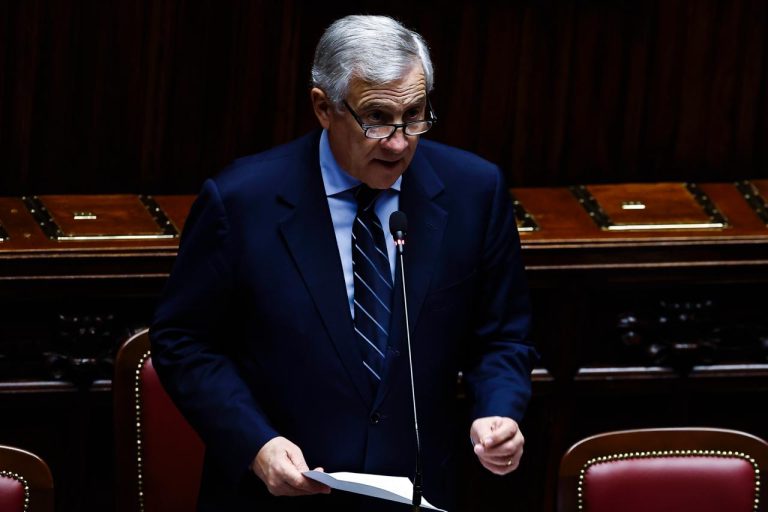
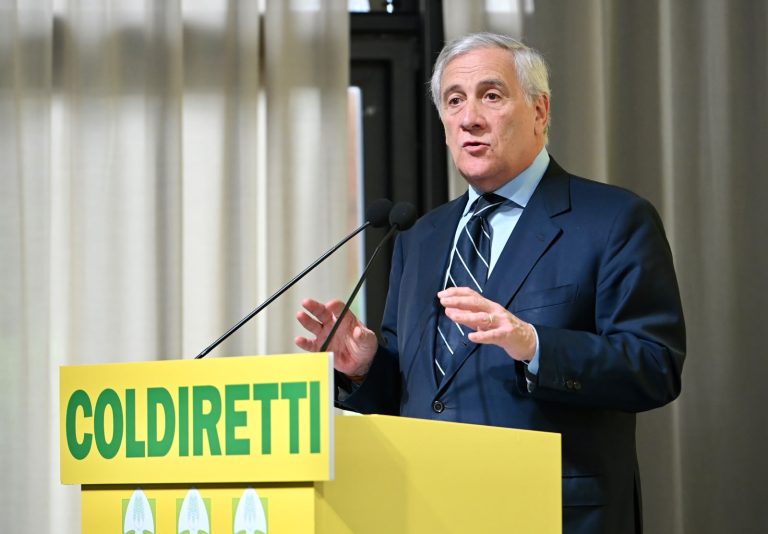
Minister of Foreign Affairs Antonio Tajani is watching events in Europe from Brazil. As Minister for Foreign Trade, he is leading a mission by Confindustria and ITA to strengthen economic cooperation under the Mercosur treaty and has sent a message to Volodymyr Zelensky just as news is spreading that the plane carrying the Ukrainian president from Moldova to Oslo was nearly struck by a drone as it took off. Zelensky was on his way to Norway for King Harald’s funeral. Tajani welcomes the comments made by the Ukrainian Prime Minister, who, in an interview with ‘La Stampa’, called for Europe to play a greater role in the peace talks, and takes the proposal a step further. “I want to remain optimistic despite the difficulties,” he says. The minister emphasises that the objective must be clear: “We need to achieve a just peace between Ukraine and the Russian Federation.” And he adds: “We are well aware that Russia is the aggressor, but we are not at war with Russia.” He then emphasises Italy’s commitment: “We will do everything we can to facilitate a ceasefire and, subsequently, peace. Europe can do a great deal, because without Europe there can be no peace, given that the EU has imposed a series of sanctions on the Russian Federation. If those sanctions are not lifted, says Tajani, we cannot achieve peace.”
At Fiesp, the Federation of Industries of the State of São Paulo, the economic agenda thus intersects with the most sensitive international issue, on the very day that Zelensky once again calls for a stronger European presence in the negotiations, citing a specific reason: “Europe must be at the table” – not just for aid, money or weapons, but because “it is a matter of genuine security”.
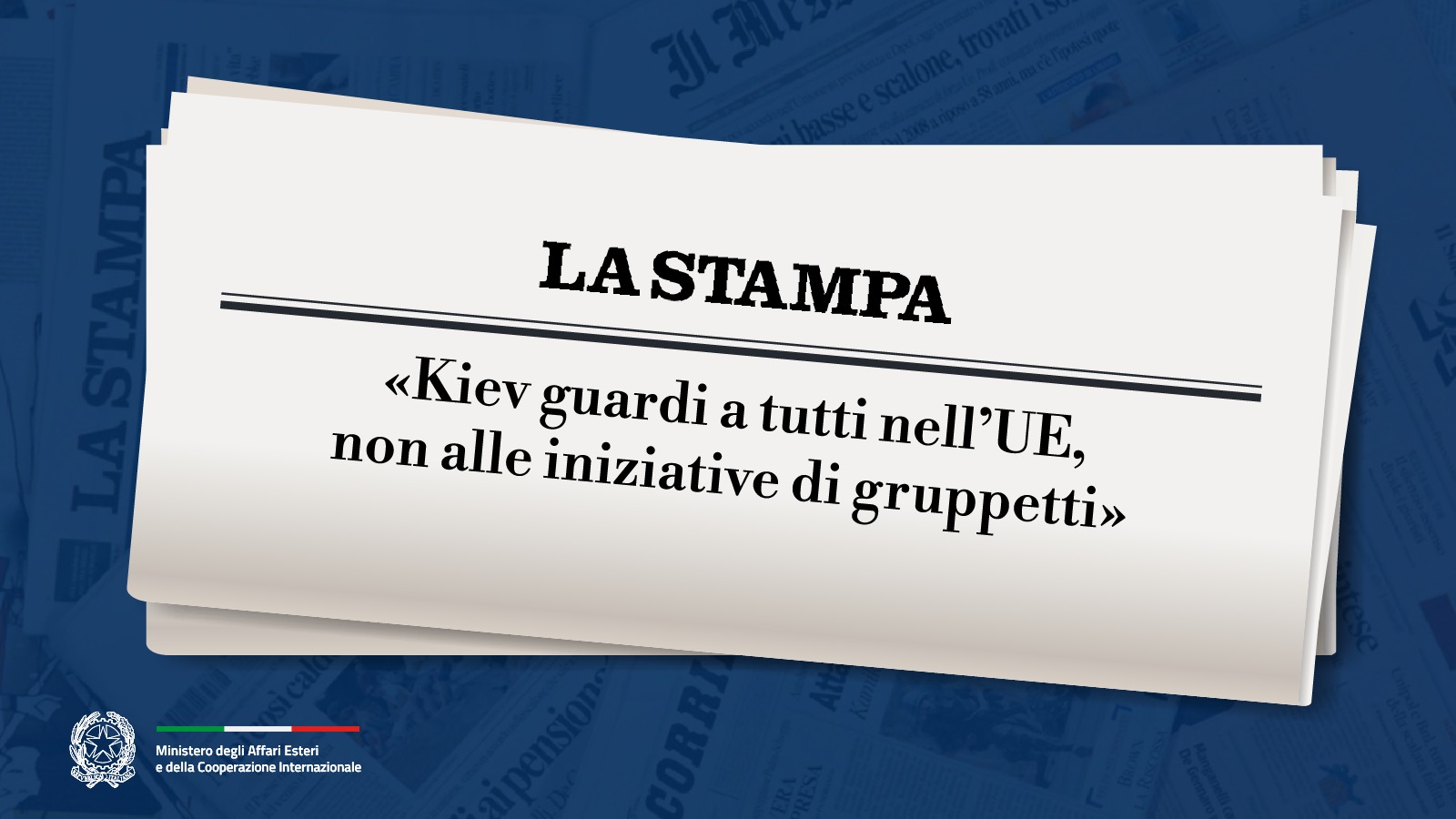
Tajani accepts the Ukrainian President’s invitation and responds with a call for unity. “I believe, however,” the minister points out, “that Zelensky, too, should look not so much at individual European nations, but at all EU Member States.” In his view, this is not the time to rely on national initiatives or narrow coalitions. “I believe that individual initiatives or those undertaken by small groups are of no value.”
Europe’s influence, explains Tajani, will depend on its ability to act in unison. “All the countries of the European Union need to be committed to this, because working together makes the whole of Europe stronger.” A message addressed directly to Zelensky “as a friend of Ukraine, as a supporter of Ukraine”. He adds that this involvement must start with the larger countries: “It is a good idea to involve all countries, starting with the largest ones”. And he explicitly mentions “not only France and Germany, but also Italy and Poland”.
According to Tajani, in fact, it is only through a collective commitment by the twenty-seven Member States that we can achieve a “strong Europe that plays a leading role in shaping this new era and in building peace.” A role that will need to be political and diplomatic, but which is inevitably intertwined with military security, particularly following yet another escalation in Russian attacks.
On the Italian front, however, there remains an insurmountable obstacle. “We have helped, and will continue to help, Ukraine to defend itself.” However, this support does not imply direct involvement by the Italian Armed Forces. “We will not send our troops into Ukrainian territory because, I repeat, we are not at war with Russia.” The approach remains to combine military support with diplomatic efforts.
Then, following this appeal, Tajani turns his attention back to Brazil. “We work for peace, for rights, and for the centrality of the individual. Our presence in Latin America is different from that of others; we are part of the West. Approving the agreement between the EU and Mercosur, he emphasises, is also a way of strengthening Europe’s presence in this region, not only economically but also politically.” And on the subject of the upcoming elections in the South American country, which are due to take place on 4 October, he concludes: “The political climate in Brazil does not affect our relations. We are friends of Brazil; whoever wins will be our partner, and we will always remain friends of this country. São Paulo is the largest Italian city in the world.”