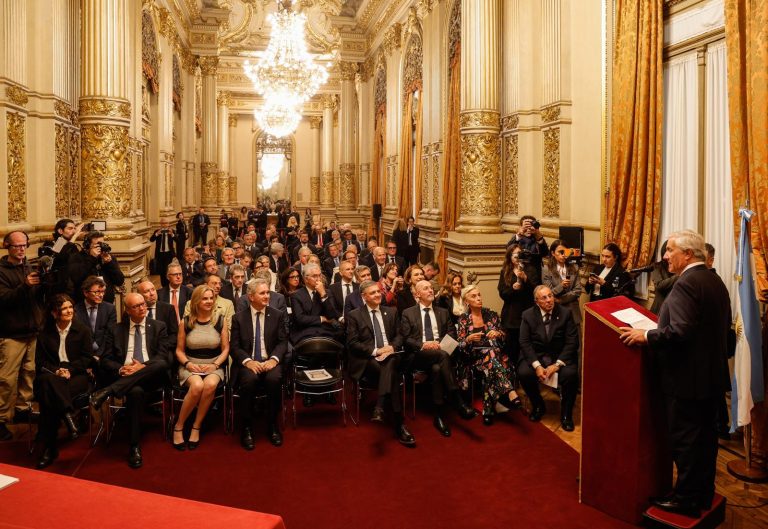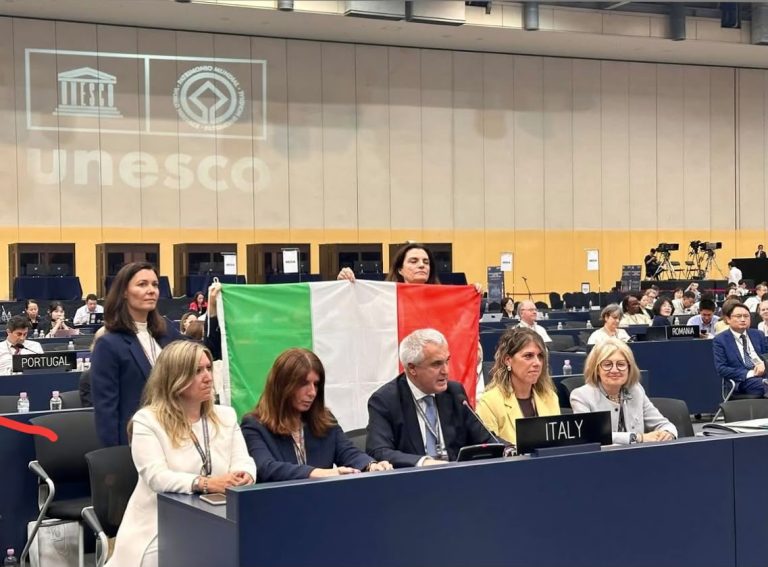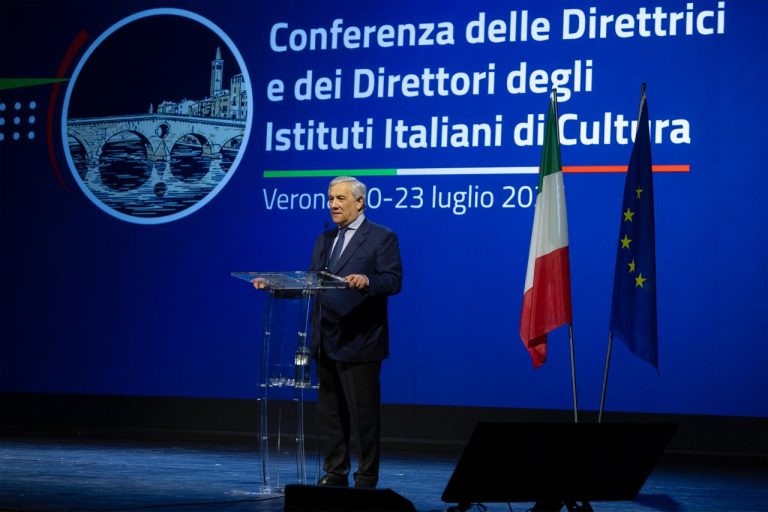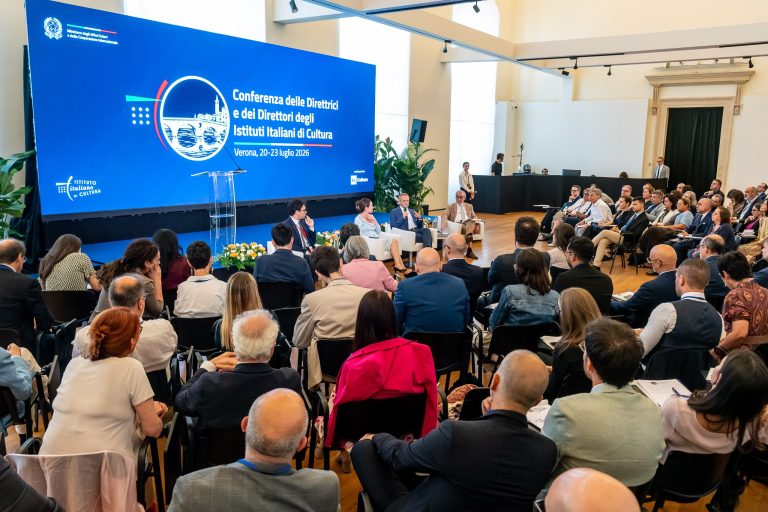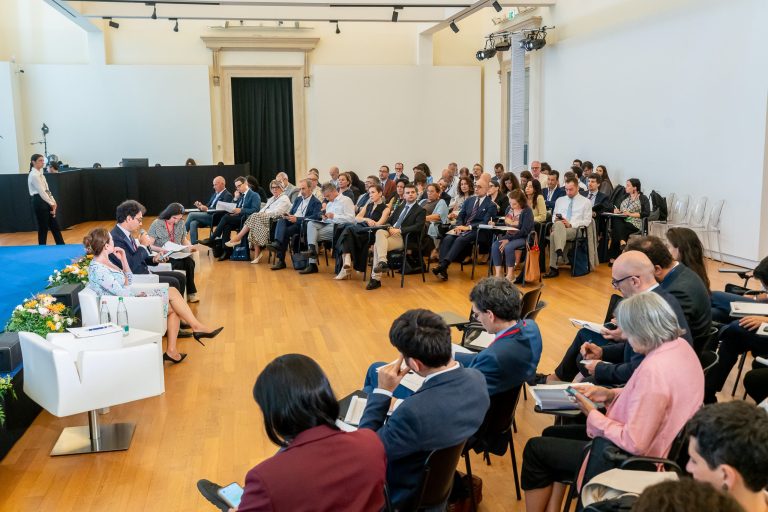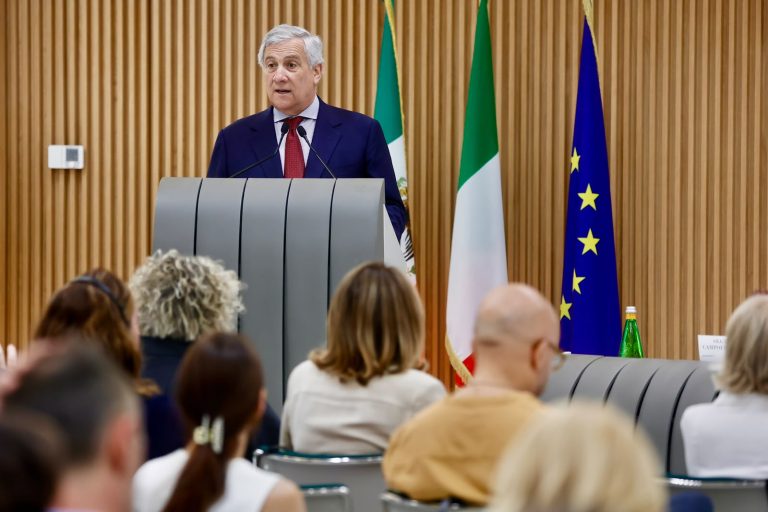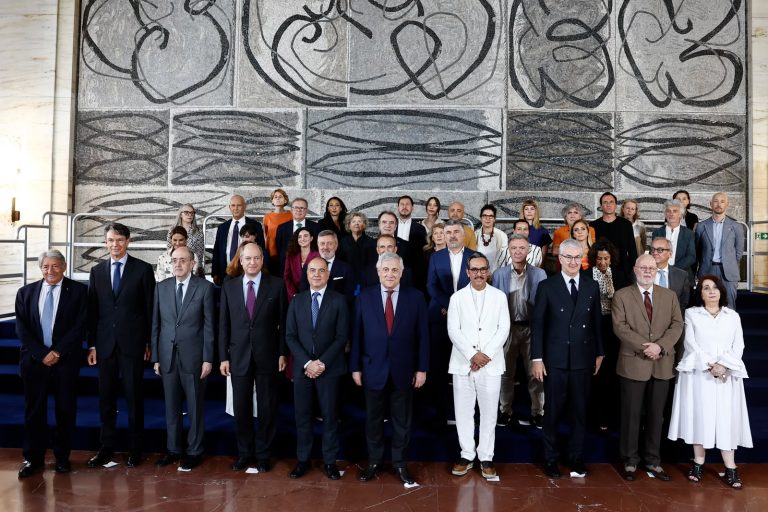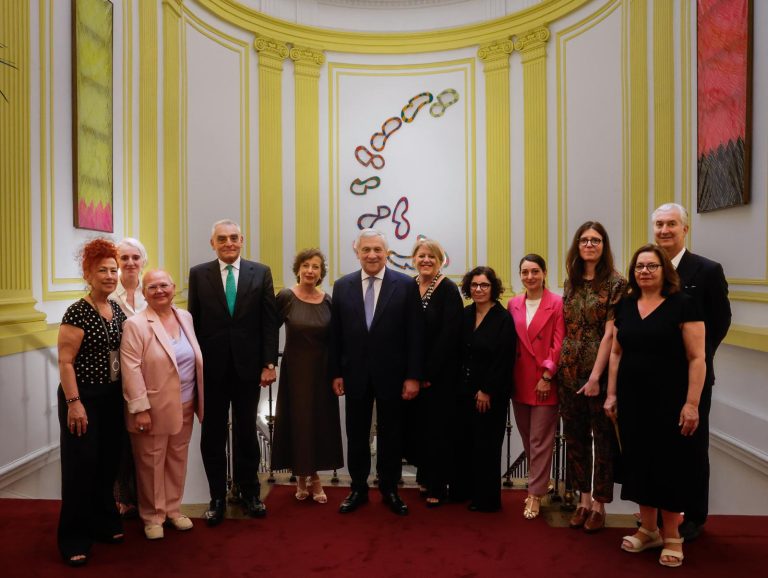
Culture as a ‘priority of Italian foreign policy.’ Minister of Foreign Affairs Antonio Tajani made this statement in Verona at the annual meeting of cultural Attachés, which concludes today.
Minister Tajani, the Ministry of Foreign Affairs has decided to hold this year’s annual meeting of cultural Attachés in Verona: what is the main focus?
Today, promoting our culture is no longer a secondary activity, but one of the most effective tools through which Italy strengthens its presence in the world. And it must be a core activity among those of the Ministry of Foreign Affairs.
How does it develop?
The network of the 88 Italian Cultural Institutes, located in 63 countries, represents one of the most important international cultural infrastructures. Every year, we carry out more than 6,000 initiatives, thanks to public funding of approximately EUR 24 million, helping to promote Italian language, art, creativity, music, cinema, and cultural heritage.
Verona becomes the capital
We brought together all the directors of the Cultural Institutes in Verona because we want to further strengthen this network, share best practices, identify new projects, and develop a more effective strategy for cultural diplomacy. We chose the Veneto region not only for its extraordinary cultural richness, but also because it is one of the most dynamic and open regions in the world: with approximately 4.8 million residents, a GDP of EUR 200 billion, and over 412,000 active businesses, it is one of the country’s economic powerhouses, where a tradition of manufacturing, innovation, and an international outlook coexist in a virtuous cycle.
Culture has often been viewed as a niche sector from an economic standpoint: what message is this summit sending on this front?
I am convinced of the opposite: culture is identity, it is growth, and it is also the economy. Especially for Italy. At a time in history marked by international tensions and profound geopolitical changes, culture serves as an extraordinary catalyst for dialogue among peoples. And that is what allows Italy to speak to the world through beauty, talent, creativity, and quality—qualities that are universally recognised.
And what about the economic situation?
There is also a fact that we cannot ignore. In 2025, the cultural and creative industries generated EUR 115.8 billion of added value, accounting for 5.7% of the national economy, and employed over 1.5 million people and just under 300,000 businesses. If we consider the entire related industry, the cultural sector generates a total of approximately EUR 310 billion, accounting for more than 15% of the wealth produced in the country. That’s why I often say that culture means economy. Promoting Italian culture means supporting ‘Made in Italy,’ tourism, our businesses, and the creative industries, and strengthening Italy’s international competitiveness. Cultural diplomacy is an integral part of growth diplomacy.
What new opportunities have emerged for our country, as well as for the Veneto region and the Verona area?
In recent years, Verona has become a hub for ideas and international projects. Starting in 2023, through the Laboratorio della Crescita—a project developed in collaboration with Il Sole 24 Ore—we are bringing the Ministry of Foreign Affairs to local communities to connect artists, cultural enterprises, start-ups, institutions, and industry professionals with Italy’s diplomatic network around the world. We would like to turn local projects into international opportunities, using the network of Embassies, Consulates, and—above all—the Italian Cultural Institutes as a platform for global promotion.
How will it work?
We will be promoting the Arena di Verona opera season around the world; Vinitaly has already expanded beyond Italy’s borders and is part of our programme to promote the wine industry worldwide. But our commitment to the local community runs even deeper: in recent days, the Ministry of Foreign Affairs met with representatives of the city’s artistic and cultural communities—from theatre to dance to literature—offering Veronese artists the opportunity to participate in the cultural programming of the network of the Italian Cultural Institutes around the world.
What will come out of the Verona summit?
One of the most concrete examples of the work resulting from this summit is the project ‘Territori. Racconti di architetture e vino’ (Territories. Stories of Architecture and Wine), which was presented right here in Verona. The project showcases one of the most iconic examples of Italian excellence: the convergence of wine, contemporary architecture, landscape, design, and regional identity. Through ten cantine d’autore (signature cellars) spread from north to south, we offer a modern narrative of Italy that showcases culture, business, tourism, and food and wine all at once.
What else?
There is also a major project aimed at strengthening the presence and promotion of Italian music around the world, which we have been working on for some time and in which we have great faith. The music industry has asked for our support, and we are ready to further enhance the work we are already doing together with Assoconcerti, the Italian Music Federation, and SIAE (Società Italiana Autori ed Editori – Italian Society of Authors and Publishers).
Turning to your political role as National Secretary of Forza Italia: how likely is it that general elections will be held next year before the local elections?
Politics is the realm of the possible, but I see no reason why the legislative session should be cut short. The government is stable, and the majority is united on key issues: we have shown that we are united even on issues where we had differing views, always finding a balance and reaching a compromise. The Italian people have given us a five-year mandate, and our goal is to fulfil it.
Will Forza Italia veto the possible inclusion of Futuro Nazionale Vannacci in the centre-right coalition or in any upcoming agreements?
Forza Italia does not veto anyone, but it has its own very clear identity: we are a liberal, Catholic, populist, pro-European, and pro-Atlanticist party. It is on these values that we build our alliances. As for the coalition’s structure, decisions are made jointly with mutual respect. But we will continue to staunchly defend our political culture and our moderate stance, which represents an essential added value for the entire centre-right. Today, it is Vannacci who is distancing himself from us, voting with the left against the government and embracing views and rhetoric that diverge dramatically from ours.
There will also be an election in Verona next year. Is Forza Italia staking a claim to the mayoral nomination for the centre-right—and has the discussion so far always centred on Flavio Tosi—or is the issue of political agreements with FdI, the Lega, and Noi Moderati still a long way off?
Before we get to the names and candidates, we need to focus on the platform and the plan for the city. That said, Forza Italia is a growing party and will make its presence felt. Our goal remains to win, by presenting a united front and fielding the most competitive candidate: I’m thinking of Flavio Tosi. And I confirm what I always say: decisions will be made collectively, just as we have always done. Our proposal is to present the candidates, evaluate their chances of success based on objective criteria, and choose the strongest one—the one who appears to have the best chance of winning.