The project, funded by the Ministry of Foreign Affairs and International Cooperation (MAECI) through the Italian Agency for Development Cooperation (AICS) and carried out by the University of Florence – Laboratory of Social Geography, has been completed. Its aim was to contribute to the regeneration of informal settlements in Afghanistan.
The activities focused on urban planning and the management and enhancement of cultural heritage in the cities of Herat and Bamiyan, the latter being home to a UNESCO World Heritage Site.
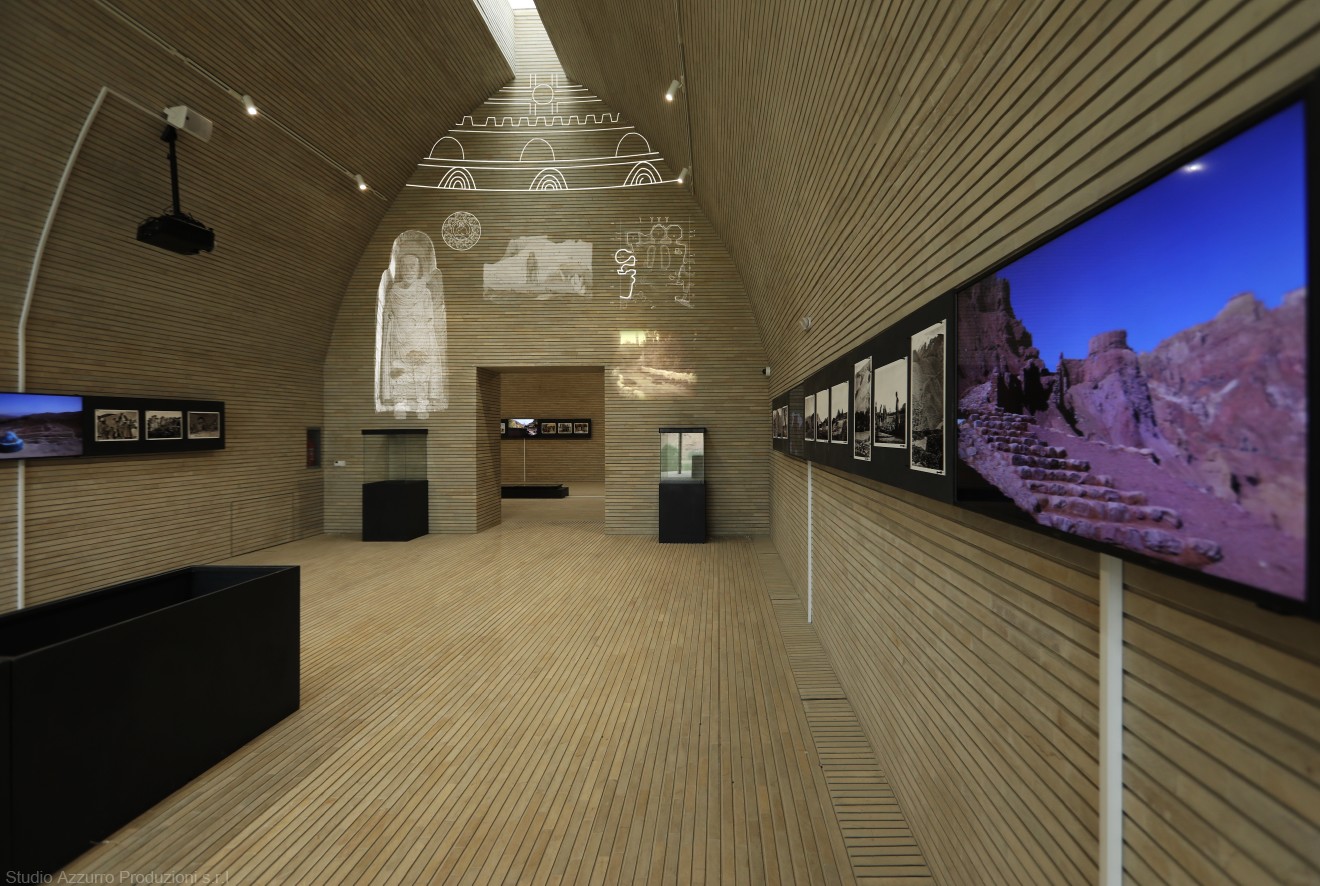
The cultural landscape was the focus of many seminars organised at the Bamiyan Cultural Centre (BCC), in collaboration with the University of Bamiyan. Also at the BCC, in collaboration with Studio Azzurro of Milan, an audiovisual exhibition spread across six rooms was set up, illustrating the results of in-depth research into the structural components of the valley’s cultural landscape: the physical and geographical environment; natural resources; forms of agricultural work; arts and crafts; vernacular architecture and traditional settlements, as well as the archaeological heritage.
The exhibition also highlights the ongoing processes of transformation, including demographic growth and the expansion of informal settlements, and their impact on the territorial organisation and the configuration of places. Particular attention is paid to the risks associated with erosion and climate change, as well as to the need for sustainable management of these processes, capable of promoting employment and a lasting economic recovery, consistent with available resources.
Finally, support for the development of tourism with a low environmental impact has been a necessary measure in light of the significant increase in Afghan visitors to the Bamiyan area. To this end, many training activities have been carried out and support has been provided for the launch of six start-ups in the tourist services sector.
Through this project, the Foreign Ministry reaffirms its commitment to the economic resilience of the Afghan people, with a particular focus on women.