Senegal is undergoing a historic transformation that is redefining its role in the West African economic landscape. The 2024-2025 period not only marks the country’s official entry into the club of global oil and gas producers, but also coincides with a significant paradigm shift in economic governance, characterized by a strong commitment to transparency in public finances. For international observers and the Italian business community, Senegal remains a fast-evolving strategic hub, where opportunities related to energy diversification are inextricably intertwined with the new needs of local industrialization.
A Rapidly Accelerating Macroeconomic Framework
The Senegalese economy shows remarkable dynamism, gaining new momentum with the start of production at the Sangomar oil field in June 2024 and the imminent exploitation of gas resources. Growth projections for 2025 outline a scenario of strong expansion, with estimates ranging from the 7.9% forecast by the International Monetary Fund (IMF) to the 10.3% predicted by the African Development Bank (AfDB). This leap forward is structurally driven by oil and gas exports, while growth in non-oil sectors remains on a more gradual but steady path.
In parallel with growth, the country has achieved significant success in terms of monetary stability. Inflation, which had worried analysts in 2023, reaching nearly 6%, has fallen dramatically, settling below the 2% threshold in the current two-year period. This is the result of falling international food prices and the stability ensured by the CFA franc’s peg to the euro, factors that have protected domestic purchasing power during in a delicate transition period. The picture, however, is not without shadows: the recent investigation into public finances has revealed a debt higher than previously estimated, pushing the debt-to-GDP ratio to levels that now require rigorous and prudent fiscal management to regain the full confidence of financial markets.
Energy, Industry, and Infrastructure: The Drivers of Change
The “Senegal 2050” agenda, submitted at the end of 2024 by President Bassirou Diomaye Faye, aims to radically transform the national production structure, moving beyond the import-driven economy model to become a regional logistics and energy hub. The extractive sector is unquestionably the current driving force behind this dynamic: with nearly 17 million barrels produced in the first year of operation at the Sangomar field, the oil and gas industry has experienced vertical expansion, coupled with the development of other mineral resources such as zirconium and phosphates. New regulations also aim to ensure that this wealth does not remain an isolated phenomenon, but rather generates related economic activities’ income for local companies and skilled employment.
Alongside energy, agriculture and infrastructure remain central pillars of the development strategy. The government is pursuing the goal of food sovereignty through the creation of agro-industrial hubs, such as Agropolo Sud, designed to reduce dependence on grain imports and enhance local supply chains. At logistics level, Senegal is strengthening its position as a regional hub thanks to strategic investment such as the Regional Express Train and the modernization of the port of Dakar, which has significantly increased its cargo handling capacity. The challenge for the future will be to maintain this pace of infrastructure investment despite the necessary fiscal consolidation.
The Strategic Energy Partnership Between Italy and Senegal
Economic relations between Italy and Senegal underwent a deep structural shift in 2025, clearly visible in trade data, which captures a historic turning point. In the first nine months of the year, total trade reached €566 million, marking an exceptional growth of 160.8% compared to the same period of the previous year. Senegal has turned from a simple outlet market to a key energy supplier for Italy: Italian imports from the African country have soared 686.1%, reaching €381 million. This trend is driven almost exclusively by the purchase of crude oil, which alone is worth €238 million, covering over 60% of all imports from Senegal.
This evolution has led, for the first time in years, to a negative trade balance for Italy, amounting to -€197 million, demonstrating Senegal’s new role as a partner for national energy security. Despite booming oil imports, Italy’s exports to Senegal continue to grow, up 9.6% to €185 million. Italian companies are successfully managing the supply of petroleum refining products and industrial machinery, confirming their position as a privileged partner for Senegal’s industrialization. From general and specialty machinery to agro-industry technologies, Italy is accompanying the country’s productive transformation, supported by a growing network of direct investment. Senegal is therefore no longer simply a commercial destination, but a partner with which to build integrated supply chains, in a spirit of equal partnership that looks to the long term.
The Dakar Business Forum opens to new joint ventures
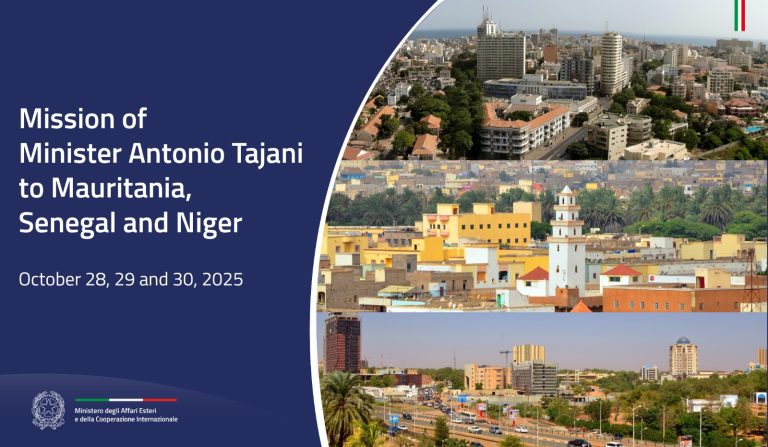
In the country of “teranga,” the typical hospitality of Senegal and its people, the mission of our country system, culminating in the Italy-Senegal Business Forum on October 29, 2025, was welcomed with enthusiasm and openness by local institutions.
“This is the beginning of a strong effort by Italy to seek an increasingly significant presence, to bring Italian companies here with their expertise, organize joint ventures, import products, and contribute to development with a view to achieving mutual benefit,” said Antonio Tajani, Deputy Prime Minister and Minister of Foreign Affairs and International Cooperation, who, together with Interior Minister Matteo Piantedosi, gave the Italian mission a highly institutional value.
Italy took part united with around a hundred participants, including around seventy company representatives, coordinated by the Ministry of Foreign Affairs and the Italian Trade Agency (ITA), in collaboration with Confindustria Assafrica & Mediterraneo and APIX, the Senegalese agency for the promotion of investment and major projects. It was a unique opportunity to “sow seeds” – as Matteo Zoppas, President of the Italian Trade Agency, stated in an interview with Africa e Affari – to foster relations and lead to a leap forward for Made in Italy products. He said: “The framework of the Mattei Plan, which focuses on Africa’s potential but also on mutually building opportunities, makes the event held in Dakar, a hub for the West African region, highly appropriate.” Three areas of cooperation were identified for that mission, namely agribusiness, energy, and infrastructure.
“There is exemplary cooperation between Italy and Senegal, based on trust, co-construction, and the pursuit of shared prosperity. This Forum embodies not only a shared vision, but also the desire to co-build our countries,” Minister of Agriculture, Food Sovereignty, and Livestock, Mabouba Diagne, said before the participants at the Business Forum. The Senegalese government representative urged the two countries to build shared growth in strategic sectors such as agribusiness, energy, and physical and digital infrastructure. “But we want to go beyond this Forum and stimulate the creation of joint ventures, encourage the establishment of Italian companies in our industrial zones, and build joint value chains,” he insisted.
Despite a relatively small domestic market – 18 million people – Senegal enjoys a key geostrategic position, direct and fast connections with Italy, political stability, energy sources, agricultural potential, and rapidly expanding physical and digital infrastructure. It is a true gateway to the vast market of the African Free Trade Area (AfFCTA), as well as to the West African bloc.
“Italy must not hesitate to position itself,” said Aissatou Ndiaye, coordinator of the national agropole development programme, at the end of a presentation before a delegation of Italian entrepreneurs at the Agropole headquarters in Dakar. Despite delays, the development of agro-industrial development zones is progressing, with two out of five agropoles ready to operate, in Central and Southern Africa. She added: “We favour joint ventures between national and international companies. We are ready; the facilities are about to be made available – land, warehouses, cold storage facilities, etc. – to foster win-win partnerships.”
Political stability favours investment. “We have revised our investment code and customs code to make the business climate more attractive. We have structural projects that enable us to create partnerships with our best national companies. We have oil and gas, as well as human resources. Our geographic location is prime,” insisted the Agropole representative.
Interview with the Italian Ambassador to Senegal, Caterina Bertolini
Besides Senegal’s inclusion among the priority countries of the Mattei Plan, the recent bilateral Business Forum in Dakar has seen the participation of a significant representation of the Italian system, beginning with the Minister of Foreign Affairs, Antonio Tajani. In your opinion, how can we interpret this renewed interest in Senegal?
The Business Forum brought over 70 Italian companies to Dakar, primarily active in the three focus sectors of the initiative: agribusiness, physical and digital infrastructure, and energy, including both oil and gas, and renewables. It was the largest Italian delegation ever seen in Senegal and West Africa, and Minister Tajani’s leadership certainly contributed to this result, enabling the mobilization of high-level institutions and companies, first on the Italian side and then on the Senegalese side. Essentially, the conditions were created for an event that responded to the Italian private sector’s growing interest in Africa in general and, within that region, in the most attractive markets. Senegal combines political stability with an attractive and consistent economic performance over several years, a strong level of infrastructure, and high potential growth margins. Furthermore, the country also enjoys a strategic position in a wider geoeconomic region, characterized by a shared language and currency for several countries (WAEMU – West African Economic and Monetary Union), which enables them to look beyond their borders and tap into a broader market.
The government’s “Vision Sénégal 2050” plan prioritizes industrialisation, in particular by strengthening local capacities to transform raw materials. From this perspective, beyond the large Italian industrial groups, can you tell us what opportunities exist for Italian SMEs? Which specific characteristics of the Italian industrial fabric are best suited to operating in Senegal?
We are very interested in national industrial growth strategies. In this regard, Italy’s manufacturing tradition is the key factor that can strengthen bilateral trade and industrial relations. Italy is a processing country, skilled at adding value to raw materials and bringing high-quality products to the market, manufactured using sustainable processes. It is therefore a model for a country like Senegal, whose current priority is to increase the value of its resources, primarily agricultural and mineral ones, by reducing dependence on foreign countries, creating jobs, and promoting sustainable growth.
Italy can offer technologies and products for Senegal’s industrial sector in many areas, from agro-industry to energy production, from construction machinery to hospital equipment. At the same time, it needs to compete on the market with other players, both in Asia and in the rest of world. Factors ancillary to the product are therefore crucial: technical assistance, training, and finance become key words and weigh heavily on local companies’ decisions. We are favoured by the excellent reputation Italy enjoys here, and by the entrepreneurs’ keen interest and curiosity in Italian products. The Embassy, together with ITA, which opened an office in Dakar in 2024, is constantly engaged in activities that showcase Italian abilities, starting with those that have already found a place on the market and demonstrate the effectiveness and potential of the collaboration between the two countries.
With the start of oil production in Senegal, do you think there are new economic and trade prospects for the country?
Recent oil and natural gas discoveries open up new prospects for Senegal, which will benefit from significant new resources to support the country’s growth. They will certainly provide opportunities to our companies. It is worth recalling that they have already partially done so: Italian companies have already been involved in the development phase of these projects in Senegal, and others are currently involved in the current phases of implementing and strengthening the structures dedicated to this sector. The needs, however, remain significant, both in the construction and management of energy facilities and in ancillary services, where Italy has many excellences. Just a few days ago, I accompanied a delegation of Italian companies to a major regional energy event held in Dakar, which confirms the vitality of this sector and the interest of our entrepreneurs.
The Senegalese diaspora in Italy is one of the most vibrant in Europe. Do you think this could be considered an additional advantage for further strengthening bilateral cooperation?
The presence of a significant diaspora is undoubtedly a key factor in fostering relations between the two countries. On the one hand, its very existence creates a bond, destined to grow stronger over time, with the growth of young people who share the cultural heritage of both countries. On the other hand, the diaspora conveys experiences and knowledge that concretely foster bilateral economic and trade relations. There are many examples of partnerships between Italian and Senegalese companies driven by the diaspora, including those of Italian entrepreneurs who launch operations in Senegal with the support of Senegalese employees in Italy, and those of Senegalese who have returned home to start businesses, drawing on the wealth of experience and knowledge acquired in Italy in a wide variety of sectors, identifying opportunities to address Senegal’s needs. The diaspora is also an important player in Italian cooperation programmes, partly as beneficiaries of initiatives promoting private sector development, and partly as partners in various projects aimed at training staff for the Senegalese and Italian markets.