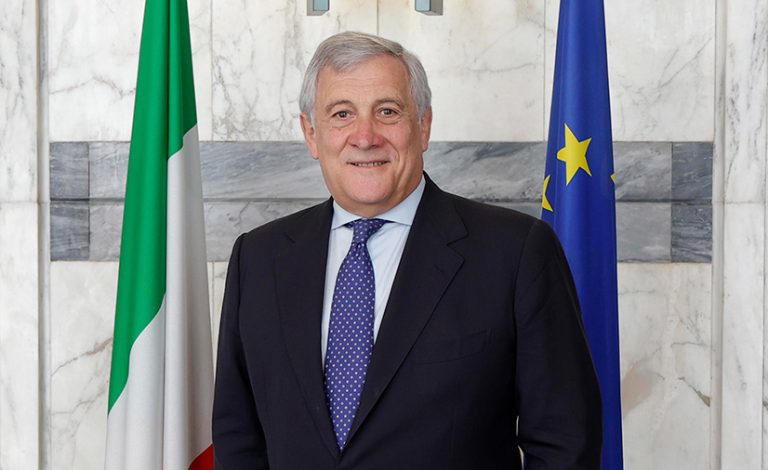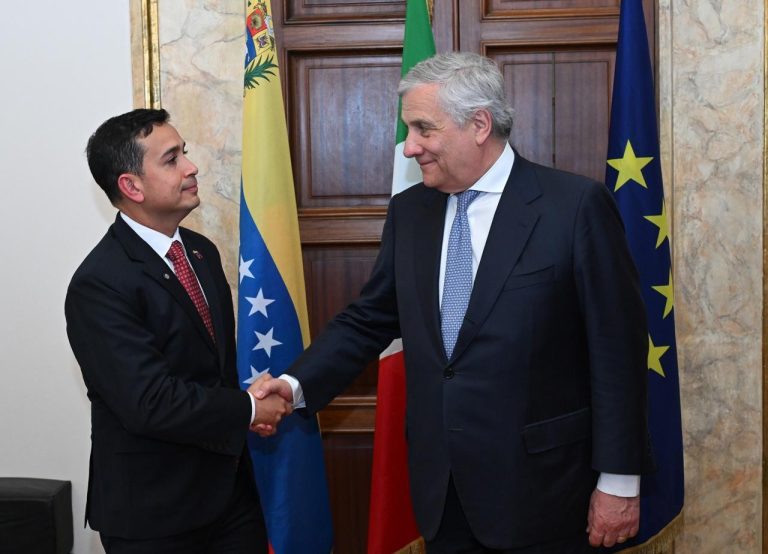
Minister Tajani, what does the release of Trentini and the other Italians represent for our country and its geopolitical role? “First and foremost, it confirms that we now possess a consolidated and effective know-how, widely recognised, in securing the release of Italians detained abroad. Let me remind you that just a year ago, Cecilia Sala was freed and earlier, Alessia Piperno, the Italian girl arrested by the Pasdaran (Iranian Revolutionary Guards) in Iran”.
What did you discuss with Trentini when he was released and brought to the embassy in Caracas?
“I wanted to know how he was, as I was concerned about his physical and psychological state. I spoke about this with him and with Mario Burlò. Our priority was the release of these two prisoners, as well as the other 42 Italians detained in Venezuela, for whom we remain fully committed”.
When did things accelerate regarding Trentini?
“It was after Jorge Rodríguez, President of the Venezuelan Parliament and brother of the current President, announced the release of prisoners. It was not guaranteed that Italians would be included, nor that Trentini would be among them. At that point, we mobilised every available diplomatic resource”.
The key to success?
“The breadth of coordination—the teamwork between Palazzo Chigi and the Italian Foreign Ministry—and the excellent work of the embassy, the Italian consulate and our intelligence services”.
Did your discussions with the U.S. Secretary of State play a significant role?
“We are very pragmatic. My relationship with Marco Rubio has always been excellent. At the G7 meeting on Epiphany, I raised the issue of releasing four Italians and he supported our request. There are matters on which we fully agree with the U.S. Administration and others where our positions differ, always handled with transparency and neutrality. This is how it should be among allies, because the transatlantic relationship is paramount”.
So it is quiet, behind-the-scenes diplomacy that delivers results, rather than public posturing?
“Discretion is the heart of diplomacy. As a politician who became Foreign Minister, I quickly understood the importance of the art of diplomacy: dialogue, engagement, trust, and, when necessary, firmness. But when required, one must stay away from the spotlight. We acted with discretion and full coordination. In fact, the first call I made after Trentini and Burlò were released was to Giorgia Meloni. We had spoken on Sunday evening, as soon as the Venezuelan Foreign Minister informed me of the imminent release, discussing the human side of the matter, which is both political and, above all, human, as it concerns people and families who are suffering and to whom we must provide answers. Meloni had said: ‘Call me at any hour once there is news.’ So I phoned her at 3:30 a.m.”
Did the fall of Maduro and the rise of President Rodríguez facilitate the negotiations?
“Certainly. The new President wants to open new diplomatic fronts. For this reason, in response to an important political signal from the Venezuelan government, we reciprocated with another significant political gesture: the Chargé d’Affaires in Venezuela was promoted to full Italian Ambassador”.
Is there an energy dimension connecting the two countries?
“It is no coincidence that Trump invited Eni to a meeting at the White House with the main American oil companies operating in Venezuela, including Chevron, Exxon, ConocoPhillips and Halliburton. Eni is one of the most active energy companies in Venezuela and we aim to continue playing a leading role in that sector. Not only in energy—where the U.S. President recognised the excellence of our work—but also in healthcare, electricity networks and water: areas in which Italy and Venezuela can cooperate”.
Does the ongoing political evolution in Venezuela help this process? “New and interesting prospects are opening up and Italy is well-positioned—thanks to its growing international standing—to seize and develop them. Across Latin America, we are gaining increasing centrality”.
Is the EU-Mercosur agreement an additional opportunity?
“Absolutely, both for Italy and Europe. As Minister for International Trade, I have always supported the need to reach an agreement with such an important group of South American countries, ensuring adequate protection for our agriculture”.
So regarding energy, is Italy fully engaged in Venezuela?
“This is a strategic issue, tied to national interest. Eni’s position in the country and its gas extraction credits will have to be negotiated with Venezuela and the United States”.
Aren’t you concerned about any last attempts by the Maduro regime that could block this new era of economic initiatives?
“Economic growth is extremely important and requires political stability to flourish. Therefore, the first objective is stabilising Venezuela, ensuring together that civil war is avoided. This awareness is widely shared, from the U.S. administration to various global actors”.
And if the transition succeeds?
“Once that phase is complete, democratic elections can take place”.
Meanwhile, in Italy, pro-Pal and pro-Maduro demonstrations have been burning American flags. Your reaction?
“Burning the flag of another nation serves no purpose. One must never confuse a government with its people and history. We must always remember that the United States enabled Italy and Europe to be free from the horrific dictatorships of the past century, from Nazism to Communism. What we must do is look forward, in a spirit of domestic and international dialogue, the only approach that benefits everyone”.