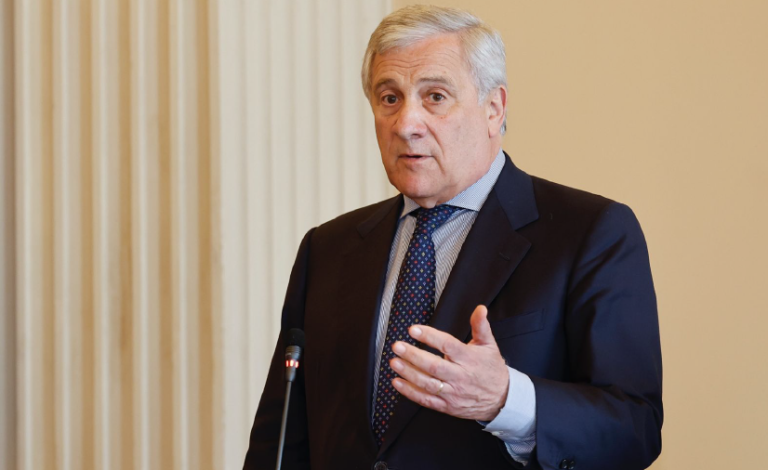
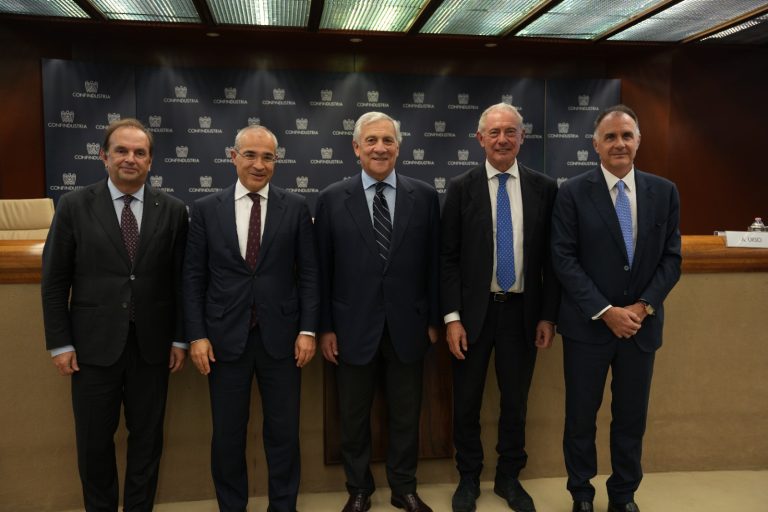
Even in the face of the most recent developments in the Italian banking world, centred on Monte dei Paschi di Siena (MPS), “the government and politicians confine themselves to setting the rules; they should not be referees but rather identify the control mechanisms, in Italy and in Europe. Therefore, it is not up to the government to take the field on one side or the other. The decision belongs to the authorities, not to politicians.” This is the clear message that Antonio Tajani, Deputy Prime Minister, Foreign Minister, and leader of Forza Italia, wanted to convey to Milano Finanza regarding the takeover bid launched by Intesa Sanpaolo for MPS just hours after the invitation to the deal was sent to Siena by Banco BPM.
Q. Minister, delving into the most recent issues in the Italian banking consolidation, what do you think of the two competing proposals regarding MPS?
A. We have always been defenders of free market, obviously in strict compliance with the rules. The initiatives from various sources we are witnessing these days demonstrate that the Italian banking system is healthy, having overcome the crisis of 2008 onwards, and having grown and strengthened. This is a good thing. Italian banks are once again able to collect savings and grant loans, fulfilling a task that coincides with our goal, i.d. to have banks that are protagonists in the world of finance, but also at the service of citizens and companies day after day. Without cheering for this or the other institution, we work to ensure that the system as a whole supports the real economy and growth.
Q. How has the government handled the Monte dei Paschi issue?
A. I believe it has handled the affair of Monte dei Paschi di Siena – in which it still retains a stake – very well. Monte dei Paschi is an example for all of Europe, having successfully emerged from a deep restructuring process. The principle that guide us is that banks serve Italy and the economic world, not political parties or governments. Politics must dictate the rules and check the efficiency of the mechanisms that control the banking system. It is up to Consob, the Antitrust Authority, the ECB, and the Bank of Italy to evaluate, not to politicians. Our goal as a government is to ensure that Italian savings are well managed and reach companies and families.
Q. Unicredit is also taking action and already holds 154% of Commerzbank: is this the first true transnational operation in the EU? Does the government support this operation?
A. There are European rules, and EU processes are moving toward a united banking system. Italian banks today are among the best in Europe in terms of capitalization and efficiency. They fully participate in strengthening the system across Europe. I am pleased that a bank rooted in Italy is successfully entering Europe. If French, German, or English entities come to Italy, I find it normal for Italian ones to go to Europe. Once again, I believe we must not be fans; our interest is to have a banking and financial system in Italy, and throughout Europe, capable of facing the economic and geopolitical revolution the world is currently experiencing effectively and resiliently.
Q. Would the consolidation of the banking system help access to credit? Would it ensure more investment in the real economy?
A. The banking system can rely on different and competing institutions. There can be large, medium, or local banks, specialized or niche ones, each with its own business proposition and all closely monitored by the Bank of Italy. Small and medium-sized entrepreneurs have always sought support from banks, even small or very small ones. We need to respond to market challenges, and these banks are true local institutions, at the side of 4 million companies, including small ones, craftsmen, and small traders who want a direct connection to credit in the local area. These banks, small but important, need to be supported.
Q. In this regard, at the proposal of Forza Italia, the government has introduced – among its priorities – incentives for pension fund investment in the real economy…
A. Pension funds are part of the Italian private savings giant. Italians’ savings amount to 1.75 trillion euros. We must create the conditions for these deposits to turn into investment. For example, if every Italian citizen decided to invest in Italy only 10 euros out of every 100 of their deposits, we would have €170 billion available to support the Italian industrial system and companies. A National Recovery and Resilience Plan (NRRP) for Italy. We need to create the conditions so that this investment does not always flee from our country, but remains here to generate prosperity and jobs.
Q. Reverting to the bids on MPS, is it conceivable to resort to the Golden Power, given that the Ministry of the Economy and Finance is still a shareholder of Monte dei Paschi?
A. I do not really think we are going in that direction. As far as we know, it seems that Intesa Sanpaolo‘s action could create the Eurozone’s largest or second-largest group by value. It will also strengthen Mediobanca, which aims to assist large, medium, and small businesses. With an Italian shareholder base, which means attention to Italian companies around the world. As Foreign Minister, responsible for foreign trade, I am pleased: exports account for 40% of Italy’s GDP.
Q. What do you think of the Euronext-Cdp affair and the revelations by Milano Finanza regarding shareholders’ agreements? What should the solution be?
A. The Italian Stock Exchange is a key infrastructure for the country. Milan’s economy benefits from it. The Italian Stock Exchange’s action should be developed, not reduced.
Q. Turning to another hot topic in the financial sector, do you agree with Matteo Salvini when he proposes a special tax on banks?
A. Banks already pay a higher corporate income tax (IRES). We need to take action with a balanced and common sense approach, otherwise foreign investors will shy away from Italy, and ordinary citizens and companies will be penalized. I am not defending banks, am defending Italians.
Q. The end of legislature is coming close. What measure would you like to ensure to Italians in the next budget?
A. We will raise the threshold for the personal income tax reduction for our middle class to €60,000, and we are aiming to exempt the thirteenth monthly salary from taxes. We also want to lower taxes for young people, to increase their salaries and wages. Taxes in Italy are already too high, and every time I hear about the need for a wealth tax, taxing extra profits, or reorganizing the real estate registry, I reject the proposals and condemn their punitive and ideological approach. In 2025 Italian public spending reached over €1.15 trillion, equal to 52% of GDP. This is a huge sum, which I believe could be sufficient if spent well and made more efficient. This is everyone’s responsibility, including Regions and Municipalities: not to waste public money, which is Italians’ money. Not to waste Italians’ money in order to lower taxes.