


As a member of the European Union, the Atlantic Alliance, and the G7, Italy condemns in the strongest terms the aggression unleashed on February 24, 2022, by the Russian Federation against Ukraine, which is a blatant violation of the fundamental principles of international law and international humanitarian law.
We condemn the Russian Federation’s persistent, massive, and indiscriminate attacks on Ukrainian territory, including against civilian targets and critical energy infrastructure, which continue to cause incalculable damage and suffering to the Ukrainian population, particularly its most vulnerable segments.
Italy supports the sovereignty, independence, and territorial integrity of Ukraine and contributes to its self-defence against the Russian Federation. This is the reason why, in coordination with our Euro-Atlantic partners and allies, we are committed to providing full and ongoing support at all levels – political, financial, economic, humanitarian, and military – to the Ukrainian government and people, participating in international efforts for Ukraine’s recovery and reconstruction, with a particular focus on energy resilience.
Italy supports international efforts aimed at facilitating negotiations between the warring parties to achieve a just and lasting peace in line with the fundamental principles of the United Nations Charter.
To this end, we maintain high pressure on the Russian Federation – particularly through the implementation of the sanctions adopted by the European Union – with the specific aim of weakening Russia’s war machine and pushing it to end its aggression and engage in serious and credible peace negotiations.
The excellent political relations between Italy and Ukraine have been further strengthened by the multidimensional support with which Italy has contributed and continues to contribute to Ukraine’s response to Russian aggression, both bilaterally and as a member of the European Union, the Atlantic Alliance, the G7, and the Donors’ Platform (UDP).
Since the beginning of the Russian invasion in February 2022, in many meetings and contacts at the highest level between Italy and Ukraine – including Prime Minister Meloni‘s visits to Kyiv for the anniversaries of the aggression in 2023 and 2024, the visit of Deputy Prime Minister and Minister of Foreign Affairs and International Cooperation Tajani in October 2023, and President Zelenskyy’s visits to Rome, most recently in December 2025 – Italy has reiterated its commitment to providing firm and concrete support for Ukraine’s self-defence and socio-economic reconstruction, as well as for international diplomatic efforts to achieve a just and lasting peace.
Also particularly significant and relevant was Italy’s organization of the Ukraine Recovery Conference (URC), hosted in Rome on July 10-11, 2025, the most important annual event to discuss economic support, reforms, and recovery in Ukraine.
Italy is part of the International Coalition for the Return of Ukrainian Children (Coalizione internazionale per il rientro dei bambini ucraini), which most recently met as a Summit of Heads of State and Government on the sidelines of the High-Level Week of the 80th session of the United Nations General Assembly.
Italy has so far adopted eight substantial military support packages for Ukraine’s defence, including both lethal and non-lethal equipment, based on the needs of the Ukrainian Armed Forces. The Ukraine Decree-Law, allowing for further assistance, has been extended until 2024.
Italy has so far organized a series of bilateral specialized training courses and activities for the Ukrainian Armed Forces; other similar activities are underway and planned.
On January 27, 2023, the Italian Minister of Defence and the French Minister of the Armed Forces announced their decision to jointly donate a SAMP/T medium- to long-range air defence and anti-missile system to the Ukrainian Armed Forces, as well as to jointly organize and conduct training for Ukrainian personnel on the same system.
The Italian Defence is also part of the Contact Group for the Defence of Ukraine – also known as the “Ramstein Format” – to better coordinate and calibrate military aid to the Ukrainian Armed Forces.
Italy contributes to EU initiatives supporting resistance in Ukraine. Specifically, the Ministry of Defence contributes personnel and training modules to the European Military Assistance Mission (EUMAM). Furthermore, the Ministry of Foreign Affairs and International Cooperation (MAECI) ensures Italy’s contribution to the European Peace Facility (EPF), i.e. to assistance measures for the Ukrainian Armed Forces and, ultimately, to the new €5 billion financial line dedicated to Ukraine (Ukraine Assistance Fund, UAF). Finally, the Ministry of Foreign Affairs and International Cooperation (MAECI) and the Ministry of Justice finance the participation of Italian experts and magistrates in the Civilian Strategic Advisory Mission (EUAM), to step up the process of reform in the civilian security sector and strengthen the rule of law.
Since the beginning of the Russian invasion, Italy has allocated approximately €3 billion in bilateral civilian assistance to Ukraine (net of military aid and EU contributions), including €310 million to support the Ukrainian state budget. These funds have enabled the Ukrainian government to continue ensuring macrofinancial stability, the payment of salaries and pensions, the repair of critical infrastructure damaged by the war, and the maintenance of essential public services (hospitals, schools, and reception centres for displaced persons).
The so called “Decreto Legge Aiuti ter” (Third Aid Decree Law) of September 2022 enabled Italy, as a EU Member State and through the signing of guarantees by the Ministry of Economy and Finance, to participate in the European programmes of Macrofinancial Assistance (MFA) for Ukraine called Emergency MFA, Exceptional MFA (total €7.2 billion in 2022), and MFA+ (€18 billion in concessional loans in 2023).
Italy also participates, within the EU, in the Ukraine Facility programme, which enables the Ukrainian government to continue, through direct funding, to provide public services, address the social consequences of the war, and support the country’s recovery, reconstruction, and modernization efforts for up to €50 billion over the period 2024-2027 (with Italy’s contribution calculated on a GNI basis). The Facility is primarily aimed at maintaining macrofinancial stability, linking European support to strong conditionality, particularly regarding the adoption of legislative and administrative reforms to support the EU accession process. It also includes a financial instrument (Ukraine Investment Framework) to facilitate private sector involvement, and is equipped with a robust audit and control framework.
As the G7 Presidency, Italy facilitated the agreement reached by the Heads of State and Government at the Borgo Egnazia Summit on June 13-15, 2024, on granting Ukraine a $50 billion loan guaranteed by the extraordinary profits of frozen Russian sovereign wealth funds, as a result of the sanctions adopted by the EU against Russia due to its aggression (the Extraordinary Revenue Acceleration (ERA) initiative).
Italy is proactively and constructively contributing to the ongoing discussions within the EU and G7 aimed at identifying solutions to address the Ukrainian government’s financial needs, in line with the principles of legality, financial and monetary stability, and overall sustainability.
The Ukraine Recovery Conference in Rome (URC2025) mainly resulted in the confirmation of the international community’s concrete financial support for Ukraine. Approximately 400 agreements were signed to support the country’s recovery, including 25 institutional agreements involving Italy, nine between Italian and Ukrainian local authorities, and approximately twenty B2B and B2G agreements involving Italian companies. In terms of financial contributions, the Conference mobilized approximately €10 billion in new public funds, of which €314 million from Italy (considering new grants and soft loans, including €150 million from our Development Cooperation) and €5 billion in private capital.
Italy has consistently supported critical infrastructure, particularly in the energy sector, with the signing of a €200 million co-financing agreement (€100 million of which is a soft loan from the Italian Cooperation Agency) with the EBRD for the restoration of Ukrhydronergo’s power capacity following the destruction of the Nova Kachovka dam, and the provision of an additional €40 million for other emergency, assistance, and technical support programmes, also through the Energy Community. Finally, a further package of nearly €100 million was announced by the Prime Minister to President Zelensky during his latest visit to Italy. The package covers the purchase and supply of generators and electrical equipment, as well as donations from private Italian companies channelled by the Civil Protection Department. It is intended to address the particularly critical situation in the energy sector at the start of the winter season, with significant rationing imposed due to the intensification of Russian attacks targeting infrastructure and electricity and gas grids in recent months.
In terms of humanitarian assistance, over €93 million has been allocated to initiatives in Ukraine and neighbouring countries. This figure includes €32.5 million in response to Humanitarian Appeals:
- €6 million to the Ukraine Humanitarian Fund of the United Nations Office for the Coordination of Humanitarian Affairs (OCHA);
- €6 million to the United Nations Children’s Fund (UNICEF) for activities in Ukraine;
- €8 million to the United Nations High Commissioner for Refugees (UNHCR) to contribute to the UNHCR’s regional plan, and an additional €6 million to the same organization to support Ukrainian refugees in Poland and Moldova;
- a total of €4 million to the International Committee of the Red Cross (ICRC) for activities in Ukraine;
- €2 million to the International Federation of Red Cross and Red Crescent Societies (IFRC) for activities in neighbouring countries and 500,000 euros for the same organization in Moldova.
It also includes additional contributions (€61.15 million) for initiatives conducted outside the framework of international organisations:
- €14 million for activities conducted by Civil Society Organisations (CSOs) in the areas of primary care, protection, and health;
- €650,000 to finance an initiative implemented by the National Institute for Infectious Diseases (INMI), aimed at strengthening the ability to provide infectious disease diagnosis and treatment services at the Sighetu Marmației hospital (Romania), which serves both the Romanian host community and Ukrainian refugees;
- €46.5 million for an emergency call by Italian CSOs in Ukraine and neighbouring countries for multisectoral assistance activities for the Ukrainian population.
In 2023, Italy also contributed to the international response to support Ukraine’s infrastructure resilience by allocating €10 million to the European Bank for Reconstruction and Development (EBRD) to support the Ukrainian energy sector.
Specific funding from the resources available in the Migration Fund and the Reward Fund was also earmarked to address the consequences of the refugee crisis in Ukraine and the region. In particular:
- €5 million to the International Organization for Migration (IOM), €5 million to UNICEF to support authorities in neighbouring countries (Moldova) in managing and assisting Ukrainian refugees, and €10 million to UNHCR for activities in Moldova.
- €3 million to UNHCR for a project aimed at providing assistance to the displaced population within Ukraine.
At the Ukraine Recovery Conference held in Rome (April 26, 2023), the Deputy Prime Minister and Minister of Foreign Affairs and International Cooperation, Hon. Antonio Tajani, announced new funds to the tune of €100 million in aid loans and €60 million in grants for humanitarian and immediate recovery aid, of which €46.5 million has already been allocated to the aforementioned call for proposals for CSO activities.
- The April bilateral Conference gave ample space to the private sector, recognizing its crucial role in the reconstruction process. The Conference provided an opportunity for 600 Italian and 150 Ukrainian companies in the sectors of Infrastructure and Transport, Energy and Environment, Steel, Agribusiness, Healthcare, Space and Avionics, IT and Services to meet.
- In order to further implement the Rome Conference commitments, a €100 million soft loan was adopted for a €200 million co-financed initiative with the European Bank for Reconstruction and Development (EBRD). The project aims to restore the energy capacity of Ukrhydroenergo (a Ukrainian state-owned electricity company). On October 2, 2023, Italy took up responsibility for the reconstruction of the city and region of Odessa, by simultaneously launching the project “Laboratory for Reconstruction” together with the Milan Triennale and the Rome MAXXI Museum. In that context, a €500,000 initiative with UNESCO was also adopted for the safety of the Cathedral of the Transfiguration in Odessa, damaged by Russian bombing. The collaboration with UNESCO on Odessa also includes the protection of the 52 cultural sites in the historic centre and the city’s master plan. Furthermore, a €500,000 contribution was adopted for the OECD’s “Ukraine Country Program.”
- At the same time, it was also announced that the Ministry of Economy and Finance (MEF) would contribute a €100 million guarantee to the European Investment Bank’s “EU for Ukraine” Fund.
Moreover, the Italian Agency for Development Cooperation’s office in Kyiv is now operational.
Contributions in response to the international consequences of the crisis
- With reference to neighbouring countries affected by the conflict, a €10 million grant has been made through the UNDP to contribute to the Energy Vulnerability Fund established by Moldova.
- The Ministry of Foreign Affairs and International Cooperation is funding the participation of experts in the EU Civilian Partnership Mission in Moldova (EUPM), which helps strengthen the country’s crisis management structures and enhance its resilience to hybrid threats, including cyber attacks and information manipulation.
- In response to the international repercussions of the war on food security, a contribution of €2 million was allocated in 2022 and an additional €2 million in 2023 to support the activities of the World Food Programme (WFP) under the “Grain from Ukraine” initiative.
Donations of goods (for humanitarian assistance and for energy resilience)
Since the beginning of the emergency, the Italian Development Cooperation has organized donations and transport of humanitarian goods totalling approximately 75 tons, also within the framework of the Union’s Civil Protection Mechanism, using the services of the United Nations Humanitarian Response Depot (UNHRD) in Brindisi:
- approximately 5 tons of medical kits donated to the Italian Red Cross for delivery to its Ukrainian sister organization in Chernivtsi on March 3, 2022.
- approximately 20 tons of humanitarian supplies arrived in Niemce, Poland on March 11 and 14, 2022, for delivery to Ukraine.
- approximately 19.4 tons of various humanitarian goods to Moldova, arrived on March 14 and 18, 2022, to support the country’s reception facilities.
- approximately 15 tons of goods (of which 9 provided by the Italian Development Cooperation and over 6 provided by the Francesca Rava Foundation) to Ukraine via Romania, arrived on June 18 and 21, 2022.
- approximately 15 tons of humanitarian goods provided by the Italian Development Cooperation for the activities of the Italian CSO “CUAMM – Doctors with Africa” in Ukraine (the first shipment of 6 tons arrived in Siret on June 9, 2022, and the second shipment of 9 tons arrived in Chernivtsi on November 29, 2022).
Furthermore, the Italian Agency for Development Cooperation (AICS) has finalized a purchase contract for 52 generators of different voltages, which have already been delivered.
Again within the framework of the Union’s Civil Protection Mechanism, the National Civil Protection Service has donated other humanitarian goods to Ukraine, Slovakia, Poland, and Moldova.
- The Italian private sector, through the Italian Civil Protection Department, has also contributed to supporting the protection of Ukrainian infrastructure by donating various materials and equipment (donor companies include Chiesi Farmaceutica S.p.A., ENI S.p.A., TotalEnergies S.p.A., Terna S.p.A., SNAM S.p.A., and Italgas Reti S.p.A.).
- In this regard, ENEL’s “A Ray of Hope” initiative is also worth mentioning. In March 2023, Enel pledged to donate 5,876 photovoltaic solar panels to Ukraine, with a total capacity of approximately 2 MW, to provide off-grid solutions ensuring uninterrupted electricity supply to critical Ukrainian public buildings, such as schools and hospitals.
Italy participated in the Ukraine Recovery Conferences (URC) held in London (June 21-22, 2023) and Berlin (June 11-12, 2024).
The URC2025, organized by Italy in Rome on July 10-11, 2025, was the fourth Ukraine Recovery Conference. It continued the annual series of high-level political events dedicated to the country’s reconstruction and modernization since the beginning of Russia’s large-scale war of aggression, according to the “building back better” principle.
By comprehensively expanding the involvement of institutional and private partners in the country’s reconstruction, consistent with the outcomes of the previous Conferences in Lugano, London, and Berlin, governments, international organizations, financial institutions, companies, regions, municipalities, and civil society met with a shared commitment to strengthening Ukraine’s resilience for as long as necessary. Participants represented the various stakeholder groups, thus demonstrating their strong commitment to Ukraine’s future.
The Conference reflected the “Lugano Principles“, including a holistic (whole-of-society) approach to recovery through the meaningful engagement of a wide range of stakeholders.
URC2025 focused on the following four thematic dimensions, which were at the core of the Berlin Conference as pillars of Ukraine’s post-conflict recovery:
Private Sector – To achieve economic growth and successful reconstruction, private capital is crucial. URC2025 addressed private sector concerns, including security, financing and insurance, overregulation, and the labour market.
Human Capital – Ukraine’s recovery depends on mobilizing human capital, fostering social cohesion, and embracing inclusiveness, with the aim of unleashing the potential of all citizens, both at home and abroad, particularly women and youth. Key challenges will include, inter alia, the reintegration of internally displaced people, refugees, and veterans into civilian life. Collaboration between stakeholders, civil society, and the Ukrainian diaspora is crucial to preserving and growing the country’s human capital for sustainable reconstruction.
Regional and Local Dimension – Local and regional players are key to Ukraine’s reconstruction and recovery, building on decentralization reform. The Conference emphasized the role of local self-government and regional State administrations in recovery, financial access, and capacity building.
Reforms and EU Integration – Continuing the spirit of the Conferences held on the topic up to 2022, URC2025 also highlighted Ukraine’s reform progress in the framework of its economic resilience and the European Union’s accession process.
Co-chaired by Prime Minister Meloni and President Zelensky, URC2025 included five plenary sessions, 28 discussion panels, 14 Recovery Forum workshops, seven seminars, a dozen multilateral meetings (including the G7+ Donors’ Platform Steering Committee meeting), and an international trade fair with 120 stands.
With approximately seven thousand participants, 75 official delegations, and 400 agreements signed, URC2025 was the most attended and productive of all the editions held to date.
Important cross-cutting issues such as macroeconomic stability, resilience and security, infrastructure, housing, energy, climate protection, green recovery, culture, healthcare, gender, education, the environment, science, technology, innovation, and disabilities were integrated into the aforementioned dimensions.
The ReBuild Ukraine Exhibition and Conference in Warsaw (November 13-14, 2025) saw the participation of 70 Italian companies located around an Italian Pavilion, dozens of B2B and B2G meetings, and the signing of important collaboration agreements, with the involvement of the entire country system. It follows URC2025, providing an opportunity to continue developing the European equity fund (European Flagship Fund for the Reconstruction of Ukraine), launched in Rome to mobilize private capital, and deepen discussions on investment in the energy, infrastructure, and dual-use sectors.
Italy has welcomed a total of 191,475 Ukrainians fleeing the war, who are beneficiaries of international protection, temporary protection, or other forms of national protection.
Italy also fully supports Ukraine’s European path and proactively contributed to the European Council’s decision of December 2023 to open EU accession negotiations with Kyiv.
Approfondimenti
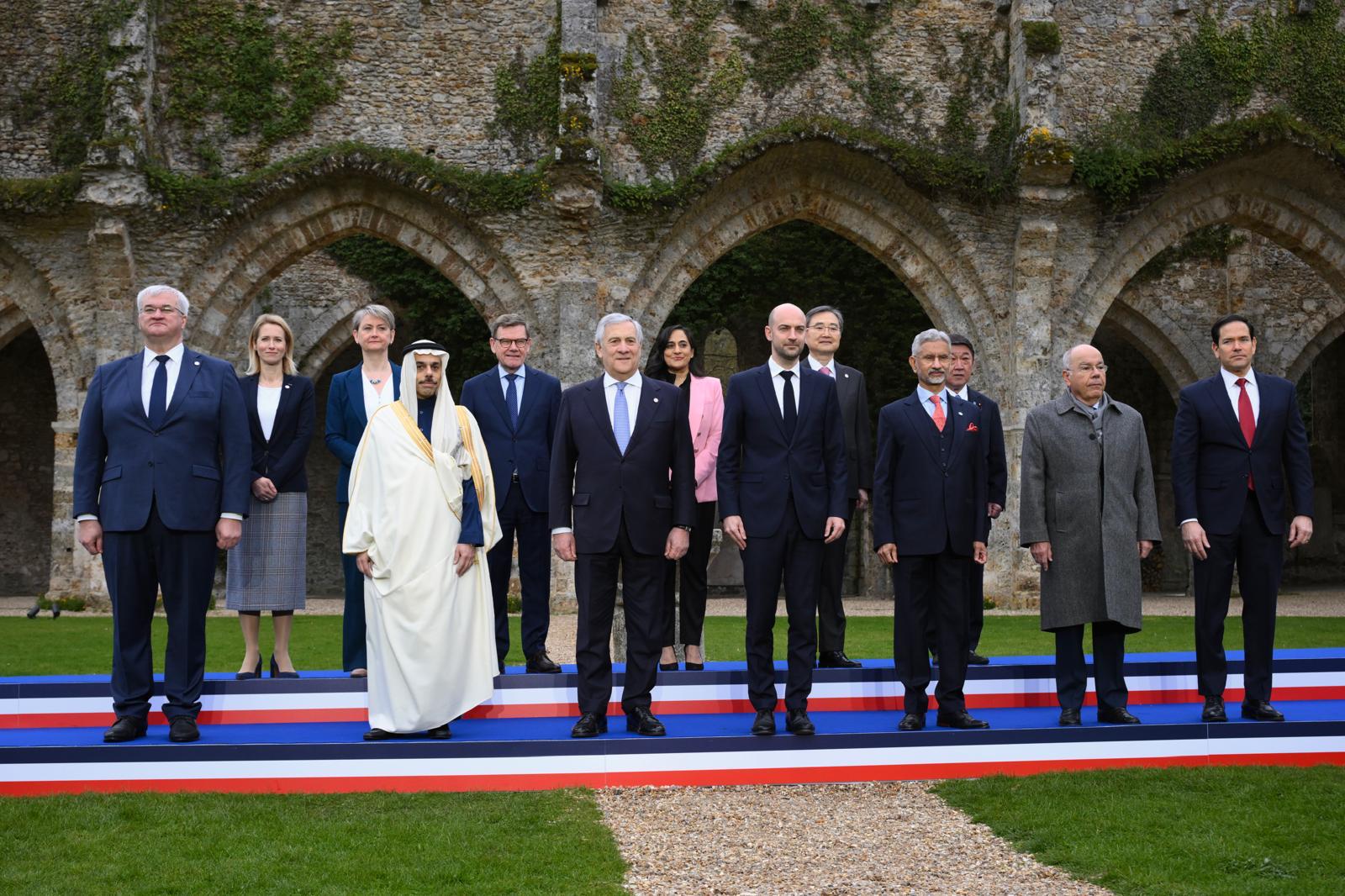
Tajani at the G7 Foreign Ministers’ Meeting: second day focused on Iran, Ukraine, transnational crime and critical minerals
The Italian Minister of Foreign Affairs, Antonio Tajani, participated in...
Tajani: “No Sardinian company will be left behind” (Unione Sarda)
The Minister, who started his career as a journalist, was...
Tajani: «European defence needs to be strengthened, but within NATO with the USA» (Corriere della Sera)
ZAGABRIA “On Wednesday, I will participate in the meeting organised...
Tajani: “Europe and the United States are mutually indispensable” (Il Giornale)
“Europe cannot do without the United States, and the United...- See all